




Ronulin R®
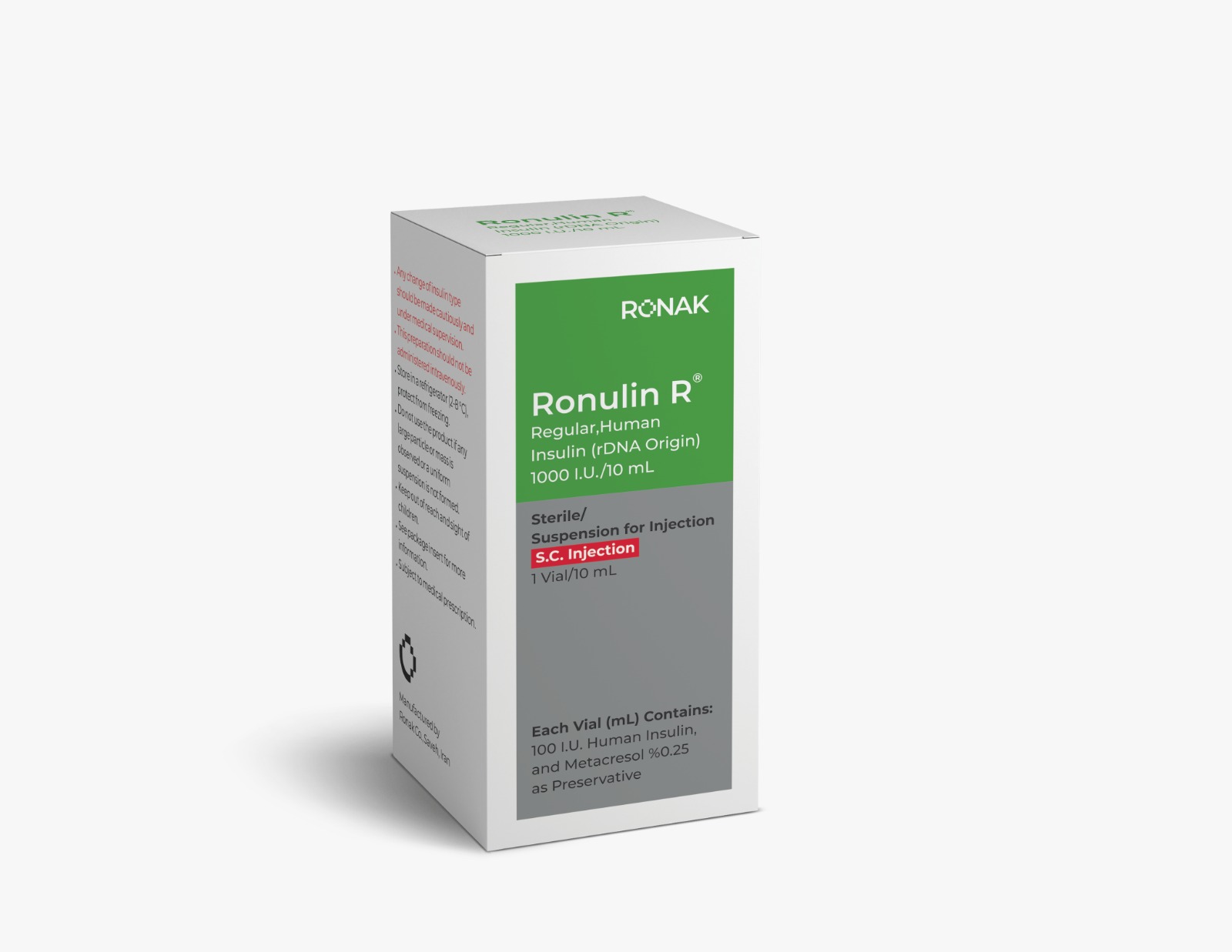
Ronulin R®
Generic Name: Regular Insulin
Dosage Form: 10 ml Injectable Solution (100 IU per ml)
Pharmacological Class: Short-acting insulin
Indications:
Ronulin R®is used to control blood sugar levels in patients with diabetes.
Description:
Ronulin R® (Regular Insulin) is a rapid-acting insulin that helps control blood sugar in patients with type 1 and type 2 diabetes.
Indications for Use:
- Type 1 Diabetes
- Type 2 Diabetes
- Gestational Diabetes
- Hyperglycemia in hospitalized patients
- Severe hyperkalemia (high potassium levels)
- Diabetic ketoacidosis
- Toxicity due to calcium channel blockers or beta-blockers
Dosage Form:
- Vial containing 10 ml of injectable solution (100 IU per ml)
Preparation of Ronulin R®
Ronulin R®does not require any preparation for subcutaneous injection.
- It can be diluted with 0.9% saline and injected intravenously under the supervision of medical personnel in healthcare settings.
- It is recommended to remove the insulin vial from the refrigerator 30 minutes before injection to allow it to reach room temperature (20–25°C).
Ronulin R® can be used in combination with intermediate or long-acting insulins, but it can only be mixed with Ronulin R®. In this case, draw Ronulin R® into the syringe first, mix it with Ronulin R®, and inject immediately.
Dosage and Injection Method:
- Ronulin R® should be injected subcutaneously 30 minutes before meals.
- Recommended injection sites include around the navel (at least 5 cm from the navel), the upper thigh, or the upper arm. Rotate injection sites daily to avoid sensitivity reactions. The injection site should not be painful, bruised, or red.
- The dose of Ronulin R® depends on the injection site, metabolism, diet, physical activity, and blood sugar levels of the patient.
Preparation for injection:
- Wash and dry your hands.
- Disinfect the injection site with an alcohol swab and let it dry.
- Sit on a chair or lie on a bed to ensure control over the injection site.
- Remove the plastic cap from the vial and wipe the vial with an alcohol swab.
- Draw air into the syringe by pulling back the plunger to the required dose.
- Insert the needle into the Ronulin R® vial and inject the air into the vial. Be careful not to contaminate the needle.
- Gently shake the vial.
- Hold the vial upside down and draw the correct dose of insulin into the syringe.
- Before removing the syringe from the vial, ensure there are no air bubbles in the syringe. If bubbles are present, tap the syringe to move the air to the top and expel it by pushing the plunger, then adjust the dose.
Pinch the skin at the injection site to create a bulge (not needed for individuals with higher body weight).
10. Insert the needle at a 90-degree angle (45 degrees for thin individuals). Ensure the entire length of the needle enters the injection site.
11. Press the plunger to inject the insulin. Do not release the skin until the injection is completed.
12. After injection, remove the needle from the skin and dispose of the syringe appropriately.
13. Cover the needle with the protective cap and dispose of it safely.
Mixing Ronulin R® and Ronulin R®:
- Draw air into the syringe for the required dose of Ronulin R®.
- Insert the needle into the Ronulin R® vial, inject air, and remove the needle.
- As in the previous step, draw air into the syringe for the required dose of Ronulin R®.
- Insert the needle into the Ronulin R® vial, inject air, but do not remove the needle.
- Invert the Ronulin R® vial and syringe.
- Draw the required dose of Ronulin R® into the syringe.
- Ensure no air bubbles are in the syringe before removing the needle. If bubbles are present, tap the syringe to move the air to the top and expel it, then adjust the dose.
- Insert the needle into the Ronulin R® vial, invert both the vial and syringe, and draw the required dose of Ronolin N®.
- Remove the needle, cover it with the protective cap, and proceed with the injection.
Note: Never return insulin left in the syringe back to the vial after injection.
Each syringe and needle is for single-use only. Dispose of them properly after use.
Missed Dose:
If you miss a dose of Ronulin R®, consult your doctor or pharmacist for advice.
Overdose:
If you take more than the recommended dose, contact your doctor immediately.
An overdose can cause hypoglycemia (low blood sugar). Mild episodes can be treated with oral glucose. For severe hypoglycemia, it may result in coma, seizures, or neurological disturbances.
Monitoring During Treatment:
While using Ronulin R®, monitor the following:
- Blood glucose levels
- Electrolyte levels (especially potassium)
- Liver and kidney function
- Patient's weight
- In diabetic ketoacidosis, monitor venous pH, serum urea nitrogen, serum creatinine, serum osmolality, and the patient's level of consciousness.
Contraindications:
- Allergy to Regular Insulin or any of the formulation components.
- During episodes of hypoglycemia.
Warnings and Precautions:
- Insufficient doses or stopping treatment, especially in insulin-dependent diabetic patients, may result in life-threatening conditions like hyperglycemia (high blood sugar) and diabetic ketoacidosis.
- Insulin doses need to be adjusted if there is a change in weight or if weight-loss surgery is performed.
- If allergic reactions occur (e.g., redness, swelling, rashes, blisters, hives, itching, wheezing, chest or throat tightness, breathing problems, difficulty swallowing, unusual voice hoarseness, or swelling of the mouth, face, lips, tongue, or throat), seek immediate medical attention.
- If symptoms of low potassium occur (e.g., muscle pain, weakness, cramps, or abnormal heart rhythm), contact your doctor.
- Ronulin R® should be used with caution in patients with liver or kidney failure.
Use in Pregnancy and Breastfeeding:
- Insulin should be used during pregnancy and breastfeeding under medical supervision. Due to physiological changes in pregnant women, insulin doses may need to be adjusted during different months.
- Insulin is excreted in breast milk. During breastfeeding, insulin doses or diet may need to be adjusted.
- The decision to breastfeed during treatment should consider the potential risk to the infant, the benefits of breastfeeding, and the advantages of treatment for the mother.
Side Effects:
Like all medications, Ronulin R® may cause side effects in some individuals, although not everyone experiences them. Possible side effects include:
- Weight gain
- Peripheral edema (swelling)
- Injection site reactions
Drug Interactions:
Consult your doctor or pharmacist about potential interactions with other medications or supplements.
Packaging:
Each package contains 1 vial of Ronulin R®.
Storage Conditions:
- Store Ronulin R® in the refrigerator (2 to 8°C), away from light and moisture, and protect it from freezing.
- Do not use the product after the expiration date.
- Keep out of reach of children.
- Keep the medication in its original packaging until use.
References:
- Insulin Regular: Drug information, UpToDate 2025
- Drugs.com
Ronulin R®
Generic Name: Regular Insulin
Dosage Form: 10 ml Injectable Solution (100 IU per ml)
Pharmacological Class: Short-acting insulin
Indications:
Ronulin R®is used to control blood sugar levels in patients with diabetes.
Description:
Ronulin R® (Regular Insulin) is a rapid-acting insulin that helps control blood sugar in patients with type 1 and type 2 diabetes.
Indications for Use:
- Type 1 Diabetes
- Type 2 Diabetes
- Gestational Diabetes
- Hyperglycemia in hospitalized patients
- Severe hyperkalemia (high potassium levels)
- Diabetic ketoacidosis
- Toxicity due to calcium channel blockers or beta-blockers
Dosage Form:
- Vial containing 10 ml of injectable solution (100 IU per ml)
Preparation of Ronulin R®
Ronulin R®does not require any preparation for subcutaneous injection.
- It can be diluted with 0.9% saline and injected intravenously under the supervision of medical personnel in healthcare settings.
- It is recommended to remove the insulin vial from the refrigerator 30 minutes before injection to allow it to reach room temperature (20–25°C).
Ronulin R® can be used in combination with intermediate or long-acting insulins, but it can only be mixed with Ronulin R®. In this case, draw Ronulin R® into the syringe first, mix it with Ronulin R®, and inject immediately.
Dosage and Injection Method:
- Ronulin R® should be injected subcutaneously 30 minutes before meals.
- Recommended injection sites include around the navel (at least 5 cm from the navel), the upper thigh, or the upper arm. Rotate injection sites daily to avoid sensitivity reactions. The injection site should not be painful, bruised, or red.
- The dose of Ronulin R® depends on the injection site, metabolism, diet, physical activity, and blood sugar levels of the patient.
Preparation for injection:
- Wash and dry your hands.
- Disinfect the injection site with an alcohol swab and let it dry.
- Sit on a chair or lie on a bed to ensure control over the injection site.
- Remove the plastic cap from the vial and wipe the vial with an alcohol swab.
- Draw air into the syringe by pulling back the plunger to the required dose.
- Insert the needle into the Ronulin R® vial and inject the air into the vial. Be careful not to contaminate the needle.
- Gently shake the vial.
- Hold the vial upside down and draw the correct dose of insulin into the syringe.
- Before removing the syringe from the vial, ensure there are no air bubbles in the syringe. If bubbles are present, tap the syringe to move the air to the top and expel it by pushing the plunger, then adjust the dose.
Pinch the skin at the injection site to create a bulge (not needed for individuals with higher body weight).
10. Insert the needle at a 90-degree angle (45 degrees for thin individuals). Ensure the entire length of the needle enters the injection site.
11. Press the plunger to inject the insulin. Do not release the skin until the injection is completed.
12. After injection, remove the needle from the skin and dispose of the syringe appropriately.
13. Cover the needle with the protective cap and dispose of it safely.
Mixing Ronulin R® and Ronulin R®:
- Draw air into the syringe for the required dose of Ronulin R®.
- Insert the needle into the Ronulin R® vial, inject air, and remove the needle.
- As in the previous step, draw air into the syringe for the required dose of Ronulin R®.
- Insert the needle into the Ronulin R® vial, inject air, but do not remove the needle.
- Invert the Ronulin R® vial and syringe.
- Draw the required dose of Ronulin R® into the syringe.
- Ensure no air bubbles are in the syringe before removing the needle. If bubbles are present, tap the syringe to move the air to the top and expel it, then adjust the dose.
- Insert the needle into the Ronulin R® vial, invert both the vial and syringe, and draw the required dose of Ronolin N®.
- Remove the needle, cover it with the protective cap, and proceed with the injection.
Note: Never return insulin left in the syringe back to the vial after injection.
Each syringe and needle is for single-use only. Dispose of them properly after use.
Missed Dose:
If you miss a dose of Ronulin R®, consult your doctor or pharmacist for advice.
Overdose:
If you take more than the recommended dose, contact your doctor immediately.
An overdose can cause hypoglycemia (low blood sugar). Mild episodes can be treated with oral glucose. For severe hypoglycemia, it may result in coma, seizures, or neurological disturbances.
Monitoring During Treatment:
While using Ronulin R®, monitor the following:
- Blood glucose levels
- Electrolyte levels (especially potassium)
- Liver and kidney function
- Patient's weight
- In diabetic ketoacidosis, monitor venous pH, serum urea nitrogen, serum creatinine, serum osmolality, and the patient's level of consciousness.
Contraindications:
- Allergy to Regular Insulin or any of the formulation components.
- During episodes of hypoglycemia.
Warnings and Precautions:
- Insufficient doses or stopping treatment, especially in insulin-dependent diabetic patients, may result in life-threatening conditions like hyperglycemia (high blood sugar) and diabetic ketoacidosis.
- Insulin doses need to be adjusted if there is a change in weight or if weight-loss surgery is performed.
- If allergic reactions occur (e.g., redness, swelling, rashes, blisters, hives, itching, wheezing, chest or throat tightness, breathing problems, difficulty swallowing, unusual voice hoarseness, or swelling of the mouth, face, lips, tongue, or throat), seek immediate medical attention.
- If symptoms of low potassium occur (e.g., muscle pain, weakness, cramps, or abnormal heart rhythm), contact your doctor.
- Ronulin R® should be used with caution in patients with liver or kidney failure.
Use in Pregnancy and Breastfeeding:
- Insulin should be used during pregnancy and breastfeeding under medical supervision. Due to physiological changes in pregnant women, insulin doses may need to be adjusted during different months.
- Insulin is excreted in breast milk. During breastfeeding, insulin doses or diet may need to be adjusted.
- The decision to breastfeed during treatment should consider the potential risk to the infant, the benefits of breastfeeding, and the advantages of treatment for the mother.
Side Effects:
Like all medications, Ronulin R® may cause side effects in some individuals, although not everyone experiences them. Possible side effects include:
- Weight gain
- Peripheral edema (swelling)
- Injection site reactions
Drug Interactions:
Consult your doctor or pharmacist about potential interactions with other medications or supplements.
Packaging:
Each package contains 1 vial of Ronulin R®.
Storage Conditions:
- Store Ronulin R® in the refrigerator (2 to 8°C), away from light and moisture, and protect it from freezing.
- Do not use the product after the expiration date.
- Keep out of reach of children.
- Keep the medication in its original packaging until use.
References:
- Insulin Regular: Drug information, UpToDate 2025
- Drugs.com