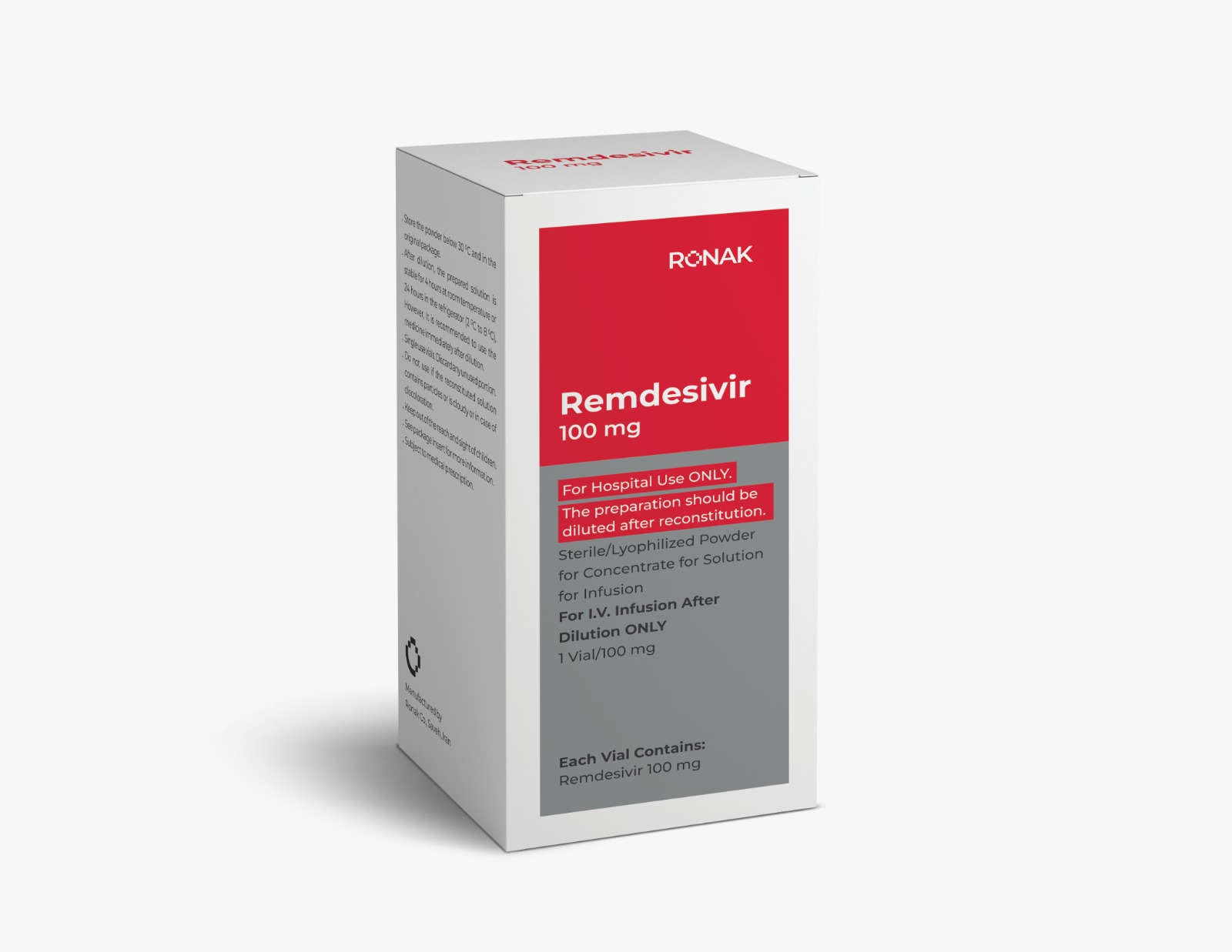





Remdesivir®
Remdesivir
Generic Name: Remdesivir
Dosage Form: 100 mg in 20 mL concentrated solution for intravenous infusion
Drug Class: Antiviral Agent
Indications for Remdesivir:
Remdesivir is used for the treatment of COVID-19.
How Remdesivir Works:
Remdesivir is a nucleotide analog prodrug that inhibits viral RNA synthesis.
Indications for Remdesivir Use:
- Treatment of COVID-19 in adults and children who require hospitalization, or in outpatient adults and children with mild to moderate COVID-19 who are at high risk of progressing to severe disease, including hospitalization or death.
Dosage Form of Remdesivir:
- 100 mg in 20 mL concentrated solution for intravenous infusion.
Preparation of Remdesivir:
- Remdesivir should be prepared in an aseptic (sterile) environment just before administration. The solution should be clear, without any color change, and free from any particles or precipitates.
- Remdesivir is compatible with 0.9% Sodium Chloride for dilution.
- The diluted solution is stable for 4 hours at room temperature (20 to 25°C) or 24 hours when refrigerated (2 to 8°C).
How to Administer Remdesivir:
- Remdesivir is only for intravenous infusion; do not administer it IM.
- The diluted Remdesivir solution in 0.9% Sodium Chloride should be infused over a period of 30 to 120 minutes.
- After the infusion is completed, continue with at least 30 mL of 0.9% Sodium Chloride solution to flush any remaining drug from the infusion set.
- Do not mix or co-administer Remdesivir with other medications.
Monitoring During Remdesivir Treatment:
- Monitor heart rate.
- Check liver enzymes (ALT, AST, bilirubin, and alkaline phosphatase).
- Monitor kidney function.
- Monitor prothrombin time (PT).
- Watch for signs of severe allergic reactions.
Contraindications for Remdesivir:
- Hypersensitivity to Remdesivir or any of its components.
Warnings and Precautions for Remdesivir:
- To reduce the risk of allergic reactions (with symptoms such as changes in blood pressure, increased or decreased heart rate, oxygen drop, fever, respiratory distress, angioedema, rash, nausea, vomiting, sweating, and chills), it is recommended to infuse the drug slowly (maximum infusion time of 120 minutes). If any symptoms occur, stop the Remdesivir treatment and initiate appropriate supportive care.
- If there is an increase in ALT levels with signs of liver inflammation, increased alkaline phosphatase, or prolonged prothrombin time (INR), Remdesivir treatment should be discontinued.
- Use with caution in patients with severe renal impairment (creatinine clearance less than 30 mL/min).
Remdesivir Use During Pregnancy and Breastfeeding:
- Remdesivir use during pregnancy should be based on a risk-benefit analysis for the mother and fetus.
- The extent of Remdesivir secretion in breast milk and its effects on the infant are unknown. The decision regarding whether to continue breastfeeding while using Remdesivir should be made based on the potential risks to the infant, the benefits of breastfeeding, and the therapeutic benefits for the mother.
Side Effects of Remdesivir:
As with any medication, Remdesivir may cause side effects, although not everyone will experience them. Common side effects include:
- Injection site irritation.
- Increased blood sugar levels.
- Decreased hemoglobin and lymphocyte count.
- Cardiac issues.
- Liver and kidney-related issues.
Drug Interactions with Remdesivir:
- Consult your doctor or pharmacist before using Remdesivir with other medications or supplements.
Packaging of Remdesivir:
- Each package contains 1 vial of Remdesivir.
Storage Conditions for Remdesivir:
- Store the medication at 2 to 8°C, away from light and moisture.
- The drug can be used until the expiration date on the packaging. Do not use or store expired medications.
- Keep out of sight and reach of children.
- Keep the drug in its original packaging until use.
References:
- Remdesivir: Drug information, UpToDate 2025
- Medicines.org.uk - Product Information
Remdesivir
Generic Name: Remdesivir
Dosage Form: 100 mg in 20 mL concentrated solution for intravenous infusion
Drug Class: Antiviral Agent
Indications for Remdesivir:
Remdesivir is used for the treatment of COVID-19.
How Remdesivir Works:
Remdesivir is a nucleotide analog prodrug that inhibits viral RNA synthesis.
Indications for Remdesivir Use:
- Treatment of COVID-19 in adults and children who require hospitalization, or in outpatient adults and children with mild to moderate COVID-19 who are at high risk of progressing to severe disease, including hospitalization or death.
Dosage Form of Remdesivir:
- 100 mg in 20 mL concentrated solution for intravenous infusion.
Preparation of Remdesivir:
- Remdesivir should be prepared in an aseptic (sterile) environment just before administration. The solution should be clear, without any color change, and free from any particles or precipitates.
- Remdesivir is compatible with 0.9% Sodium Chloride for dilution.
- The diluted solution is stable for 4 hours at room temperature (20 to 25°C) or 24 hours when refrigerated (2 to 8°C).
How to Administer Remdesivir:
- Remdesivir is only for intravenous infusion; do not administer it IM.
- The diluted Remdesivir solution in 0.9% Sodium Chloride should be infused over a period of 30 to 120 minutes.
- After the infusion is completed, continue with at least 30 mL of 0.9% Sodium Chloride solution to flush any remaining drug from the infusion set.
- Do not mix or co-administer Remdesivir with other medications.
Monitoring During Remdesivir Treatment:
- Monitor heart rate.
- Check liver enzymes (ALT, AST, bilirubin, and alkaline phosphatase).
- Monitor kidney function.
- Monitor prothrombin time (PT).
- Watch for signs of severe allergic reactions.
Contraindications for Remdesivir:
- Hypersensitivity to Remdesivir or any of its components.
Warnings and Precautions for Remdesivir:
- To reduce the risk of allergic reactions (with symptoms such as changes in blood pressure, increased or decreased heart rate, oxygen drop, fever, respiratory distress, angioedema, rash, nausea, vomiting, sweating, and chills), it is recommended to infuse the drug slowly (maximum infusion time of 120 minutes). If any symptoms occur, stop the Remdesivir treatment and initiate appropriate supportive care.
- If there is an increase in ALT levels with signs of liver inflammation, increased alkaline phosphatase, or prolonged prothrombin time (INR), Remdesivir treatment should be discontinued.
- Use with caution in patients with severe renal impairment (creatinine clearance less than 30 mL/min).
Remdesivir Use During Pregnancy and Breastfeeding:
- Remdesivir use during pregnancy should be based on a risk-benefit analysis for the mother and fetus.
- The extent of Remdesivir secretion in breast milk and its effects on the infant are unknown. The decision regarding whether to continue breastfeeding while using Remdesivir should be made based on the potential risks to the infant, the benefits of breastfeeding, and the therapeutic benefits for the mother.
Side Effects of Remdesivir:
As with any medication, Remdesivir may cause side effects, although not everyone will experience them. Common side effects include:
- Injection site irritation.
- Increased blood sugar levels.
- Decreased hemoglobin and lymphocyte count.
- Cardiac issues.
- Liver and kidney-related issues.
Drug Interactions with Remdesivir:
- Consult your doctor or pharmacist before using Remdesivir with other medications or supplements.
Packaging of Remdesivir:
- Each package contains 1 vial of Remdesivir.
Storage Conditions for Remdesivir:
- Store the medication at 2 to 8°C, away from light and moisture.
- The drug can be used until the expiration date on the packaging. Do not use or store expired medications.
- Keep out of sight and reach of children.
- Keep the drug in its original packaging until use.
References:
- Remdesivir: Drug information, UpToDate 2025
- Medicines.org.uk - Product Information