




Levekin®
Levekin®
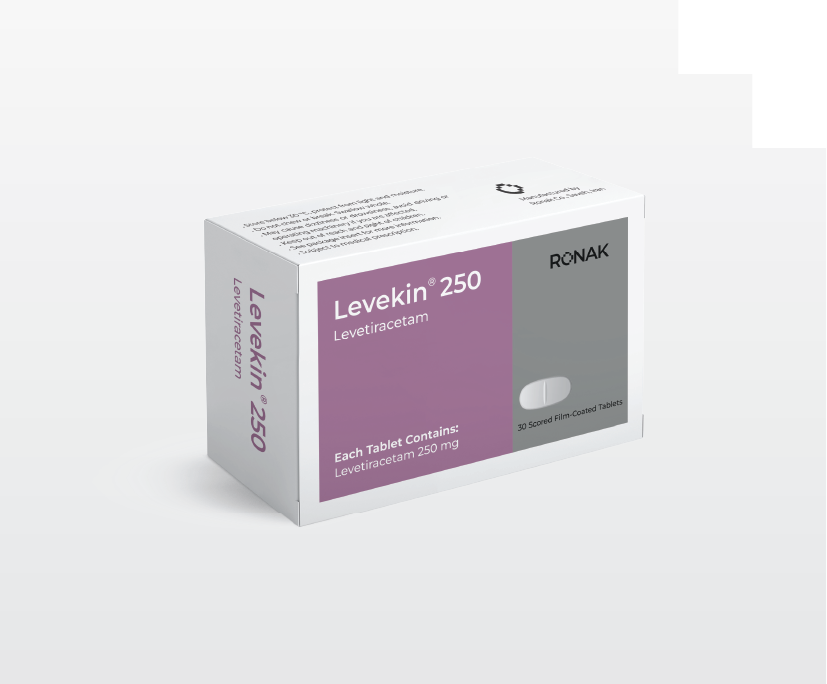
Active ingredient: Levetiracetam
Dosage form: Film-coated scored tablets 250 mg, 500 mg, 1000 mg
Pharmacologic Class: Antiepileptic
Indications: Control and treatment of focal and generalized seizures
Before Taking the Medicine
Read this leaflet carefully before taking the medicine.
This medication has been prescribed for you personally. Do not share it with others, even if their symptoms appear similar.
If you have further questions, consult your doctor or pharmacist.
If any side effect listed becomes severe, contact your doctor or pharmacist immediately.
What Levekin® Is and What It Is Used For
Levekin® tablets contain Levetiracetam as the active ingredient.
This medicine is used to treat various forms of partial (focal) seizures, with or without secondary generalization, in patients aged 16 years and older, newly diagnosed with epilepsy as monotherapy.
It can also be added to existing antiepileptic therapy in the following cases:
- Partial seizures with or without secondary generalization (except in infants under one month old)
- Myoclonic seizures in patients aged 12 years and older with juvenile myoclonic epilepsy
- Primary generalized tonic–clonic seizures in patients aged 12 years and older with idiopathic generalized epilepsy
What You Need to Know Before Taking Levekin®
Contraindications
- Hypersensitivity to Levetiracetam or any other component of the formulation.
Precautions
Inform your doctor before taking this medicine if:
- You have kidney impairment (dose adjustment may be required).
- Your seizures worsen, especially during the first month or after a dose increase.
- You experience depression, mood changes, or thoughts of self-harm.
- You have a family history of irregular heart rhythm or cardiac disease that predisposes you to arrhythmia.
- You notice unusual thoughts, irritability, aggression, or behavioral/mood changes.
Taking Levetiracetam with Other Medicines
Inform your doctor or pharmacist about all medications you are taking (prescription, over-the-counter, herbal, or supplements).
Levetiracetam may interact with other antiepileptic or CNS-active drugs.
Pregnancy and Breastfeeding
Levetiracetam should not be used during pregnancy unless strictly necessary and under close medical supervision.
Breastfeeding is not recommended while taking this medication.
Driving and Using Machines
Levetiracetam may cause drowsiness or dizziness, especially at the beginning of treatment or after dose increases.
Avoid driving or operating machinery until you are sure you are alert and unaffected.
How to Take Levekin®
Take this medication exactly as prescribed by your doctor or pharmacist.
Do not change the dose or duration of treatment without consulting a doctor.
- Usually taken twice daily (morning and evening) at regular times.
- May be taken with or without food.
- Swallow tablets whole with sufficient water; do not chew or crush them.
If You Take More Than Prescribed
Contact your doctor or emergency services immediately.
If You Miss a Dose
If you remember soon after your scheduled time, take the missed dose immediately and continue as usual.
Do not double your next dose to make up for the missed one.
If you miss multiple doses, consult your doctor promptly.
If You Stop Taking Levetiracetam
Do not stop treatment suddenly without consulting your doctor.
If discontinuation is required, your doctor will gradually taper the dose to prevent seizure recurrence.
Possible Side Effects
As with all medicines, Levetiracetam can cause side effects, although not everyone gets them.
Contact your doctor immediately if you experience:
- Headache, dizziness, difficulty breathing, or severe allergic reactions
- Drug Reaction with Eosinophilia and Systemic Symptoms (DRESS) – presenting with flu-like symptoms, rash, fever, elevated liver enzymes, blood cell changes, swollen lymph nodes
- Signs of kidney failure: reduced urine output, swelling of legs/ankles, nausea, fatigue, confusion
- Severe skin reactions: toxic epidermal necrolysis (widespread rash, blistering, peeling)
- Encephalopathy: confusion, drowsiness, memory loss, abnormal behavior
- Very Common (>10%)
- Nasopharyngitis (inflammation of throat/nasal mucosa), drowsiness, headache
Common (1–10%)
- Loss of appetite, irritability, aggression, anxiety, insomnia, nervousness, imbalance, seizures, fatigue, tremor, dizziness, cough, abdominal pain, diarrhea, indigestion, nausea, rash
Uncommon (0.1–1%)
- Low platelet or white blood cell count, weight loss or gain, suicidal thoughts, mood disorders, hallucinations, anger, panic attacks, memory problems, coordination issues, blurred vision, abnormal liver tests, hair loss, eczema, itching, muscle weakness or pain
Not all possible side effects are listed. If you notice any unusual symptoms, inform your doctor or pharmacist.
Storage Conditions
- Store below 30°C, away from light and moisture.
- Keep in the original packaging.
- Keep out of sight and reach of children.
- Dispose of any unused tablets after the expiry date.
References
1) Levetiracetam: Drug information, UpToDate 2025
2) https://www.medicines.org.uk/emc/medicine/26123
Levekin®
Active ingredient: Levetiracetam
Dosage form: Film-coated scored tablets 250 mg, 500 mg, 1000 mg
Pharmacologic Class: Antiepileptic
Indications: Control and treatment of focal and generalized seizures
Before Taking the Medicine
Read this leaflet carefully before taking the medicine.
This medication has been prescribed for you personally. Do not share it with others, even if their symptoms appear similar.
If you have further questions, consult your doctor or pharmacist.
If any side effect listed becomes severe, contact your doctor or pharmacist immediately.
What Levekin® Is and What It Is Used For
Levekin® tablets contain Levetiracetam as the active ingredient.
This medicine is used to treat various forms of partial (focal) seizures, with or without secondary generalization, in patients aged 16 years and older, newly diagnosed with epilepsy as monotherapy.
It can also be added to existing antiepileptic therapy in the following cases:
- Partial seizures with or without secondary generalization (except in infants under one month old)
- Myoclonic seizures in patients aged 12 years and older with juvenile myoclonic epilepsy
- Primary generalized tonic–clonic seizures in patients aged 12 years and older with idiopathic generalized epilepsy
What You Need to Know Before Taking Levekin®
Contraindications
- Hypersensitivity to Levetiracetam or any other component of the formulation.
Precautions
Inform your doctor before taking this medicine if:
- You have kidney impairment (dose adjustment may be required).
- Your seizures worsen, especially during the first month or after a dose increase.
- You experience depression, mood changes, or thoughts of self-harm.
- You have a family history of irregular heart rhythm or cardiac disease that predisposes you to arrhythmia.
- You notice unusual thoughts, irritability, aggression, or behavioral/mood changes.
Taking Levetiracetam with Other Medicines
Inform your doctor or pharmacist about all medications you are taking (prescription, over-the-counter, herbal, or supplements).
Levetiracetam may interact with other antiepileptic or CNS-active drugs.
Pregnancy and Breastfeeding
Levetiracetam should not be used during pregnancy unless strictly necessary and under close medical supervision.
Breastfeeding is not recommended while taking this medication.
Driving and Using Machines
Levetiracetam may cause drowsiness or dizziness, especially at the beginning of treatment or after dose increases.
Avoid driving or operating machinery until you are sure you are alert and unaffected.
How to Take Levekin®
Take this medication exactly as prescribed by your doctor or pharmacist.
Do not change the dose or duration of treatment without consulting a doctor.
- Usually taken twice daily (morning and evening) at regular times.
- May be taken with or without food.
- Swallow tablets whole with sufficient water; do not chew or crush them.
If You Take More Than Prescribed
Contact your doctor or emergency services immediately.
If You Miss a Dose
If you remember soon after your scheduled time, take the missed dose immediately and continue as usual.
Do not double your next dose to make up for the missed one.
If you miss multiple doses, consult your doctor promptly.
If You Stop Taking Levetiracetam
Do not stop treatment suddenly without consulting your doctor.
If discontinuation is required, your doctor will gradually taper the dose to prevent seizure recurrence.
Possible Side Effects
As with all medicines, Levetiracetam can cause side effects, although not everyone gets them.
Contact your doctor immediately if you experience:
- Headache, dizziness, difficulty breathing, or severe allergic reactions
- Drug Reaction with Eosinophilia and Systemic Symptoms (DRESS) – presenting with flu-like symptoms, rash, fever, elevated liver enzymes, blood cell changes, swollen lymph nodes
- Signs of kidney failure: reduced urine output, swelling of legs/ankles, nausea, fatigue, confusion
- Severe skin reactions: toxic epidermal necrolysis (widespread rash, blistering, peeling)
- Encephalopathy: confusion, drowsiness, memory loss, abnormal behavior
- Very Common (>10%)
- Nasopharyngitis (inflammation of throat/nasal mucosa), drowsiness, headache
Common (1–10%)
- Loss of appetite, irritability, aggression, anxiety, insomnia, nervousness, imbalance, seizures, fatigue, tremor, dizziness, cough, abdominal pain, diarrhea, indigestion, nausea, rash
Uncommon (0.1–1%)
- Low platelet or white blood cell count, weight loss or gain, suicidal thoughts, mood disorders, hallucinations, anger, panic attacks, memory problems, coordination issues, blurred vision, abnormal liver tests, hair loss, eczema, itching, muscle weakness or pain
Not all possible side effects are listed. If you notice any unusual symptoms, inform your doctor or pharmacist.
Storage Conditions
- Store below 30°C, away from light and moisture.
- Keep in the original packaging.
- Keep out of sight and reach of children.
- Dispose of any unused tablets after the expiry date.
References
1) Levetiracetam: Drug information, UpToDate 2025
2) https://www.medicines.org.uk/emc/medicine/26123