




Ropakin inj®
Ropakin®
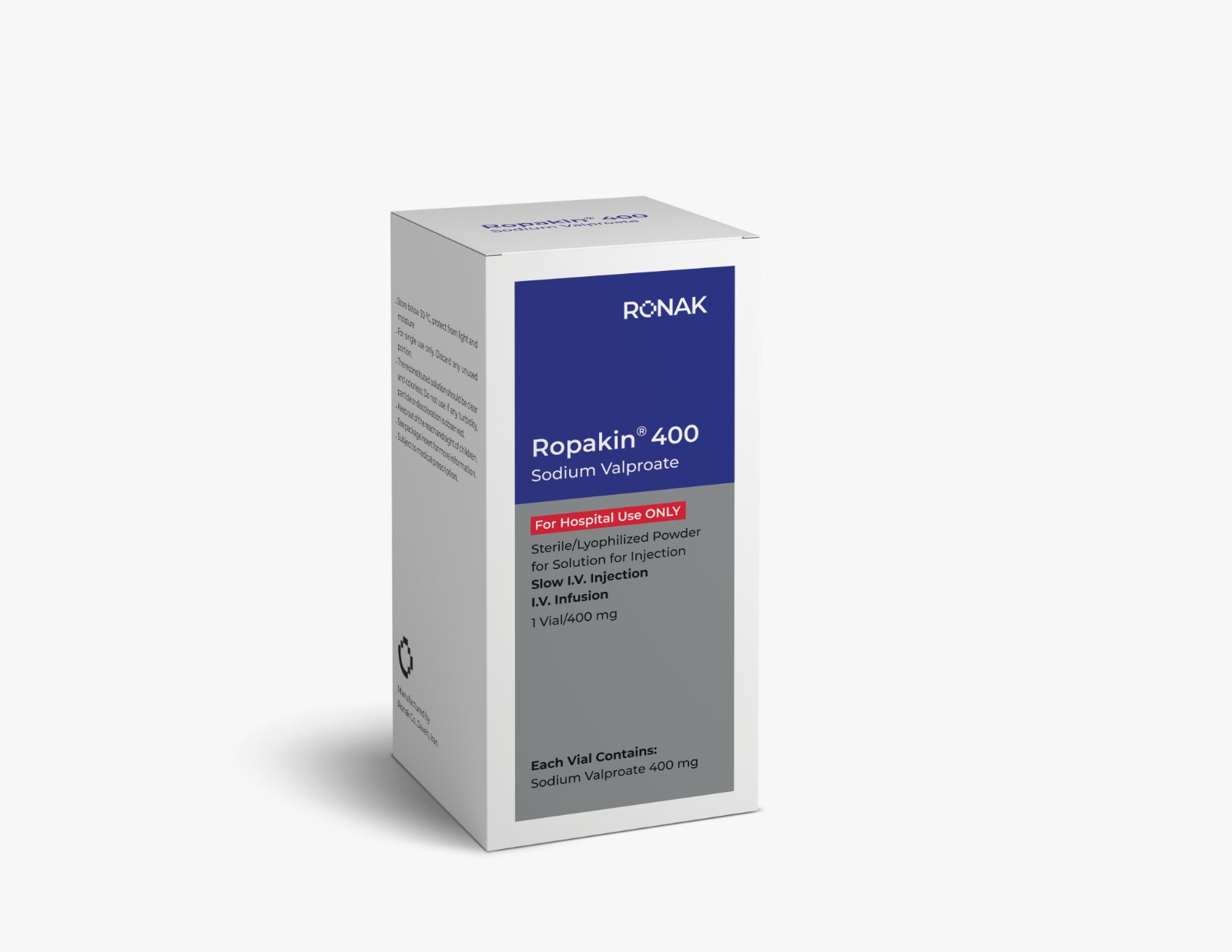
Generic Name: Sodium Valproate
Dosage Form: Lyophilized powder containing 400 mg sodium valproate for preparation of injectable solution
Pharmacologic Class: Anticonvulsant
Indications: This medicine is used for the control of seizures and treatment-resistant migraine.
Ropakin®
Ropakin® (Sodium Valproate) is a medication acting on the nervous system that works by enhancing the activity of GABA (an inhibitory neurotransmitter), blocking voltage-dependent sodium channels, and inhibiting rapid neuronal firing, thereby reducing the excitability of nerve cells.
Indications of Ropakin®
- Various types of seizures (partial and generalized)
- Status epilepticus
- Treatment-resistant migraine
Dosage Form of Ropakin®
Vial containing 400 mg lyophilized powder for preparation of injectable solution.
Preparation of Ropakin® Solution
Add 4 mL of sterile water for injection to the contents of the vial until the powder is completely dissolved.
The solution should be prepared immediately before administration.
Each vial of Ropakin® is for single use only; any remaining solution should be discarded after use.
Compatible diluents:
- Sodium Chloride 0.9%
- Dextrose 5%
- Ringer’s Lactate
Dosage and Administration of Ropakin®
This drug should be administered only by slow intravenous injection or intravenous infusion.
In most cases, Ropakin® may be given as an intravenous infusion over 60 minutes at a rate not exceeding 20 mg per minute, after dilution with an appropriate solvent.
Monitoring Parameters During Ropakin® Use
Before and during treatment, your physician may order periodic evaluations including:
- Complete blood count (CBC)
- Bone density
- Coagulation tests
- Plasma valproate levels
- Liver function tests
- Kidney function tests
- Blood glucose levels
- Plasma electrolytes (sodium and potassium)
- Urinalysis (for glucose and electrolytes)
- Symptoms of pancreatitis
- Signs of DRESS syndrome (rash, redness, blisters, etc.)
- Signs of polycystic ovary syndrome (PCOS)
- Level of alertness and mental or motor performance
Contraindications of Ropakin®
- Hypersensitivity to valproic acid or its derivatives, or to any excipient in the formulation
- Severe hepatic impairment
- Urea cycle disorders
- Suspected POLG-related disorder in children under two years of age
- Known mitochondrial disorders caused by mutations in mitochondrial DNA polymerase γ (POLG)
- Pregnancy, unless no suitable alternative
- Women of childbearing potential, unless the requirements of the Pregnancy Prevention Program are fulfilled
- Porphyria
Warnings and Precautions
- Sodium valproate may cause drowsiness; if this occurs, avoid activities requiring mental alertness such as driving or operating machinery.
- Injectable sodium valproate is not recommended for children under 2 years of age.
- Report immediately to your physician if symptoms of liver dysfunction occur (dark urine, fatigue, loss of appetite, stomach discomfort, pale stools, facial swelling, vomiting, or yellowing of skin/eyes).
- Report signs of pancreatic problems (abdominal pain, vomiting, loss of appetite).
- Report signs of increased ammonia (confusion, drowsiness, lethargy, cognitive disturbances).
- Report signs of low platelets (bruising, bleeding, difficulty in blood clotting).
- Report symptoms of urea cycle disorder (irritability, fatigue, vomiting, imbalance).
- Seek immediate medical attention for allergic or hypersensitivity reactions (rash, swelling, blistering, skin peeling, eye redness, or ulcers in the mouth, throat, nose, or eyes).
- Inform your doctor if you have a history of bariatric (weight-loss) surgery.
- Always inform your doctor of all other medications or supplements you are taking to prevent drug interactions.
- Elderly patients are more sensitive to dehydration and drowsiness; use with caution in this group.
Use of Ropakin® During Pregnancy and Lactation
- Consult your doctor before using sodium valproate during pregnancy or breastfeeding.
- Use of sodium valproate during pregnancy may cause neural tube defects and other congenital malformations in the fetus.
- Women of childbearing potential must use reliable contraception during therapy.
- Estrogen-containing contraceptives (such as LD, Yaz, Rokin, etc.) may lower valproate blood levels and increase seizure risk.
Possible Side Effects of Ropakin®
Like all medicines, this drug may cause unwanted side effects, although not everyone experiences them. Possible adverse reactions include:
- Headache, weakness, fever
- Nausea, vomiting, abdominal pain, diarrhea, loss of appetite, indigestion, constipation
- Tremor, dizziness, blurred or double vision, nystagmus
- Loss of balance, emotional instability, confusion, memory issues
- Flu-like symptoms, respiratory infections, runny nose
- Weight gain or loss
- Hair loss
- Fatigue, drowsiness, weakness, dizziness
- Sleep disturbances
Drug Interactions
Consult your doctor or pharmacist before taking sodium valproate with other medications or supplements.
Packaging
Each pack contains 1 vial.
Storage Conditions
- Keep out of sight and reach of children.
- Store below 25°C, away from light and moisture.
- Do not use after the expiry date indicated on the packaging.
- Keep in the original package.
References
-
Valproate (valproic acid): Drug information, UpToDate 2025
-
Valproate (valproic acid) FDA Label 2025
Ropakin®
Generic Name: Sodium Valproate
Dosage Form: Lyophilized powder containing 400 mg sodium valproate for preparation of injectable solution
Pharmacologic Class: Anticonvulsant
Indications: This medicine is used for the control of seizures and treatment-resistant migraine.
Ropakin®
Ropakin® (Sodium Valproate) is a medication acting on the nervous system that works by enhancing the activity of GABA (an inhibitory neurotransmitter), blocking voltage-dependent sodium channels, and inhibiting rapid neuronal firing, thereby reducing the excitability of nerve cells.
Indications of Ropakin®
- Various types of seizures (partial and generalized)
- Status epilepticus
- Treatment-resistant migraine
Dosage Form of Ropakin®
Vial containing 400 mg lyophilized powder for preparation of injectable solution.
Preparation of Ropakin® Solution
Add 4 mL of sterile water for injection to the contents of the vial until the powder is completely dissolved.
The solution should be prepared immediately before administration.
Each vial of Ropakin® is for single use only; any remaining solution should be discarded after use.
Compatible diluents:
- Sodium Chloride 0.9%
- Dextrose 5%
- Ringer’s Lactate
Dosage and Administration of Ropakin®
This drug should be administered only by slow intravenous injection or intravenous infusion.
In most cases, Ropakin® may be given as an intravenous infusion over 60 minutes at a rate not exceeding 20 mg per minute, after dilution with an appropriate solvent.
Monitoring Parameters During Ropakin® Use
Before and during treatment, your physician may order periodic evaluations including:
- Complete blood count (CBC)
- Bone density
- Coagulation tests
- Plasma valproate levels
- Liver function tests
- Kidney function tests
- Blood glucose levels
- Plasma electrolytes (sodium and potassium)
- Urinalysis (for glucose and electrolytes)
- Symptoms of pancreatitis
- Signs of DRESS syndrome (rash, redness, blisters, etc.)
- Signs of polycystic ovary syndrome (PCOS)
- Level of alertness and mental or motor performance
Contraindications of Ropakin®
- Hypersensitivity to valproic acid or its derivatives, or to any excipient in the formulation
- Severe hepatic impairment
- Urea cycle disorders
- Suspected POLG-related disorder in children under two years of age
- Known mitochondrial disorders caused by mutations in mitochondrial DNA polymerase γ (POLG)
- Pregnancy, unless no suitable alternative
- Women of childbearing potential, unless the requirements of the Pregnancy Prevention Program are fulfilled
- Porphyria
Warnings and Precautions
- Sodium valproate may cause drowsiness; if this occurs, avoid activities requiring mental alertness such as driving or operating machinery.
- Injectable sodium valproate is not recommended for children under 2 years of age.
- Report immediately to your physician if symptoms of liver dysfunction occur (dark urine, fatigue, loss of appetite, stomach discomfort, pale stools, facial swelling, vomiting, or yellowing of skin/eyes).
- Report signs of pancreatic problems (abdominal pain, vomiting, loss of appetite).
- Report signs of increased ammonia (confusion, drowsiness, lethargy, cognitive disturbances).
- Report signs of low platelets (bruising, bleeding, difficulty in blood clotting).
- Report symptoms of urea cycle disorder (irritability, fatigue, vomiting, imbalance).
- Seek immediate medical attention for allergic or hypersensitivity reactions (rash, swelling, blistering, skin peeling, eye redness, or ulcers in the mouth, throat, nose, or eyes).
- Inform your doctor if you have a history of bariatric (weight-loss) surgery.
- Always inform your doctor of all other medications or supplements you are taking to prevent drug interactions.
- Elderly patients are more sensitive to dehydration and drowsiness; use with caution in this group.
Use of Ropakin® During Pregnancy and Lactation
- Consult your doctor before using sodium valproate during pregnancy or breastfeeding.
- Use of sodium valproate during pregnancy may cause neural tube defects and other congenital malformations in the fetus.
- Women of childbearing potential must use reliable contraception during therapy.
- Estrogen-containing contraceptives (such as LD, Yaz, Rokin, etc.) may lower valproate blood levels and increase seizure risk.
Possible Side Effects of Ropakin®
Like all medicines, this drug may cause unwanted side effects, although not everyone experiences them. Possible adverse reactions include:
- Headache, weakness, fever
- Nausea, vomiting, abdominal pain, diarrhea, loss of appetite, indigestion, constipation
- Tremor, dizziness, blurred or double vision, nystagmus
- Loss of balance, emotional instability, confusion, memory issues
- Flu-like symptoms, respiratory infections, runny nose
- Weight gain or loss
- Hair loss
- Fatigue, drowsiness, weakness, dizziness
- Sleep disturbances
Drug Interactions
Consult your doctor or pharmacist before taking sodium valproate with other medications or supplements.
Packaging
Each pack contains 1 vial.
Storage Conditions
- Keep out of sight and reach of children.
- Store below 25°C, away from light and moisture.
- Do not use after the expiry date indicated on the packaging.
- Keep in the original package.
References
-
Valproate (valproic acid): Drug information, UpToDate 2025
-
Valproate (valproic acid) FDA Label 2025