




Brivakin®
Brivakin®
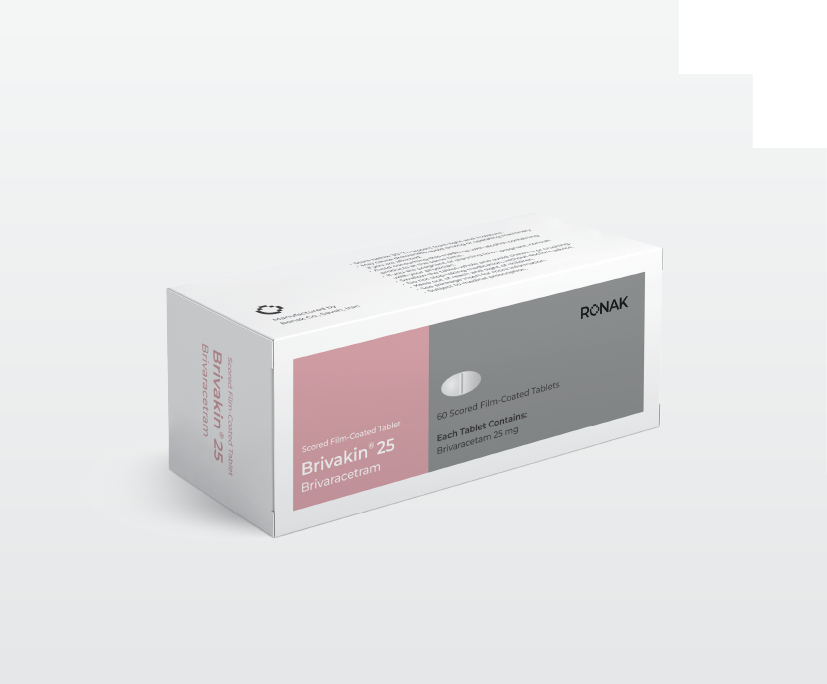
Generic Name: Brivaracetam
Dosage Form: Film-coated scored tablets 25 mg, 50 mg, and 100 mg
Pharmacologic Class: Antiepileptic
Indications: Control and treatment of focal (partial) epilepsy
Brivakin®
Brivakin® (Brivaracetam) is an antiepileptic medication that works by binding to synaptic vesicle protein 2A (SV2A) receptors, inhibiting neurotransmitter release, and thereby preventing seizures.
It is sometimes used alone, but more often as an adjunctive therapy with other antiepileptic drugs to manage focal seizures, especially in treatment-resistant cases.
Indications
Control and treatment of focal (partial) epilepsy in patients older than one month.
Dosage Forms
Film-coated scored oral tablets of 25 mg, 50 mg, and 100 mg.
Dosage and Administration
Take Brivakin® exactly as prescribed by your physician. If you are unsure about the correct way to take it, consult your doctor or pharmacist.
Do not change the dose or duration of treatment without medical advice.
You can take Brivakin® with or without food.
Swallow the tablet whole with water; do not chew it.
Missed Dose
Take the missed dose as soon as you remember.
Overdose
An overdose may cause dizziness, loss of balance, fatigue, nausea, double vision, anxiety, or a slow heartbeat.
If overdose occurs, seek medical attention immediately.
Monitoring During Treatment
Your doctor may periodically check:
- Blood cell counts
- Kidney function (creatinine and urea levels)
- Liver enzyme levels
- Behavioral changes (aggression, anger, depression, anxiety, suicidal thoughts, etc.)
Contraindications
- Hypersensitivity to Brivakin® or any of its ingredients (symptoms may include skin rash, difficulty breathing or swallowing, swelling of lips, face, throat, or tongue)
Warnings and Precautions
- Brivaracetam may cause balance or coordination problems, fatigue, or drowsiness—notify your doctor if these occur.
- Avoid driving or operating heavy machinery until you know how the medicine affects you.
- Report any breathing difficulties, facial swelling, or skin rashes to your doctor.
- Brivaracetam may cause psychosis, paranoia, hallucinations, or behavioral changes—contact your doctor immediately if these occur.
- Suicidal thoughts or behavior may increase in some patients—seek medical help right away if this happens.
- Inform your doctor if you have liver or kidney problems.
- Do not stop Brivaracetam suddenly, as this may increase seizure risk.
Pregnancy and Lactation
Brivaracetam crosses the placenta. Limited data exist on its use during pregnancy—consult your doctor before taking it.
It is also excreted in breast milk—consult your doctor before use while breastfeeding.
Side Effects
- Dizziness, drowsiness, fatigue, abnormal behavior
- Constipation, taste disturbance, nausea, vomiting, decreased appetite
- Changes in blood cell counts
- Coordination and walking difficulties, balance issues
- Weakness, tiredness, euphoria, irritability, lethargy, suicidal thoughts
- Nystagmus (involuntary rhythmic eye movements)
Drug Interactions
Consult your doctor or pharmacist before taking Brivakin® with any other drugs or supplements.
Packaging
Each Brivakin® package contains six blisters, providing a total of 60 scored tablets.
Storage Condition:
- Store below 25°C and protect from freezing.
- Keep away from light and moisture.
- Use only until the expiry date printed on the package.
- Keep out of reach of children.
References:
- FDA – Drug Label Information
- EMA – Product Information (Briviact)
- Brivaracetam: Drug information, UpToDate 2025
test
Brivakin®
Generic Name: Brivaracetam
Dosage Form: Film-coated scored tablets 25 mg, 50 mg, and 100 mg
Pharmacologic Class: Antiepileptic
Indications: Control and treatment of focal (partial) epilepsy
Brivakin®
Brivakin® (Brivaracetam) is an antiepileptic medication that works by binding to synaptic vesicle protein 2A (SV2A) receptors, inhibiting neurotransmitter release, and thereby preventing seizures.
It is sometimes used alone, but more often as an adjunctive therapy with other antiepileptic drugs to manage focal seizures, especially in treatment-resistant cases.
Indications
Control and treatment of focal (partial) epilepsy in patients older than one month.
Dosage Forms
Film-coated scored oral tablets of 25 mg, 50 mg, and 100 mg.
Dosage and Administration
Take Brivakin® exactly as prescribed by your physician. If you are unsure about the correct way to take it, consult your doctor or pharmacist.
Do not change the dose or duration of treatment without medical advice.
You can take Brivakin® with or without food.
Swallow the tablet whole with water; do not chew it.
Missed Dose
Take the missed dose as soon as you remember.
Overdose
An overdose may cause dizziness, loss of balance, fatigue, nausea, double vision, anxiety, or a slow heartbeat.
If overdose occurs, seek medical attention immediately.
Monitoring During Treatment
Your doctor may periodically check:
- Blood cell counts
- Kidney function (creatinine and urea levels)
- Liver enzyme levels
- Behavioral changes (aggression, anger, depression, anxiety, suicidal thoughts, etc.)
Contraindications
- Hypersensitivity to Brivakin® or any of its ingredients (symptoms may include skin rash, difficulty breathing or swallowing, swelling of lips, face, throat, or tongue)
Warnings and Precautions
- Brivaracetam may cause balance or coordination problems, fatigue, or drowsiness—notify your doctor if these occur.
- Avoid driving or operating heavy machinery until you know how the medicine affects you.
- Report any breathing difficulties, facial swelling, or skin rashes to your doctor.
- Brivaracetam may cause psychosis, paranoia, hallucinations, or behavioral changes—contact your doctor immediately if these occur.
- Suicidal thoughts or behavior may increase in some patients—seek medical help right away if this happens.
- Inform your doctor if you have liver or kidney problems.
- Do not stop Brivaracetam suddenly, as this may increase seizure risk.
Pregnancy and Lactation
Brivaracetam crosses the placenta. Limited data exist on its use during pregnancy—consult your doctor before taking it.
It is also excreted in breast milk—consult your doctor before use while breastfeeding.
Side Effects
- Dizziness, drowsiness, fatigue, abnormal behavior
- Constipation, taste disturbance, nausea, vomiting, decreased appetite
- Changes in blood cell counts
- Coordination and walking difficulties, balance issues
- Weakness, tiredness, euphoria, irritability, lethargy, suicidal thoughts
- Nystagmus (involuntary rhythmic eye movements)
Drug Interactions
Consult your doctor or pharmacist before taking Brivakin® with any other drugs or supplements.
Packaging
Each Brivakin® package contains six blisters, providing a total of 60 scored tablets.
Storage Condition:
- Store below 25°C and protect from freezing.
- Keep away from light and moisture.
- Use only until the expiry date printed on the package.
- Keep out of reach of children.
References:
- FDA – Drug Label Information
- EMA – Product Information (Briviact)
- Brivaracetam: Drug information, UpToDate 2025