




Citalopram®
Citalopram
Generic name: Citalopram
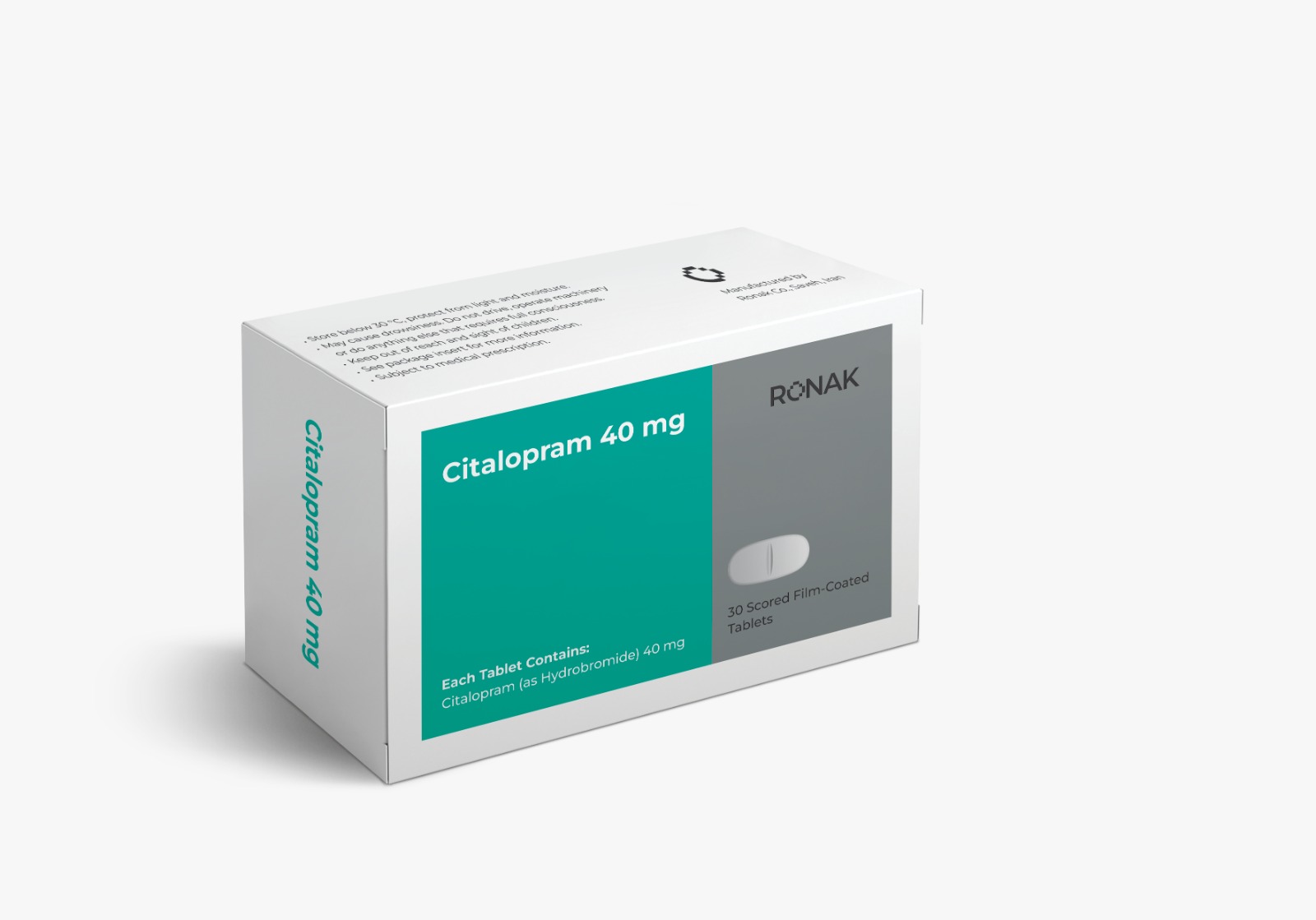
Dosage form: Film-coated scored tablets, 40 mg
Drug class: Antidepressant
Indication: Used in the treatment of mood disorders.
Citalopram
Citalopram is a selective serotonin reuptake inhibitor (SSRI) that increases serotonin levels in the brain without affecting dopamine or norepinephrine. It is used to treat anxiety disorders and depression.
Indications for Citalopram
- Major Depressive Disorder (MDD)
- Generalized Anxiety Disorder (GAD)
- Panic disorder
- Post-Traumatic Stress Disorder (PTSD)
- Social Anxiety Disorder (SAD)
- Obsessive-Compulsive Disorder (OCD)
- Premenstrual Dysphoric Disorder (PMDD)
- Binge-eating disorder
- Aggressive or agitated behavior associated with dementia
- Premature Ejaculation (PE)
- Menopausal symptoms, including hot flashes and night sweats
Dosage Forms of Citalopram
- Oral film-coated scored tablets: 40 mg
How to Use and Dosage of Citalopram
- Take exactly as prescribed by your physician, with or without food.
- Do not stop taking the medication abruptly, even if you feel better, without consulting your doctor.
Missed Dose of Citalopram
If you miss a dose, take it as soon as you remember.
If it is near the time of your next dose, skip the missed dose.
Do not take two doses at the same time or take an extra dose.
Overdose of Citalopram
If you take more than the recommended dose, notify your doctor immediately or go to a medical center.
Monitoring Requirements During Treatment with Citalopram
Before starting and during treatment, your doctor may monitor:
- Kidney and liver function
- CBC
- Electrolytes: sodium, magnesium, potassium
- Electrocardiogram (ECG)
- Progression of disease symptoms
- Unusual behavior changes (e.g., anxiety, restlessness, irritability)
- Suicidal thoughts
Contraindications for Citalopram
- Hypersensitivity to citalopram or any component of the formulation
- Concomitant use with monoamine oxidase inhibitors (MAOIs) such as moclobemide, selegiline, or tranylcypromine, or within 14 days before or after MAOI therapy
- Concomitant use with linezolid, intravenous methylene blue, pimozide, or dapoxetine
- Prolonged QT interval on ECG
Warnings and Precautions for Citalopram
- If you experience symptoms such as fever, abnormal heart rate, confusion, excessive sweating, irritability, tremor, muscle stiffness, or flushing, consult your doctor immediately.
- Citalopram may cause drowsiness or dizziness; avoid driving or operating machinery if affected.
- If you notice vision changes, eye pain, or swelling/redness around the eyes, consult your doctor.
- Concomitant use of citalopram with antiplatelet drugs, anticoagulants, or NSAIDs may increase bleeding risk. Inform your physician if you use these medications.
- Long-term use in older adults may increase the risk of bone fractures; exercise extra caution.
- Citalopram may lower blood sodium, especially in elderly. Symptoms may include headache, memory/concentration problems, confusion, and weakness; consult your doctor if these occur.
- Use cautiously in patients with liver or kidney impairment, or with a history of seizures. Inform your physician if any apply.
Use of Citalopram During Pregnancy and Breastfeeding
- Consult your doctor or pharmacist before using citalopram during pregnancy or breastfeeding.
- Discuss use during the third trimester with your healthcare provider.
Side Effects of Citalopram
Possible side effects include (not everyone experiences these):
- Headache
- Dizziness, fatigue, or weakness
- Drowsiness or insomnia
- Gastrointestinal disturbances, such as nausea
- Sexual dysfunction
- Weight changes
- Excessive sweating
Drug Interactions with Citalopram
Consult your doctor or pharmacist before using citalopram with other medications or supplements.
Packaging of Citalopram
- Each package contains 30 tablets (3 blister packs of 10 tablets each).
Storage Conditions for Citalopram
- Keep out of reach of children.
- Store below 30°C, away from light and moisture.
- Use before the end of the month indicated on the package. Do not use expired medication.
- Keep in the original packaging until use.
References
- Citalopram: Drug Information, UpToDate 2025
- electronic Medicines Compendium (eMC)
Citalopram
Generic name: Citalopram
Dosage form: Film-coated scored tablets, 40 mg
Drug class: Antidepressant
Indication: Used in the treatment of mood disorders.
Citalopram
Citalopram is a selective serotonin reuptake inhibitor (SSRI) that increases serotonin levels in the brain without affecting dopamine or norepinephrine. It is used to treat anxiety disorders and depression.
Indications for Citalopram
- Major Depressive Disorder (MDD)
- Generalized Anxiety Disorder (GAD)
- Panic disorder
- Post-Traumatic Stress Disorder (PTSD)
- Social Anxiety Disorder (SAD)
- Obsessive-Compulsive Disorder (OCD)
- Premenstrual Dysphoric Disorder (PMDD)
- Binge-eating disorder
- Aggressive or agitated behavior associated with dementia
- Premature Ejaculation (PE)
- Menopausal symptoms, including hot flashes and night sweats
Dosage Forms of Citalopram
- Oral film-coated scored tablets: 40 mg
How to Use and Dosage of Citalopram
- Take exactly as prescribed by your physician, with or without food.
- Do not stop taking the medication abruptly, even if you feel better, without consulting your doctor.
Missed Dose of Citalopram
If you miss a dose, take it as soon as you remember.
If it is near the time of your next dose, skip the missed dose.
Do not take two doses at the same time or take an extra dose.
Overdose of Citalopram
If you take more than the recommended dose, notify your doctor immediately or go to a medical center.
Monitoring Requirements During Treatment with Citalopram
Before starting and during treatment, your doctor may monitor:
- Kidney and liver function
- CBC
- Electrolytes: sodium, magnesium, potassium
- Electrocardiogram (ECG)
- Progression of disease symptoms
- Unusual behavior changes (e.g., anxiety, restlessness, irritability)
- Suicidal thoughts
Contraindications for Citalopram
- Hypersensitivity to citalopram or any component of the formulation
- Concomitant use with monoamine oxidase inhibitors (MAOIs) such as moclobemide, selegiline, or tranylcypromine, or within 14 days before or after MAOI therapy
- Concomitant use with linezolid, intravenous methylene blue, pimozide, or dapoxetine
- Prolonged QT interval on ECG
Warnings and Precautions for Citalopram
- If you experience symptoms such as fever, abnormal heart rate, confusion, excessive sweating, irritability, tremor, muscle stiffness, or flushing, consult your doctor immediately.
- Citalopram may cause drowsiness or dizziness; avoid driving or operating machinery if affected.
- If you notice vision changes, eye pain, or swelling/redness around the eyes, consult your doctor.
- Concomitant use of citalopram with antiplatelet drugs, anticoagulants, or NSAIDs may increase bleeding risk. Inform your physician if you use these medications.
- Long-term use in older adults may increase the risk of bone fractures; exercise extra caution.
- Citalopram may lower blood sodium, especially in elderly. Symptoms may include headache, memory/concentration problems, confusion, and weakness; consult your doctor if these occur.
- Use cautiously in patients with liver or kidney impairment, or with a history of seizures. Inform your physician if any apply.
Use of Citalopram During Pregnancy and Breastfeeding
- Consult your doctor or pharmacist before using citalopram during pregnancy or breastfeeding.
- Discuss use during the third trimester with your healthcare provider.
Side Effects of Citalopram
Possible side effects include (not everyone experiences these):
- Headache
- Dizziness, fatigue, or weakness
- Drowsiness or insomnia
- Gastrointestinal disturbances, such as nausea
- Sexual dysfunction
- Weight changes
- Excessive sweating
Drug Interactions with Citalopram
Consult your doctor or pharmacist before using citalopram with other medications or supplements.
Packaging of Citalopram
- Each package contains 30 tablets (3 blister packs of 10 tablets each).
Storage Conditions for Citalopram
- Keep out of reach of children.
- Store below 30°C, away from light and moisture.
- Use before the end of the month indicated on the package. Do not use expired medication.
- Keep in the original packaging until use.
References
- Citalopram: Drug Information, UpToDate 2025
- electronic Medicines Compendium (eMC)