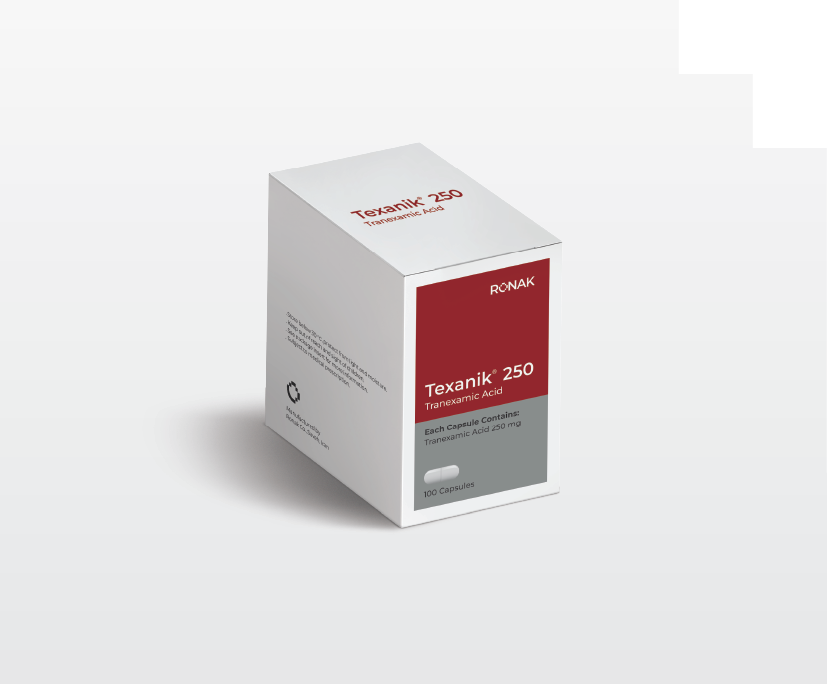


®تِكسانِك
الاسم العلمي: حمض الترانيكساميك
الشكل الصيدلاني: كبسولات 250 ملغ
الفئة الدوائية: مضادٌّ لانحلال الفيبرين (Antifibrinolytic)
الاستطبابات: الوقاية من النزف ومعالجته.
تِكسانِك®
تِكسانِك® (حمض الترانيكساميك) دواء مضاد لانحلال الفيبرين؛ يثبّط تكسّر الفيبرين ويَحمي الخثرة، مما يساعد على الوقاية من النزف ومعالجته.
دواعي الاستعمال
-
خفض غزارة الطمث وكل نزف رحمي غير طبيعي
-
الوقاية والمعالجة من النزف في إجراءات طب الأسنان لدى مرضى اضطرابات النزف (مثل الناعور) أو متناولي المضادات التخثّر
-
خفض نزف ما بعد الولادة
-
التقليل أو المعالجة لأنواع مختلفة من النزف بما فيها الهضمي وداخل القِحف والنزف الرضي
-
الوقاية من الوذمة الوعائية الوراثية
-
الوقاية من النزف بعد جراحات مختلفة بما فيها العظمية والقلبية
الشكل الدوائي
كبسولات فموية 250 ملغ.
طريقة الاستعمال والجرعة
استعمل الدواء تمامًا كما وصفه الطبيب. لا تعدّل الجرعة أو مدة العلاج دون استشارة.
يمكن تناول تِكسانِك® مع الطعام أو بدونه.
الجرعة المنسية
عند نسيان جرعة خذها عند التذكّر، وإن حان موعد الجرعة التالية فتجاوز الجرعة المنسية. لا تتناول جرعتين معًا.
الجرعة المفرطة
عند تناول كمية زائدة اتصل بالطبيب أو راجع أقرب مركز صحي فورًا.
المتابعة أثناء العلاج
-
الرؤية (للعلاجات التي تتجاوز 3 أشهر)
-
علامات فرط التحسّس، والاختلاجات، والاختطار الخثاري
-
تخطيط كهربائية الدماغ EEG لمن لديهم سوابق اختلاجات
-
TEG/ROTEM في نزف الرضوح عند اللزوم
موانع الاستعمال
-
فرط تحسّس لحمض الترانيكساميك أو لأي من المكوّنات
-
خثار أو صمّة فعّالة (مثل خثار وريدي عميق، خثار دماغي، صمّة رئوية)
-
سوابق أو خطورة خثار/صمّة بما فيها انسداد أوردة/شرايين الشبكية
-
استعمال موانع الحمل الهرمونية المركّبة
-
بيلة دموية
التحذيرات والاحتياطات
-
قد يسبّب دوخة أو يُضعف القدرة الجسدية/الذهنية؛ تجنّب القيادة وتشغيل الآلات حتى تتبيّن تأثيره عليك.
-
في حالة DIC، يُستعمل بحذر وتحت مراقبة لصيقة.
-
قصور الكلى يستلزم تعديل الجرعة.
-
يُستخدم بحذر أكبر في النزف تحت العنكبوتية أو أمراض قلبية/وعائية دماغية غير معالجة.
-
أبلغ طبيبك فورًا عند حدوث تغيّر في الرؤية أو ألم/حرقة بالعين.
-
اطلب العناية العاجلة عند تفاعل تحسّسي شديد منتشر (احمرار، تورّم، فقاعات/تقشّر الجلد، احمرار العينين أو تقرّحات الفم/الحلق/الأنف/العين).
-
تجنّب موانع الحمل الهرمونية أثناء استخدام الدواء.
الحمل والإرضاع
يعبر المشيمة ويُفرز في حليب الأم؛ يُتخذ القرار باستعماله أثناء الحمل أو الإرضاع بعد موازنة الفوائد والمخاطر مع الطبيب.
الأعراض الجانبية
قد تظهر: ألم بطني، صداع، ألم ظهر/عضلات/مفاصل، احتقان أنفي.
التداخلات الدوائية
استشر طبيبك/صيدليك حول جميع الأدوية والمكمّلات المرافقة.
التعبئة
كل عبوة تحتوي 100 كبسولة (10 شرائط × 10 كبسولات).
التخزين
-
يحفظ بعيدًا عن متناول ونظر الأطفال.
-
يحفظ عند 25°م أو أقل، بعيدًا عن الضوء والرطوبة.
-
يُستعمل حتى نهاية الشهر المدوّن في تاريخ الصلاحية؛ لا تستعمل الأدوية المنتهية الصلاحية.
-
يُحفظ في العبوة الأصلية.
Texanik® (tranexamic acid) is an antifibrinolytic agent that prevents and treats bleeding by inhibiting the breakdown of fibrin (a key clotting protein in blood) and stabilizing formed clots.
Texanik® (tranexamic acid) is an antifibrinolytic agent that prevents and treats bleeding by inhibiting the breakdown of fibrin (a key clotting protein in blood) and stabilizing formed clots.
- Reduction of heavy menstrual bleeding and any type of abnormal uterine bleeding
- Prevention and treatment of bleeding during dental procedures in patients with bleeding disorders, including hemophilia or those receiving anticoagulant therapy
- Reduction of postpartum hemorrhage
- Management or reduction of various types of bleeding, including gastrointestinal bleeding, intracranial hemorrhage, or trauma-related bleeding
- Prevention of hereditary angioedema
- Prevention of bleeding following surgical procedures, including orthopedic and cardiac surgeries
Oral capsules, 250 mg
Use the medication exactly as prescribed by your physician. If you are unsure about the correct method of administration, consult your physician or pharmacist.
For optimal therapeutic outcomes, do not alter the dose or duration of treatment without medical advice.
Texanik® may be taken with or without food.
If a dose is missed, take it as soon as you remember. If it is almost time for the next dose, skip the missed dose. Do not take a double or extra dose to compensate.
In case of overdose, immediately contact your physician or seek medical attention.
- Visual function in treatments longer than 3 months
- Signs of hypersensitivity reactions, seizures, and thrombotic events
- EEG in patients with a history of seizures
- Thromboelastography (TEG) or thromboelastometry (ROTEM) in patients with trauma-induced bleeding
Hypersensitivity to tranexamic acid or any of the excipients in the formulation
Patients with active thromboembolic disease such as deep vein thrombosis (DVT), cerebral thrombosis, or pulmonary embolism
Patients with a history of or risk factors for thrombosis or thromboembolism, including retinal vein or artery occlusion
Patients receiving combined hormonal contraceptives
Hematuria (blood in urine)
Tranexamic acid may cause dizziness and may impair physical or mental performance. Therefore, patients should avoid activities requiring high alertness, such as driving or operating heavy machinery, while taking this medication.
In patients with disseminated intravascular coagulation (DIC), tranexamic acid should be administered with caution and under close and continuous monitoring. Patients with a history of DIC should inform their physician.
Dose adjustment is required in patients with renal impairment. Patients with a history of kidney disease should inform their physician before starting treatment.
Tranexamic acid should be used with greater caution in patients with subarachnoid hemorrhage or untreated cardiovascular or cerebrovascular disease. Patients with a history of these conditions should inform their physician.
Any changes in vision, eye pain, or severe eye irritation during treatment should be reported to a physician immediately.
In case of severe hypersensitivity reactions such as erythema, swelling, blistering or skin detachment, or lesions in the eyes, mouth, throat, nose, or genital area, immediate medical attention should be sought.
Concurrent use of hormonal contraceptive methods should be avoided during tranexamic acid therapy.
Tranexamic acid crosses the placenta, and its concentration in the umbilical cord blood is similar to maternal plasma levels.
Tranexamic acid is excreted in breast milk. The decision to use this medication during lactation should be made after carefully weighing the benefits and risks.
Like all medicines, tranexamic acid may cause adverse effects, although not everybody gets them. The more common adverse effects include:
- Abdominal pain
- Headache
- Back pain, muscle or joint pain
- Nasal congestion
Consult your physician or pharmacist regarding the use of tranexamic acid concomitantly with other medications or supplements.
Each package contains 100 capsules (10 blisters of 10 capsules).
- Keep out of the sight and reach of children
- Store at 25°C, protected from light and moisture
- Do not use after the expiry date stated on the packaging
- Store in the original packaging
- Tranexamic acid: Drug information, UpToDate 2025
- https://www.medicines.org.uk/emc/product/14622/smpc