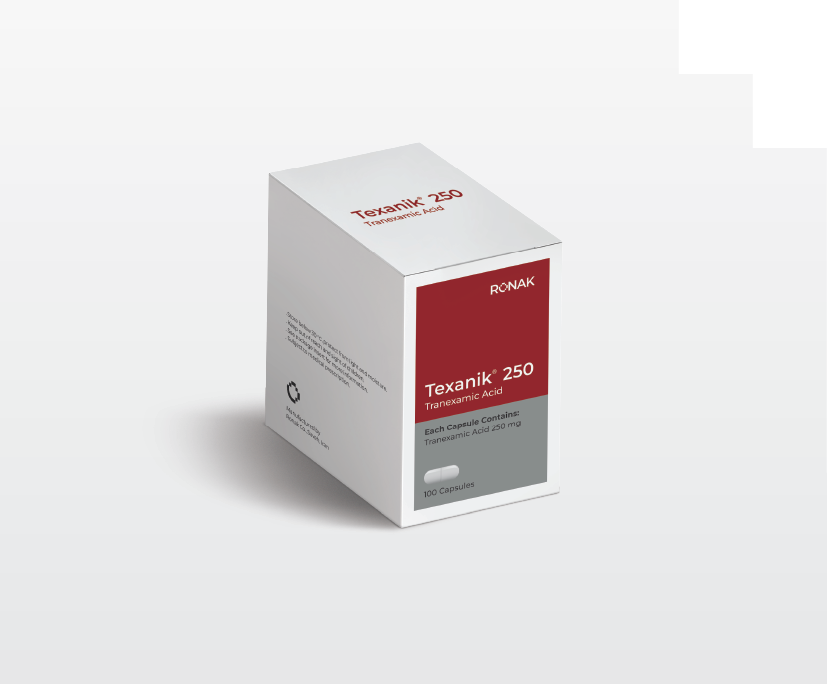


Texanik®
Generic name: Tranexamic acid
Dosage form: 250 mg capsule
Pharmacological class: Antifibrinolytic agent
Indications:
This medication is used for the prevention and treatment of bleeding.
Texanik® (tranexamic acid) is an antifibrinolytic agent that prevents and treats bleeding by inhibiting the breakdown of fibrin (a key clotting protein in blood) and stabilizing formed clots.
Texanik® (tranexamic acid) is an antifibrinolytic agent that prevents and treats bleeding by inhibiting the breakdown of fibrin (a key clotting protein in blood) and stabilizing formed clots.
- Reduction of heavy menstrual bleeding and any type of abnormal uterine bleeding
- Prevention and treatment of bleeding during dental procedures in patients with bleeding disorders, including hemophilia or those receiving anticoagulant therapy
- Reduction of postpartum hemorrhage
- Management or reduction of various types of bleeding, including gastrointestinal bleeding, intracranial hemorrhage, or trauma-related bleeding
- Prevention of hereditary angioedema
- Prevention of bleeding following surgical procedures, including orthopedic and cardiac surgeries
Oral capsules, 250 mg
Use the medication exactly as prescribed by your physician. If you are unsure about the correct method of administration, consult your physician or pharmacist.
For optimal therapeutic outcomes, do not alter the dose or duration of treatment without medical advice.
Texanik® may be taken with or without food.
If a dose is missed, take it as soon as you remember. If it is almost time for the next dose, skip the missed dose. Do not take a double or extra dose to compensate.
In case of overdose, immediately contact your physician or seek medical attention.
- Visual function in treatments longer than 3 months
- Signs of hypersensitivity reactions, seizures, and thrombotic events
- EEG in patients with a history of seizures
- Thromboelastography (TEG) or thromboelastometry (ROTEM) in patients with trauma-induced bleeding
Hypersensitivity to tranexamic acid or any of the excipients in the formulation
Patients with active thromboembolic disease such as deep vein thrombosis (DVT), cerebral thrombosis, or pulmonary embolism
Patients with a history of or risk factors for thrombosis or thromboembolism, including retinal vein or artery occlusion
Patients receiving combined hormonal contraceptives
Hematuria (blood in urine)
Tranexamic acid may cause dizziness and may impair physical or mental performance. Therefore, patients should avoid activities requiring high alertness, such as driving or operating heavy machinery, while taking this medication.
In patients with disseminated intravascular coagulation (DIC), tranexamic acid should be administered with caution and under close and continuous monitoring. Patients with a history of DIC should inform their physician.
Dose adjustment is required in patients with renal impairment. Patients with a history of kidney disease should inform their physician before starting treatment.
Tranexamic acid should be used with greater caution in patients with subarachnoid hemorrhage or untreated cardiovascular or cerebrovascular disease. Patients with a history of these conditions should inform their physician.
Any changes in vision, eye pain, or severe eye irritation during treatment should be reported to a physician immediately.
In case of severe hypersensitivity reactions such as erythema, swelling, blistering or skin detachment, or lesions in the eyes, mouth, throat, nose, or genital area, immediate medical attention should be sought.
Concurrent use of hormonal contraceptive methods should be avoided during tranexamic acid therapy.
Tranexamic acid crosses the placenta, and its concentration in the umbilical cord blood is similar to maternal plasma levels.
Tranexamic acid is excreted in breast milk. The decision to use this medication during lactation should be made after carefully weighing the benefits and risks.
Like all medicines, tranexamic acid may cause adverse effects, although not everybody gets them. The more common adverse effects include:
- Abdominal pain
- Headache
- Back pain, muscle or joint pain
- Nasal congestion
Consult your physician or pharmacist regarding the use of tranexamic acid concomitantly with other medications or supplements.
Each package contains 100 capsules (10 blisters of 10 capsules).
- Keep out of the sight and reach of children
- Store at 25°C, protected from light and moisture
- Do not use after the expiry date stated on the packaging
- Store in the original packaging
- Tranexamic acid: Drug information, UpToDate 2025
- https://www.medicines.org.uk/emc/product/14622/smpc