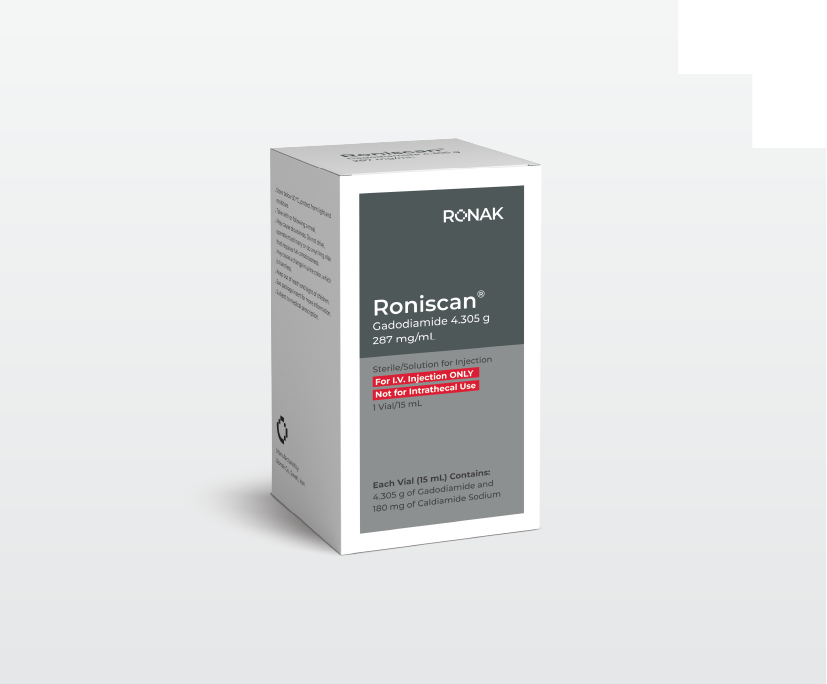





®رونيسكان
رونيسكان®
الاسم العلمي: غادوديأميد (Gadodiamide)
الشكل الصيدلاني: محلول للحقن يحتوي على 287 ملغ/مل من غادوديأميد
الفئة الدوائية: عامل تباين قائم على الغادولينيوم
دواعي الاستعمال: يُستخدم رونيسكان® في تصوير الرنين المغناطيسي للجهاز العصبي المركزي، والصدر (غير القلبي)، والبطن، والحوض، والحيّز خلف الصفاق لتحسين إظهار الآفات.
رونيسكان®
رونيسكان® (غادوديأميد) هو عامل تباين يُحدث، عند وضعه ضمن مجال مغناطيسي خارجي، تأثيرات مغناطيسية في النسيج المستهدف، مما يتيح الحصول على صور عالية الجودة.
دواعي استعمال رونيسكان®
-
تصوير الرنين المغناطيسي (MRI) للجهاز العصبي المركزي، والصدر (غير القلبي)، والبطن، والحوض، والحيّز خلف الصفاق
-
تصوير الأوعية بالرنين المغناطيسي (MRA)
-
تصوير الجهاز العضلي الهيكلي
الشكل الصيدلاني
-
قارورة تحتوي على 15 مل من محلول للحقن (287 ملغ/مل)
تحضير رونيسكان®
رونيسكان® محلول جاهز للاستخدام ولا يحتاج إلى تحضير.
طريقة الإعطاء والجرعة
-
للحقن الوريدي فقط: لا يُعطى داخل القراب (Intrathecal)؛ فقد يسبب أذى عصبيًا حسّيًا/حركيًا، اختلاجات أو غيبوبة.
-
المحلول عديم اللون إلى أصفر شاحب؛ افحصه قبل الاستخدام للتأكد من عدم وجود تغيّر لون أو جسيمات. لا تستخدمه إذا وُجدت جسيمات أو تغيّر لون.
-
يُستخدم المحلول فور سحبه إلى المحقنة؛ وتُتلف أي كمية متبقية.
-
يمكن (اختياريًا) إتباعه بـ 5 مل من كلوريد الصوديوم 0.9% لضمان إعطاء كامل الجرعة.
-
يجب إكمال التصوير خلال ساعة واحدة بعد الحقن.
-
بعد الإعطاء في تصوير الجهاز العضلي الهيكلي، تم غسل موقع الحقن بـ 40 مل من المحلول الملحي (NS).
المتابعة اللازمة أثناء استخدام رونيسكان®
-
مراقبة علامات فرط الحساسية أثناء الحقن وبعده بفترة قصيرة
-
تقييم وظيفة الكلى قبل إعطاء عامل التباين
-
متابعة قصيرة وطويلة الأمد لاحتمال حدوث التليّف الجهازي الكلوي المنشأ (NSF): حكة، تورّم، شدّ الجلد، تيبّس المفاصل، ألم عظام الحوض أو الأضلاع، ضعف عضلي
-
التحقق من حالة الحمل قبل الاستخدام
موانع الاستعمال
-
فرط الحساسية لغادوديأميد أو لأي من مكوّنات المستحضر
-
الفشل الكلوي الشديد الحاد أو المزمن (GFR أقل من 30 مل/دقيقة/1.73 م²)
-
حديثو الولادة حتى عمر 4 أسابيع (بسبب عدم اكتمال وظيفة الكلى)
التحذيرات والاحتياطات
-
لدى مرضى القصور الكلوي، والأمراض الالتهابية، والحوامل، والأطفال قد يبقى الغادولينيوم فترة أطول في الجسم؛ استخدم أقل كمية لازمة للتصوير.
-
قد تزيد عوامل التباين القائمة على الغادولينيوم خطر التليّف الجهازي الكلوي المنشأ (NSF)؛ لا تُستخدم إلا عند الضرورة وعندما لا يوفر الرنين دون تباين معلومات تشخيصية كافية.
-
يجب مراقبة المرضى عن كثب أثناء الحقن ولمدة عدة ساعات بعده، خاصة المصابين بحساسية دوائية أو ربو أو حالات تحسسية أخرى. أوقف الحقن وابدأ العلاج فورًا عند حدوث تفاعلات تحسسية شديدة (جلدية/تنفسية/قلبية وعائية).
-
يجب حساب تصفية الكرياتينين للمرضى المعرضين لتراجع وظيفة الكلى (مثل العمر >60، ارتفاع ضغط الدم، السكري) واتخاذ قرار الجرعة وفقًا لذلك.
الاستعمال أثناء الحمل والرضاعة
-
استشر الطبيب قبل الاستخدام أثناء الحمل أو الرضاعة.
-
قد يعبر غادوديأميد المشيمة؛ لا يُستخدم إلا إذا فاقت الفوائد المخاطر المحتملة على الجنين.
-
قد يُفرز غادوديأميد في حليب الأم؛ تُوازن القرارات بين فائدة الأم والمخاطر المحتملة على الرضيع.
الآثار الجانبية لرونيسكان®
قد تشمل (ليس لدى جميع المرضى):
-
صداع ودوار
-
ألم بطني، غثيان أو قيء
-
تفاعلات موضعية في موقع الحقن
-
ضيق نفس
التداخلات الدوائية
استشر الطبيب أو الصيدلي قبل استخدام رونيسكان® مع أدوية أو مكمّلات أخرى.
التعبئة
تحتوي كل عبوة على قارورة واحدة من رونيسكان®.
شروط التخزين
-
يُحفظ تحت 25°م مع الحماية من الضوء والرطوبة.
-
يُحمى من التجميد.
-
يُستخدم قبل تاريخ الانتهاء ولا يُستخدم المنتج منتهي الصلاحية.
-
يُحفظ بعيدًا عن متناول الأطفال.
-
يُحفظ في العبوة الأصلية حتى وقت الاستعمال.
المراجع
-
Gadodiamide: Drug Information, UpToDate 2025
-
Drugs.com – Gadodiamide
رونيسكان®
الاسم العلمي: غادوديأميد (Gadodiamide)
الشكل الصيدلاني: محلول للحقن يحتوي على 287 ملغ/مل من غادوديأميد
الفئة الدوائية: عامل تباين قائم على الغادولينيوم
دواعي الاستعمال: يُستخدم رونيسكان® في تصوير الرنين المغناطيسي للجهاز العصبي المركزي، والصدر (غير القلبي)، والبطن، والحوض، والحيّز خلف الصفاق لتحسين إظهار الآفات.
رونيسكان®
رونيسكان® (غادوديأميد) هو عامل تباين يُحدث، عند وضعه ضمن مجال مغناطيسي خارجي، تأثيرات مغناطيسية في النسيج المستهدف، مما يتيح الحصول على صور عالية الجودة.
دواعي استعمال رونيسكان®
-
تصوير الرنين المغناطيسي (MRI) للجهاز العصبي المركزي، والصدر (غير القلبي)، والبطن، والحوض، والحيّز خلف الصفاق
-
تصوير الأوعية بالرنين المغناطيسي (MRA)
-
تصوير الجهاز العضلي الهيكلي
الشكل الصيدلاني
-
قارورة تحتوي على 15 مل من محلول للحقن (287 ملغ/مل)
تحضير رونيسكان®
رونيسكان® محلول جاهز للاستخدام ولا يحتاج إلى تحضير.
طريقة الإعطاء والجرعة
-
للحقن الوريدي فقط: لا يُعطى داخل القراب (Intrathecal)؛ فقد يسبب أذى عصبيًا حسّيًا/حركيًا، اختلاجات أو غيبوبة.
-
المحلول عديم اللون إلى أصفر شاحب؛ افحصه قبل الاستخدام للتأكد من عدم وجود تغيّر لون أو جسيمات. لا تستخدمه إذا وُجدت جسيمات أو تغيّر لون.
-
يُستخدم المحلول فور سحبه إلى المحقنة؛ وتُتلف أي كمية متبقية.
-
يمكن (اختياريًا) إتباعه بـ 5 مل من كلوريد الصوديوم 0.9% لضمان إعطاء كامل الجرعة.
-
يجب إكمال التصوير خلال ساعة واحدة بعد الحقن.
-
بعد الإعطاء في تصوير الجهاز العضلي الهيكلي، تم غسل موقع الحقن بـ 40 مل من المحلول الملحي (NS).
المتابعة اللازمة أثناء استخدام رونيسكان®
-
مراقبة علامات فرط الحساسية أثناء الحقن وبعده بفترة قصيرة
-
تقييم وظيفة الكلى قبل إعطاء عامل التباين
-
متابعة قصيرة وطويلة الأمد لاحتمال حدوث التليّف الجهازي الكلوي المنشأ (NSF): حكة، تورّم، شدّ الجلد، تيبّس المفاصل، ألم عظام الحوض أو الأضلاع، ضعف عضلي
-
التحقق من حالة الحمل قبل الاستخدام
موانع الاستعمال
-
فرط الحساسية لغادوديأميد أو لأي من مكوّنات المستحضر
-
الفشل الكلوي الشديد الحاد أو المزمن (GFR أقل من 30 مل/دقيقة/1.73 م²)
-
حديثو الولادة حتى عمر 4 أسابيع (بسبب عدم اكتمال وظيفة الكلى)
التحذيرات والاحتياطات
-
لدى مرضى القصور الكلوي، والأمراض الالتهابية، والحوامل، والأطفال قد يبقى الغادولينيوم فترة أطول في الجسم؛ استخدم أقل كمية لازمة للتصوير.
-
قد تزيد عوامل التباين القائمة على الغادولينيوم خطر التليّف الجهازي الكلوي المنشأ (NSF)؛ لا تُستخدم إلا عند الضرورة وعندما لا يوفر الرنين دون تباين معلومات تشخيصية كافية.
-
يجب مراقبة المرضى عن كثب أثناء الحقن ولمدة عدة ساعات بعده، خاصة المصابين بحساسية دوائية أو ربو أو حالات تحسسية أخرى. أوقف الحقن وابدأ العلاج فورًا عند حدوث تفاعلات تحسسية شديدة (جلدية/تنفسية/قلبية وعائية).
-
يجب حساب تصفية الكرياتينين للمرضى المعرضين لتراجع وظيفة الكلى (مثل العمر >60، ارتفاع ضغط الدم، السكري) واتخاذ قرار الجرعة وفقًا لذلك.
الاستعمال أثناء الحمل والرضاعة
-
استشر الطبيب قبل الاستخدام أثناء الحمل أو الرضاعة.
-
قد يعبر غادوديأميد المشيمة؛ لا يُستخدم إلا إذا فاقت الفوائد المخاطر المحتملة على الجنين.
-
قد يُفرز غادوديأميد في حليب الأم؛ تُوازن القرارات بين فائدة الأم والمخاطر المحتملة على الرضيع.
الآثار الجانبية لرونيسكان®
قد تشمل (ليس لدى جميع المرضى):
-
صداع ودوار
-
ألم بطني، غثيان أو قيء
-
تفاعلات موضعية في موقع الحقن
-
ضيق نفس
التداخلات الدوائية
استشر الطبيب أو الصيدلي قبل استخدام رونيسكان® مع أدوية أو مكمّلات أخرى.
التعبئة
تحتوي كل عبوة على قارورة واحدة من رونيسكان®.
شروط التخزين
-
يُحفظ تحت 25°م مع الحماية من الضوء والرطوبة.
-
يُحمى من التجميد.
-
يُستخدم قبل تاريخ الانتهاء ولا يُستخدم المنتج منتهي الصلاحية.
-
يُحفظ بعيدًا عن متناول الأطفال.
-
يُحفظ في العبوة الأصلية حتى وقت الاستعمال.
المراجع
-
Gadodiamide: Drug Information, UpToDate 2025
-
Drugs.com – Gadodiamide