


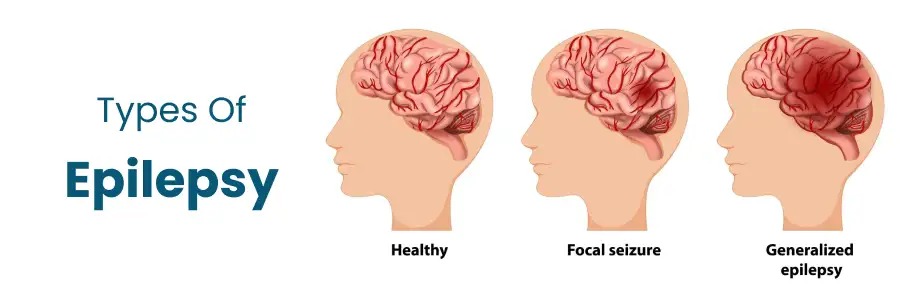
Understanding the Types of Epilepsy
Recognizing the different types of epilepsy is crucial for identifying symptoms accurately. Physicians classify epileptic seizures based on how abnormal brain activity begins and manifests. Below is an overview of the main types:
Generalized Epilepsy
In this type of epilepsy, abnormal neuronal activity occurs simultaneously across the entire brain. Generalized seizures can take various forms and present diverse symptoms.
1. Tonic-Clonic Seizure (Grand Mal)
Tonic-clonic seizures are among the most severe and well-known types of generalized seizures, usually beginning with a sudden loss of consciousness. This seizure has two stages:
-
Tonic phase: Muscles suddenly stiffen, the body becomes rigid, and breathing may be temporarily disrupted.
-
Clonic phase: The muscles then jerk rhythmically for several minutes before gradually relaxing.
During the seizure, the person may lose bladder or bowel control, bite their tongue, or suffer injuries from falling. Afterward, confusion, extreme fatigue, or sleepiness are common, and the person may not recall the episode.
2. Clonic Seizure
Clonic seizures involve repetitive, rapid muscle contractions, often affecting the arms, neck, or face—sometimes on both sides of the body. The individual may temporarily lose consciousness and exhibit uncontrollable movements. Recovery follows with fatigue or confusion.
3. Tonic Seizure
Tonic seizures cause sudden and intense muscle stiffening, often leading to falls and potential injuries, especially head trauma. These seizures are brief—typically under one minute—and followed by short-term confusion or weakness.
4. Myoclonic Seizure
Myoclonic seizures are characterized by sudden, quick, involuntary jerks of muscles, typically in the arms, shoulders, or upper body. They often occur in children or teenagers, especially upon waking or during exhaustion. Consciousness is usually preserved, and recovery is immediate.
5. Atonic Seizure
Atonic seizures involve a sudden loss of muscle control, causing the person to collapse or lose balance without jerking movements. These episodes last only a few seconds but can cause injuries due to sudden falls.
6. Myoclonic-Tonic-Clonic Seizure
This combined seizure begins with myoclonic jerks, progresses to the tonic phase with muscle stiffening, and ends with clonic jerking movements. These seizures are typically intense and can cause significant physical exhaustion or temporary amnesia afterward.
7. Absence Seizure (Petit Mal)
Absence seizures primarily affect children and are brief, lasting just a few seconds. The person experiences a sudden lapse in awareness, often appearing to stare blankly, blink rapidly, or make subtle movements like lip-smacking. The episode ends abruptly, and normal activity resumes immediately without confusion.
8. Myoclonic-Atonic Seizure
This seizure starts with myoclonic jerks followed by a sudden loss of muscle tone, causing the person to collapse. They occur without warning and carry a high risk of head or facial injury.
9. Epileptic Spasms
Epileptic spasms are sudden, brief contractions of muscles, often involving bending forward or extending the limbs. They usually occur in infants and young children, often in clusters, and can cause injuries if the environment is unsafe.
Focal Epilepsy (Partial Epilepsy)
Focal seizures occur when abnormal electrical activity originates in a specific region of the brain, unlike generalized epilepsy where the entire brain is affected.
1. Focal Seizures Without Impaired Awareness (Simple Partial)
In this type, consciousness is preserved. Symptoms depend on the affected brain area and may include tingling sensations, numbness, altered taste or smell, or localized muscle twitching. The individual remains aware of their surroundings and can recall the event afterward, though communication during the episode may be difficult. These seizures usually last under two minutes.
2. Focal Seizures With Impaired Awareness (Complex Partial)
In this type, the person loses awareness and becomes unresponsive for several seconds. They may stare blankly, perform repetitive movements (like rubbing hands, chewing, or walking aimlessly), or experience sensations such as fear, confusion, or déjà vu (a feeling of reliving a current situation). These seizures last longer than simple partial seizures, and confusion or disorientation often follows.
References
-
Adams and Victor's Principles of Neurology, 12th Edition, Chapter 15
-
Merritt's Neurology, 14th Edition – Classification of Seizures and Epilepsy