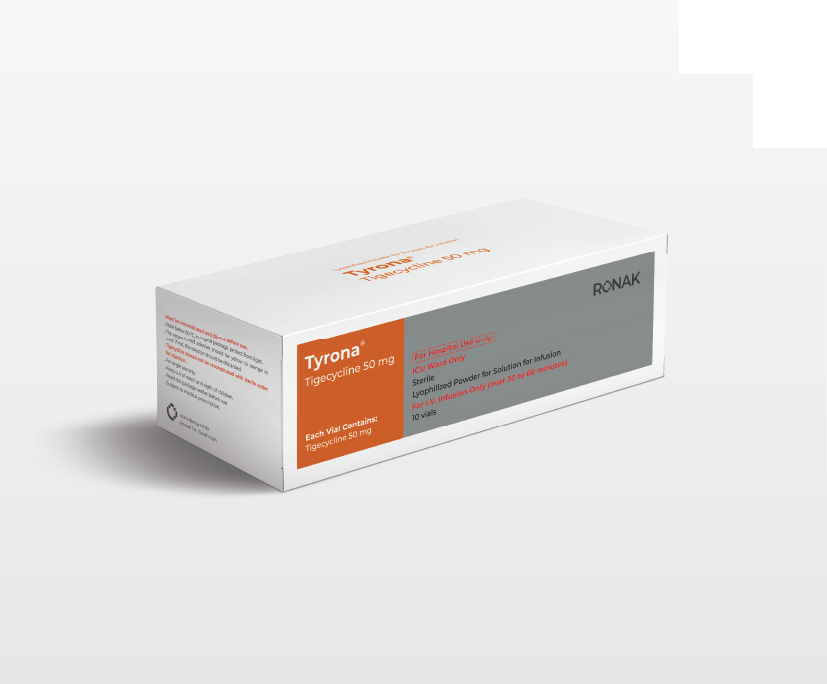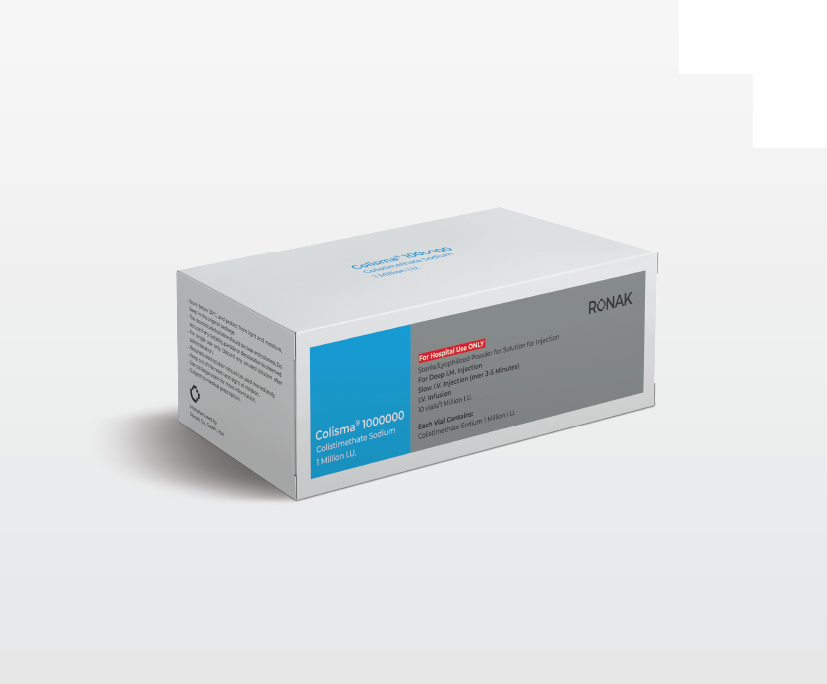





Tyrona®
Tyrona®
Generic name: Tigecycline
Dosage form: Lyophilized powder for injection, 50 mg of tigecycline
Drug class: Antibiotic
Tyrona® Overview:
Tigecycline is an antibiotic from the glycylcycline class that works by stopping the growth of bacteria responsible for infections. It is used in adults and children aged 8 years and older to treat the following infections:
- Complicated skin and soft tissue infections (excluding diabetic foot infections).
- Complicated intra-abdominal infections.
- Community-acquired bacterial pneumonia
Dosage Form:
- Lyophilized powder for injection, 50 mg of tigecycline.
Preparation of Tyrona®:
Solution Preparation:
Each vial of Tigecycline should be mixed with 5.3 mL of 0.9% sodium chloride, 5% dextrose, or Ringer’s solution to achieve a concentration of 10 mg/mL of Tigecycline. The vial should be gently rotated until the powder is dissolved. Do not use water for injection to prepare the solution.
Dilution:
Add 5 mL of the prepared solution to 100 mL of a compatible intravenous infusion solution.
The prepared solution should be yellow to orange in color. If the solution is any other color, discard it. Before dilution, the solution should be checked for particles or color changes (e.g., green or black).
Tigecycline can be administered through a dedicated line or via the Y-site for intravenous infusion. If a shared line is used for multiple medications, the line should be flushed with 0.9% sodium chloride, 5% dextrose, or Ringer’s solution before and after administering Tigecycline.
Dosage and Administration:
How to Use:
Tigecycline is administered only as an intravenous infusion over 30 to 60 minutes. It is recommended that Tigecycline be administered within 60 minutes of infusion.
Recommended Dosage:
- Adults: The recommended initial dose is 100 mg, followed by 50 mg every 12 hours for 5 to 14 days.
- Children and Adolescents (8 to 17 years):
- Children 8 to under 12 years: 1.2 mg/kg of Tigecycline every 12 hours as an intravenous infusion, up to a maximum of 50 mg every 12 hours for 5 to 14 days.
- Adolescents 12 to under 18 years: 50 mg of Tigecycline every 12 hours for 5 to 14 days.
The duration of treatment should be based on the severity, site of infection, and the patient’s clinical response.
Use in the Elderly:
No dose adjustment is needed for elderly patients.
Renal Impairment:
No dose adjustment is required in patients with renal impairment or those undergoing hemodialysis.
Use in Children:
The safety and efficacy of Tigecycline in children under 8 years of age have not been established. The drug should not be used in children under 8 years due to the risk of tooth discoloration.
Overdose of Tigecycline:
If you are concerned that you may have received an overdose of Tigecycline, contact your doctor or nurse immediately.
If you miss a dose:
If you are concerned that you have missed a dose of Tigecycline, immediately inform your doctor or nurse.
Monitoring During Treatment:
The following should be monitored while using Tyrona®:
- Hepatic function (periodically)
- Coagulation parameters (including aPTT, PTT, fibrinogen) at baseline and regularly during therapy
- Worsening hepatic function in patients who develop abnormal LFTs during therapy
- Observe for signs and symptoms of anaphylaxis during administration
2. Before using Tigecycline, consider the following:
Contraindications:
- Hypersensitivity to tigecycline or any component of the formulation.
- Patients who are allergic to tetracycline antibiotics (such as doxycycline, minocycline) may experience excessive sensitivity to tigecycline.
Warnings and Precautions:
Before receiving Tigecycline, inform your doctor or nurse if you have any of the following:
- Tigecycline may cause life-threatening anaphylaxis. Due to structural similarity with tetracyclines, avoid use in patients with known hypersensitivity to tetracycline-class antibiotics.
- Tigecycline may be associated with antianabolic effects observed with the tetracycline class (including increased BUN, azotemia, acidosis, and hyperphosphatemia). Discontinue use if antianabolic effects occur.
- Tigecycline may be associated with abnormalities of blood coagulation parameters, including prolongation of PT and aPTT and decreased fibrinogen that may be dose- and/or time-dependent, in particular in patients with renal and hepatic impairment; discontinue use when suspected.
- Tigecycline may be associated with fixed drug eruption due to structural similarities with tetracyclines. Discontinue use if fixed drug reaction is suspected.
- Abnormal liver function tests (increased total bilirubin, prothrombin time, transaminases) have been reported. Isolated cases of significant hepatic dysfunction and hepatic failure have occurred. Adverse hepatic effects may occur after drug discontinuation.
- Acute pancreatitis (including fatalities) has been reported, including patients without known risk factors; discontinue use when suspected.
- Tigecycline may be associated with photosensitivity due to structural similarities with tetracyclines. Discontinue use if photosensitivity occurs.
- Tigecycline may be associated with pseudotumor cerebri due to structural similarities with tetracyclines. Discontinue use if pseudotumor cerebri occurs.
- Prolonged use may result in fungal or bacterial superinfection, including C. difficile-associated diarrhea (CDAD) and pseudomembranous colitis; CDAD has been observed >2 months postantibiotic treatment.
- Use with caution in patients with hepatic impairment; dosage adjustment recommended in severe hepatic impairment.
- Avoid use as monotherapy for patients with intestinal perforation (in the small sample of available cases, sepsis/septic shock occurred more frequently than patients treated with imipenem/cilastatin comparator).
- Safety and efficacy in children and adolescents <18 years of age have not been established. Use only if no alternative antibiotics are available. Because of potential effects on tooth development (yellow-gray-brown discoloration), use in patients <8 years of age is not recommended.
- Do not use for diabetic foot infections; non-inferiority was not demonstrated in studies. Do not use for healthcare-acquired pneumonia (HAP) or ventilator-associated pneumonia (VAP); increased mortality and decreased efficacy have been reported in HAP and VAP trials.
· Dizziness may occur, which could affect your ability to drive or operate heavy machinery.
Pregnancy and Breastfeeding:
- Tigecycline may harm a fetus. If you are pregnant, breastfeeding, or planning to become pregnant, consult your doctor before using Tigecycline.
- It is unclear whether Tigecycline is excreted in human breast milk. Before breastfeeding, consult your doctor.
3. Side Effects:
As with any medication, Tigecycline may cause some side effects, though not everyone experiences them. If any of the following side effects occur or worsen, inform your doctor:
- Nausea and vomiting
- Diarrhea
- Septic shock
- Pneumonia
- Abscesses
- Hypoglycemia
- Dizziness
- Abdominal pain
- Indigestion
- Loss of appetite
- Itching
- Rash
- Injection site reaction
- Headache
- Increased BUN (blood urea nitrogen)
Drug Interactions:
- Consult your doctor or pharmacist before taking ciprofloxacin with other medications or supplements.
Packaging:
- Each package contains 10 vials of Tyrona®.
5. Storage Conditions:
- Store at temperatures below 30°C.
- Keep the medication in its original box, away from light and moisture.
- Keep it out of reach of children.
- Dispose of any remaining medication properly.
References:
Tigecycline: Drug information, UpToDate 2025
Tyrona®
Generic name: Tigecycline
Dosage form: Lyophilized powder for injection, 50 mg of tigecycline
Drug class: Antibiotic
Tyrona® Overview:
Tigecycline is an antibiotic from the glycylcycline class that works by stopping the growth of bacteria responsible for infections. It is used in adults and children aged 8 years and older to treat the following infections:
- Complicated skin and soft tissue infections (excluding diabetic foot infections).
- Complicated intra-abdominal infections.
- Community-acquired bacterial pneumonia
Dosage Form:
- Lyophilized powder for injection, 50 mg of tigecycline.
Preparation of Tyrona®:
Solution Preparation:
Each vial of Tigecycline should be mixed with 5.3 mL of 0.9% sodium chloride, 5% dextrose, or Ringer’s solution to achieve a concentration of 10 mg/mL of Tigecycline. The vial should be gently rotated until the powder is dissolved. Do not use water for injection to prepare the solution.
Dilution:
Add 5 mL of the prepared solution to 100 mL of a compatible intravenous infusion solution.
The prepared solution should be yellow to orange in color. If the solution is any other color, discard it. Before dilution, the solution should be checked for particles or color changes (e.g., green or black).
Tigecycline can be administered through a dedicated line or via the Y-site for intravenous infusion. If a shared line is used for multiple medications, the line should be flushed with 0.9% sodium chloride, 5% dextrose, or Ringer’s solution before and after administering Tigecycline.
Dosage and Administration:
How to Use:
Tigecycline is administered only as an intravenous infusion over 30 to 60 minutes. It is recommended that Tigecycline be administered within 60 minutes of infusion.
Recommended Dosage:
- Adults: The recommended initial dose is 100 mg, followed by 50 mg every 12 hours for 5 to 14 days.
- Children and Adolescents (8 to 17 years):
- Children 8 to under 12 years: 1.2 mg/kg of Tigecycline every 12 hours as an intravenous infusion, up to a maximum of 50 mg every 12 hours for 5 to 14 days.
- Adolescents 12 to under 18 years: 50 mg of Tigecycline every 12 hours for 5 to 14 days.
The duration of treatment should be based on the severity, site of infection, and the patient’s clinical response.
Use in the Elderly:
No dose adjustment is needed for elderly patients.
Renal Impairment:
No dose adjustment is required in patients with renal impairment or those undergoing hemodialysis.
Use in Children:
The safety and efficacy of Tigecycline in children under 8 years of age have not been established. The drug should not be used in children under 8 years due to the risk of tooth discoloration.
Overdose of Tigecycline:
If you are concerned that you may have received an overdose of Tigecycline, contact your doctor or nurse immediately.
If you miss a dose:
If you are concerned that you have missed a dose of Tigecycline, immediately inform your doctor or nurse.
Monitoring During Treatment:
The following should be monitored while using Tyrona®:
- Hepatic function (periodically)
- Coagulation parameters (including aPTT, PTT, fibrinogen) at baseline and regularly during therapy
- Worsening hepatic function in patients who develop abnormal LFTs during therapy
- Observe for signs and symptoms of anaphylaxis during administration
2. Before using Tigecycline, consider the following:
Contraindications:
- Hypersensitivity to tigecycline or any component of the formulation.
- Patients who are allergic to tetracycline antibiotics (such as doxycycline, minocycline) may experience excessive sensitivity to tigecycline.
Warnings and Precautions:
Before receiving Tigecycline, inform your doctor or nurse if you have any of the following:
- Tigecycline may cause life-threatening anaphylaxis. Due to structural similarity with tetracyclines, avoid use in patients with known hypersensitivity to tetracycline-class antibiotics.
- Tigecycline may be associated with antianabolic effects observed with the tetracycline class (including increased BUN, azotemia, acidosis, and hyperphosphatemia). Discontinue use if antianabolic effects occur.
- Tigecycline may be associated with abnormalities of blood coagulation parameters, including prolongation of PT and aPTT and decreased fibrinogen that may be dose- and/or time-dependent, in particular in patients with renal and hepatic impairment; discontinue use when suspected.
- Tigecycline may be associated with fixed drug eruption due to structural similarities with tetracyclines. Discontinue use if fixed drug reaction is suspected.
- Abnormal liver function tests (increased total bilirubin, prothrombin time, transaminases) have been reported. Isolated cases of significant hepatic dysfunction and hepatic failure have occurred. Adverse hepatic effects may occur after drug discontinuation.
- Acute pancreatitis (including fatalities) has been reported, including patients without known risk factors; discontinue use when suspected.
- Tigecycline may be associated with photosensitivity due to structural similarities with tetracyclines. Discontinue use if photosensitivity occurs.
- Tigecycline may be associated with pseudotumor cerebri due to structural similarities with tetracyclines. Discontinue use if pseudotumor cerebri occurs.
- Prolonged use may result in fungal or bacterial superinfection, including C. difficile-associated diarrhea (CDAD) and pseudomembranous colitis; CDAD has been observed >2 months postantibiotic treatment.
- Use with caution in patients with hepatic impairment; dosage adjustment recommended in severe hepatic impairment.
- Avoid use as monotherapy for patients with intestinal perforation (in the small sample of available cases, sepsis/septic shock occurred more frequently than patients treated with imipenem/cilastatin comparator).
- Safety and efficacy in children and adolescents <18 years of age have not been established. Use only if no alternative antibiotics are available. Because of potential effects on tooth development (yellow-gray-brown discoloration), use in patients <8 years of age is not recommended.
- Do not use for diabetic foot infections; non-inferiority was not demonstrated in studies. Do not use for healthcare-acquired pneumonia (HAP) or ventilator-associated pneumonia (VAP); increased mortality and decreased efficacy have been reported in HAP and VAP trials.
· Dizziness may occur, which could affect your ability to drive or operate heavy machinery.
Pregnancy and Breastfeeding:
- Tigecycline may harm a fetus. If you are pregnant, breastfeeding, or planning to become pregnant, consult your doctor before using Tigecycline.
- It is unclear whether Tigecycline is excreted in human breast milk. Before breastfeeding, consult your doctor.
3. Side Effects:
As with any medication, Tigecycline may cause some side effects, though not everyone experiences them. If any of the following side effects occur or worsen, inform your doctor:
- Nausea and vomiting
- Diarrhea
- Septic shock
- Pneumonia
- Abscesses
- Hypoglycemia
- Dizziness
- Abdominal pain
- Indigestion
- Loss of appetite
- Itching
- Rash
- Injection site reaction
- Headache
- Increased BUN (blood urea nitrogen)
Drug Interactions:
- Consult your doctor or pharmacist before taking ciprofloxacin with other medications or supplements.
Packaging:
- Each package contains 10 vials of Tyrona®.
5. Storage Conditions:
- Store at temperatures below 30°C.
- Keep the medication in its original box, away from light and moisture.
- Keep it out of reach of children.
- Dispose of any remaining medication properly.
References:
Tigecycline: Drug information, UpToDate 2025