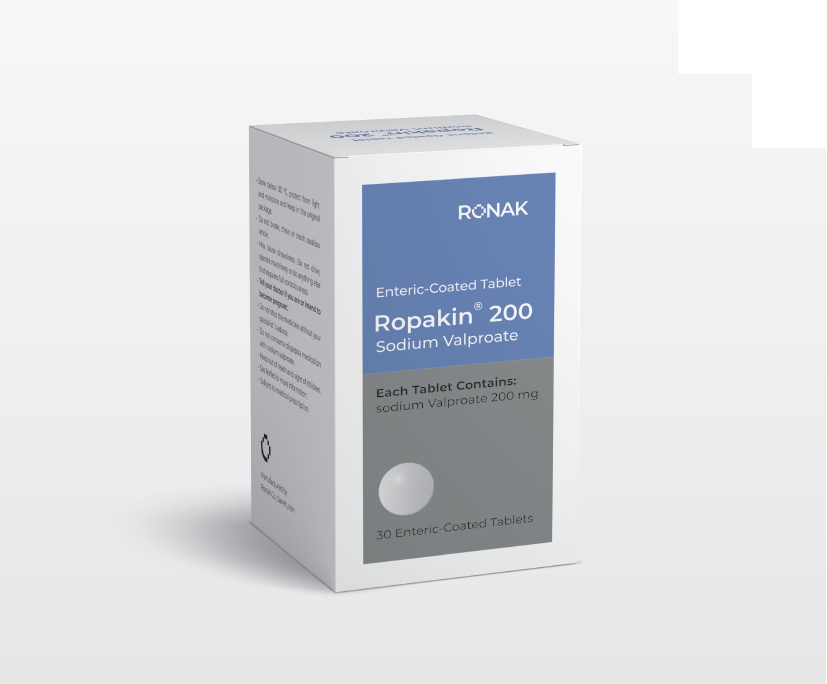


Ropakin®
Generic Name: Sodium Valproate
Dosage Form: 200 mg Tablets
Pharmacological Class: Antiepileptic Agent
Indications: This medication is used to treat epilepsy, bipolar disorder, and the prevention of migraine headaches.
Ropakin® (sodium valproate) is a central nervous system agent used in the treatment of a wide range of neurological and psychiatric disorders. It enhances or mimics the action of gamma-aminobutyric acid (GABA), an inhibitory neurotransmitter, and inhibits voltage-gated sodium channels on neuronal membranes. By suppressing rapid and repetitive neuronal firing, it reduces neuronal excitability and helps control seizures and mood disorders.
- Epilepsy (Partial and Generalized Seizures)
- Bipolar Disorder
- Migraine Prophylaxis
Each Ropakin® tablet contains 200 mg of Sodium Valproate.
- Take this medication exactly as prescribed by your physician. If you are uncertain about the proper method of administration, consult your physician or pharmacist.
- Ropakin® is preferably taken with food.
- Do not chew or crush the tablets.
- Your physician determines the dosage based on age, body weight, therapeutic response, and serum drug concentrations.
- Treatment with Ropakin® requires regular medical supervision. Do not alter the dose or discontinue treatment without consulting your physician.
Take the missed dose as soon as you remember. If it is almost time for your next scheduled dose, skip the missed dose and continue with your regular dosing schedule. Do not double the dose to make up for a missed dose.
Overdose of sodium valproate may result in:
- Drowsiness
- Respiratory depression
- Hypotension
- Tachycardia
- Coma
If an overdose occurs, immediately contact emergency medical services and your physician for appropriate treatment.
Before and during treatment, your physician may periodically request:
- Blood tests
- Coagulation studies
- Liver function tests
- Serum valproate concentrations
- Bone density assessment
- Hypersensitivity to sodium valproate or any component of the formulation (symptoms may include skin rash, difficulty breathing or swallowing, and swelling of the lips, face, throat, or tongue)
- Active liver disease or a history of significant liver disease, particularly drug-related liver injury
- Pregnancy (unless no effective alternative treatment is available)
- Porphyria
- Urea cycle disorders
- Metabolic disorders associated with mitochondrial dysfunction
- Sodium valproate may cause drowsiness. If this occurs, avoid driving or operating machinery.
- A small number of patients may experience negative thoughts, including thoughts of self-harm. Contact your physician immediately if such symptoms occur.
- Consult your physician if symptoms suggestive of liver injury develop, including nausea, vomiting, abdominal pain, loss of appetite, or jaundice.
- Seek medical advice if vomiting, altered consciousness, or changes in mental status occur during treatment.
- Because sodium valproate may affect blood clotting, inform healthcare professionals, including dentists, that you are taking this medication before undergoing any procedure.
- Long-term treatment may increase the risk of bone health complications, particularly in patients with limited mobility or inadequate calcium and sunlight exposure. Discuss calcium and vitamin D supplementation with your physician if appropriate.
- Consult your physician if fever, skin rash, or swollen lymph nodes develop during treatment.
- Abrupt discontinuation of antiepileptic medications may increase seizure frequency; therefore, do not stop treatment or alter the dose without medical advice.
- Women of childbearing potential should use a reliable method of contraception throughout treatment.
- Estrogen-containing contraceptives (such as combined oral contraceptives) may reduce serum sodium valproate levels and increase the risk of seizures. Consult your physician regarding the most appropriate contraceptive method.
- If you are planning to become pregnant, consult your physician before conception.
- If pregnancy occurs, do not discontinue Ropakin® abruptly; seek medical advice immediately.
- Use during pregnancy is associated with an increased risk of neural tube defects and other congenital abnormalities. Ropakin® should only be used under specialist supervision when no suitable alternative treatment is available.
- If sodium valproate is used during pregnancy, consult your physician regarding folic acid supplementation, as folic acid may reduce the risk of neural tube defects and early pregnancy loss.
- Sodium valproate is excreted into breast milk in small amounts. Consult your physician before breastfeeding.
Like all medicines, Ropakin® may cause side effects, although not everybody experiences them. Possible adverse reactions include:
- Hypersensitivity reactions (skin rash associated with joint pain, fever, difficulty breathing or swallowing, swelling of the lips, throat, or tongue) and Stevens–Johnson syndrome
- Weight gain
- Nausea and vomiting
- Severe fatigue and drowsiness
- Upper abdominal pain
- Jaundice
- Loss of appetite
- Edema
- Gingival swelling and oral ulceration
- Thrombocytopenia (reduced platelet count)
- Coagulation disorders and unexplained bleeding
- Mood changes
- Headache
- Agitation
- Aggression
- Confusion
- Hallucinations
- Learning difficulties
- Hyperactivity
- Memory impairment
- Poor concentration
- Loss of consciousness
- Hypothyroidism
- Impaired balance and coordination
- Weakness, lethargy, and tremor
- Temporary hair loss or changes in hair texture and color
- Increased androgen levels
- Menstrual irregularities and excessive hair growth in women
- Kidney disorders, urinary frequency, and urinary incontinence
Consult your physician or pharmacist before taking Ropakin® concomitantly with any other medications or dietary supplements.
Each bottle contains 30 tablets.
- Keep out of the sight and reach of children.
- Store below 30°C, protected from light and moisture.
- The product may be used until the last day of the month indicated as the expiration date on the package.
- Do not use or store expired medicines.
- Keep the medication in its original packaging.
- Electronic Medicines Compendium (eMC)
- Valproate: Drug Information, UpToDate, 2023.