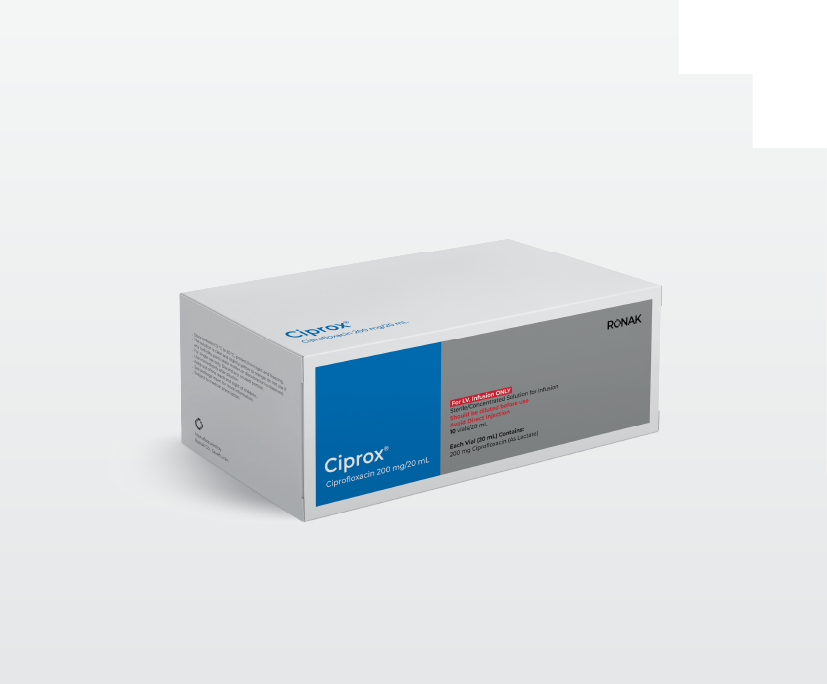


Ципрокс®
Ципрокс®
Международное непатентованное название: Ципрофлоксацин
Лекарственная форма: Концентрированный раствор для инъекций 20 мл, содержащий 10 мг ципрофлоксацина в 1 мл
Фармакологическая группа: Антибиотик (фторхинолон)
Показания к применению:
Ципрокс® применяется для лечения различных бактериальных инфекций, включая:
-
Инфекции мочевыводящих путей
-
Инфекции дыхательных путей
-
Инфекции костей и суставов
-
Инфекции кожи
-
Инфекции брюшной полости
-
Эндокардит
-
Нейтропеническая лихорадка
-
Инфекции верхних и нижних дыхательных путей
-
Простатит
-
Пиелонефрит
Общая информация о Ципрокс®:
Ципрокс® (ципрофлоксацин) — антибиотик широкого спектра действия из группы фторхинолонов, который подавляет размножение бактерий путем ингибирования синтеза ДНК.
Форма выпуска:
Концентрированный раствор для инъекций, содержащий 200 мг ципрофлоксацина (10 мг/мл).
Подготовка раствора Ципрокс®:
-
Раствор должен быть прозрачным, бесцветным или светло-желтым.
-
При наличии помутнения или посторонних частиц раствор использовать нельзя.
-
Раствор необходимо разводить перед введением.
-
Никогда не вводить неразбавленный раствор.
Растворы для разведения:
-
0,9% раствор натрия хлорида
-
5% декстроза в 0,45% растворе натрия хлорида
-
5% декстроза в 0,225% растворе натрия хлорида
-
5% декстроза
-
10% декстроза
Способ применения и дозы:
Разведенный раствор вводят внутривенно в течение 1 часа.
При использовании Y-образной инфузионной системы рекомендуется временно приостановить основную инфузию.
Мониторинг во время лечения:
-
Общий анализ крови
-
Функция печени и почек при длительном применении
-
Контроль ЭКГ (удлинение интервала QT)
-
Признаки повреждения сухожилий или периферической нейропатии
-
Нарушения уровня глюкозы в крови
-
Кожные высыпания и аллергические реакции
Противопоказания:
-
Гиперчувствительность к ципрофлоксацину или другим хинолонам
-
Одновременное применение с тизанидином или агомелатином
-
Миастения гравис
Предупреждения и меры предосторожности:
-
Требуется коррекция дозы при почечной недостаточности
-
Осторожно применять при судорогах, инсульте, аневризме аорты, дефиците G6PD
-
Обеспечить достаточное потребление жидкости
-
При аллергических или неврологических реакциях препарат отменить
-
Препарат неэффективен против сифилиса
-
При повреждении сухожилий немедленно прекратить прием
-
Возможны вторичные инфекции
-
Осторожно применять у пожилых пациентов
Беременность и грудное вскармливание:
Применение возможно только после консультации врача.
Грудное вскармливание следует прекратить на 2 дня после окончания лечения.
Побочные эффекты:
-
Головная боль, головокружение
-
Реакции в месте инъекции
-
Кожные реакции, фоточувствительность
-
Тошнота, диарея, рвота, боли в животе
Взаимодействие с другими препаратами:
Перед применением сообщите врачу обо всех принимаемых лекарствах.
Упаковка:
10 флаконов в упаковке.
Условия хранения:
Хранить при температуре 15–30°C, защищать от света и влаги.
Не замораживать.
Хранить в недоступном для детей месте.
Ciprox® is a broad-spectrum fluoroquinolone antibiotic. It prevents bacterial multiplication by inhibiting DNA replication.
Ciprox® is used in the treatment of skin and soft-tissue infections, bone and joint infections, hospital-acquired pneumonia, endocarditis, febrile neutropenia, upper and lower respiratory tract infections, intra-abdominal infections, urogenital tract infections, prostatitis, and pyelonephritis.
Concentrated injectable solution containing 200 mg Ciprofloxacin — 10 mg in 1 mL.
Ciprox® solution is clear and colorless to pale yellow. Do not inject it if any cloudiness or foreign particles are observed.
This product must be diluted before injection. Never inject the prepared solution before dilution.
Ciprox® may be diluted in the following solutions:
- 0.9% sodium chloride
- 5% dextrose in 0.45% sodium chloride
- 5% dextrose in 0.225% sodium chloride
- 5% dextrose
- 10% dextrose
The diluted solution should be administered as an intravenous infusion over 1 hour.
If administered through a Y-site infusion set, it is recommended that the primary solution be temporarily stopped during the Ciprox® infusion.
- Blood cell counts
- Liver and kidney function during long-term treatment
- Cardiac monitoring for QT prolongation
- Signs and symptoms of tendinopathy, such as tendon pain, swelling, inflammation, or rupture, and/or peripheral neuropathy
- Signs and symptoms of blood-glucose dysregulation, especially in patients with diabetes
- Skin rash and signs and symptoms of hypersensitivity reactions
- History of hypersensitivity to Ciprofloxacin symptoms may include skin rash with difficulty breathing or swallowing, swelling of the lips, face, throat, or tongue — other quinolone antibiotics, such as levofloxacin and ofloxacin, or any other component of the formulation
- Concomitant use with tizanidine, due to increased serum levels of tizanidine, or agomelatine
- Use in patients with a history of myasthenia gravis
- Ciprofloxacin use in patients with kidney failure requires dose adjustment.
- Ciprofloxacin should be used with caution in people with a history of seizures, brain injuries including stroke, aortic aneurysm, or favism / G6PD deficiency.
- To prevent crystal formation in the urine, patients should drink enough water and fluids during treatment.
- If symptoms of hypersensitivity reactions occur — including redness, swelling or skin rash, blisters, hives, itching, wheezing, tightness in the chest or throat, difficulty breathing, swallowing, or speaking, unusual hoarseness, or swelling of the mouth, face, lips, tongue, or throat — seek medical care immediately.
- If nervous-system adverse effects occur, such as dizziness, tremor, depression, or delirium, Ciprofloxacin should be discontinued and an alternative treatment should be considered.
- This medicine is not effective in treating syphilis and may mask its symptoms. Therefore, all patients with syphilis should undergo diagnostic testing for syphilis at the time of diagnosis and again 3 months later.
- If tendinopathy — tendon pain, swelling, or inflammation — tendon rupture, or peripheral neuropathy occurs, this medicine should be stopped immediately.
- Long-term use of Ciprofloxacin may lead to secondary fungal or bacterial infection.
- This medicine should be used with greater caution in older adults.
- This medicine is preferably not used in children, except for the treatment of anthrax.
Consult your physician or pharmacist before using Ciprofloxacin during pregnancy or breastfeeding.
Ciprofloxacin crosses the placenta, and alternative medicines are preferred during pregnancy when needed.
This medicine is excreted in breast milk. Because of the possibility of adverse effects in the infant, a decision should be made to discontinue breastfeeding or discontinue the medicine according to the patient’s condition. If the medicine is received, breastfeeding should not be performed until two days after completion of treatment.
Like all medicines, Ciprofloxacin may cause unwanted side effects along with its desired therapeutic effects, although these effects do not occur in everyone. More common possible side effects include:
- Headache, dizziness, or restlessness
- Injection-site reactions
- Skin reactions and sensitivity to light
- Nausea, diarrhea, vomiting, and abdominal pain
Consult your physician or pharmacist about using Ciprofloxacin together with other medicines or supplements.
Each package contains 10 Ciprox® vials.
- Store below 30°C, protected from light and moisture.
- The medicine may be used until the end of the month stated in the expiry date on the package. Do not use or store expired medicines.
- Keep the medicine out of the reach of children.
- Keep the medicine in its original packaging until use.
- Ciprofloxacin: Drug information, UpToDate 2025
- Drugs.com Ciprofloxacin information.