

Ronopar®
Generic Name: Levodopa/Benserazide
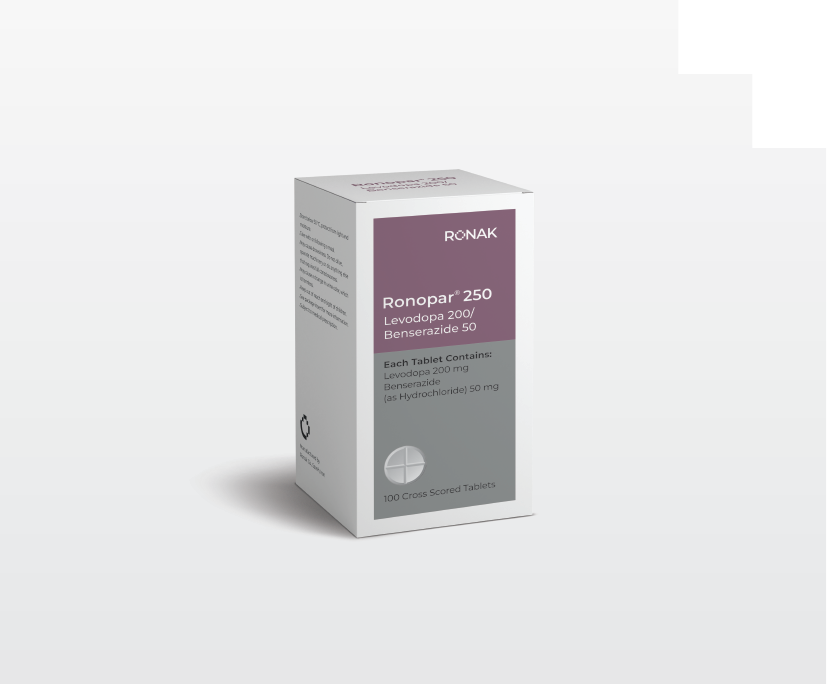
Dosage Form: 125 mg (100 mg/25 mg) and 250 mg (200 mg/50 mg) Cross-Scored Tablets
Pharmacological Class: Antiparkinsonian Agent
Indications: This medication is used to treat Parkinson’s disease.
Ronopar® contains two active ingredients: Levodopa and Benserazide.
Patients with Parkinson’s disease have insufficient dopamine levels in certain areas of the brain, resulting in symptoms such as slowness of movement, muscle rigidity, and tremor. Levodopa is converted to dopamine (the active form) within the brain and helps improve the symptoms of Parkinson’s disease.
Benserazide inhibits the conversion of Levodopa to dopamine before it reaches the brain, allowing a greater amount of Levodopa to enter the central nervous system and thereby enhancing its therapeutic effect.
- Parkinson’s Disease
- Restless Legs Syndrome (RLS)
- Ronopar® 125 mg Cross-Scored Tablet containing 100 mg Levodopa and 25 mg Benserazide
- Ronopar® 250 mg Cross-Scored Tablet containing 200 mg Levodopa and 50 mg Benserazide
- The dosage and timing of Ronopar® vary among individuals. Take this medication exactly as prescribed by your physician.
- If you are uncertain about the correct method of administration, consult your physician or pharmacist.
- Do not alter the dose or duration of treatment without medical advice.
- It is recommended to take Ronopar® 30 minutes before meals or one hour after meals.
- Ronopar® should not be taken together with foods containing high amounts of protein, such as red meat, poultry, or egg whites.
If you miss a dose, take it as soon as you remember. If it is almost time for your next scheduled dose, skip the missed dose and continue with your regular dosing schedule. Do not take two doses simultaneously or an additional dose to compensate for a missed dose.
If more than the prescribed dose is taken, consult your physician or seek immediate medical attention.
- Cardiovascular function
- Hepatic function
- Renal function
- Blood cell counts
- Blood glucose levels in patients with diabetes mellitus
- Signs and symptoms of psychosis or dystonia (involuntary repetitive muscle contractions)
- Hypersensitivity to Levodopa, Benserazide, or any component of the formulation
- Concurrent use of monoamine oxidase inhibitors (MAOIs), or use within 14 days before or after discontinuation of MAOI therapy
- Conditions in which sympathomimetic amines (such as epinephrine or norepinephrine) are contraindicated
- Clinical or laboratory evidence of uncontrolled cardiovascular, endocrine, renal, hepatic, hematologic, or pulmonary disease
- Psychosis
- Angle-closure glaucoma
- Pregnancy
- Women of childbearing potential who are not using effective contraception
- Patients younger than 25 years of age
- Seek immediate medical attention if signs of a hypersensitivity reaction occur, including redness, swelling, skin rash, blistering, hives, itching, wheezing, chest or throat tightness, difficulty breathing, swallowing or speaking, unusual hoarseness, or swelling of the mouth, face, lips, tongue, or throat.
- Ronopar® may cause drowsiness. If this occurs, avoid driving or operating heavy machinery.
- Treatment may lead to impulse control disorders or compulsive behaviors, including pathological gambling, increased sexual urges, or binge eating. Consult your physician if any of these symptoms occur.
- Use with caution in patients with cardiovascular disease (particularly arrhythmias or a history of myocardial infarction), diabetes, open-angle glaucoma, peptic ulcer disease, hepatic impairment, renal impairment, or seizure disorders. Inform your physician if you have a history of any of these conditions.
- The use of Ronopar® is generally not recommended within 12–48 hours before surgery. Inform your healthcare provider if surgery is planned.
- Ronopar® should not be used during pregnancy or breastfeeding.
- Effective contraception must be used during treatment.
- If pregnancy occurs during treatment, notify your physician immediately.
Like all medicines, Ronopar® may cause side effects, although not everybody experiences them. Possible adverse reactions include:
- Gastrointestinal disturbances such as diarrhea, stomach discomfort, or vomiting
- Tremor and psychiatric adverse effects
- Fatigue and dizziness
Consult your physician or pharmacist before taking Ronopar® concomitantly with any other medications or dietary supplements.
Each package contains one bottle with 100 cross-scored tablets.
- Store below 30°C, protected from light and moisture.
- The product may be used until the last day of the month indicated as the expiration date on the package.
- Do not use or store expired medicines.
- Keep out of the reach of children.
- Do not remove the tablets from their original packaging until ready for use.
- Levodopa and Benserazide (United States: Not Available): Drug Information, UpToDate, 2025.
- Electronic Medicines Compendium (Levodopa/Benserazide SmPC)