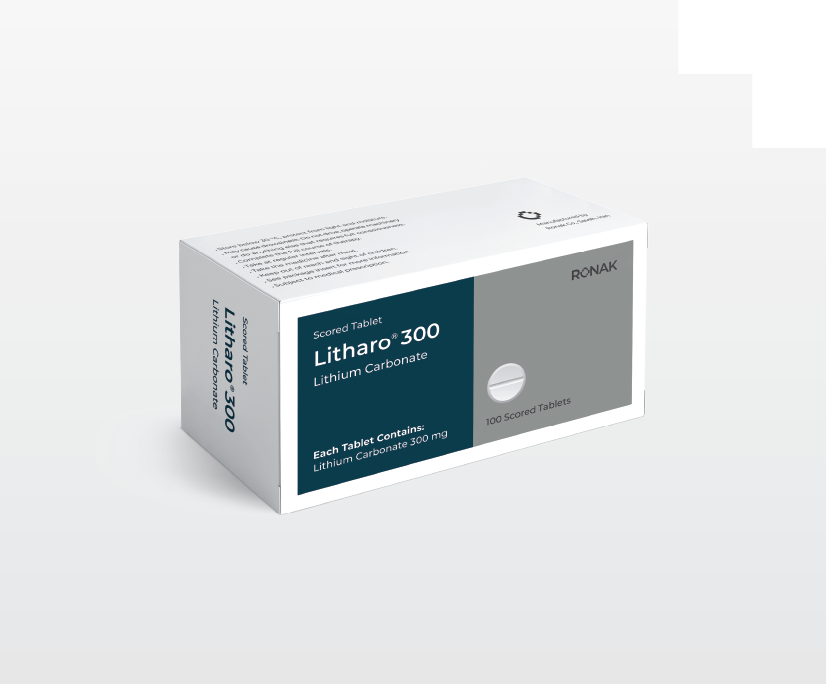





Litharo®
Litharo®
Generic Name: Lithium Carbonate
Dosage Form: Scored tablets, 300 mg
Drug Class: Mood stabilizer
Indications: Used for treating acute manic and hypomanic episodes in patients with bipolar disorder and depression.
Litharo®
Litharo® (Lithium Carbonate) is a mood stabilizer that helps stabilize mood by affecting neural signaling and the function of neurotransmitters, including serotonin, dopamine, and norepinephrine.
Indications for Litharo®
- Acute mania, acute episodes with mixed features, acute hypomania, acute bipolar major depression in patients over 7 years
- Maintenance treatment to reduce manic and depressive episodes in patients with bipolar disorder aged over 7 years
- Unipolar major depressive disorder
- Postpartum mood disorders
- Prevention of cluster headaches
Dosage Forms of Litharo®
- Scored tablets: 300 mg
How to Use and Dosage of Litharo®
- Take exactly as prescribed by your doctor. Consult your doctor or pharmacist if you are unsure about the correct way to take it.
- Take with a full glass of water and with food to reduce gastrointestinal side effects. Do not crush or chew the tablets.
- Maintain adequate intake of salt and fluids.
Missed Dose of Litharo®
- Take the missed dose as soon as you remember.
- If it is close to the next scheduled dose, skip the missed dose.
- Do not double the dose.
Overdose of Litharo®
- Lithium toxicity can occur even at doses near the therapeutic range.
- If any of the following symptoms occur, stop the medication and contact your doctor immediately:
- Diarrhea and vomiting
- Tremor, muscle coordination problems, lightheadedness, muscle weakness
- Dizziness, unsteady gait, blurred speech, slurred speech
- Muscle twitches, seizures
Monitoring Requirements During Treatment with Lithium Carbonate
Before starting and during treatment, your doctor may monitor:
- Complete blood count (CBC)
- Serum lithium levels
- Signs of lithium toxicity
- Kidney function
- Calcium levels and hypercalcemia symptoms (weakness, fatigue, abdominal pain, constipation, etc.)
- Electrolytes (sodium and potassium)
- Thyroid hormone levels
- Parathyroid hormone levels
- Pregnancy tests
- ECG (heart monitoring)
- Fluid balance
- Body weight
- Signs of excessive thirst or increased urination
Contraindications for Lithium Carbonate
- Hypersensitivity to lithium or any component of the formulation
- Severe cardiovascular disease
- Kidney disease
- Debilitated patients
- Dehydration
- Low serum sodium
- Concurrent use of diuretics
- Brain injury
Warnings and Precautions for Lithium Carbonate
- Lithium may reduce sodium levels; maintain a diet with adequate salt and drink 2.5–3 liters of water daily.
- Seek medical advice immediately if you experience blurred vision, double vision, severe headache, pressure behind the eyes, tinnitus, or sudden vision changes.
- Report any changes in consciousness (restlessness, hallucinations, delirium), palpitations, unstable blood pressure, weakness, dizziness, sweating, hot flashes, or fever.
- Contact your doctor if you experience muscle stiffness, tremor, twitching, loss of coordination, or seizures.
- Inform your doctor of all medications you are taking to prevent drug interactions.
- Patients with cardiovascular disease, myasthenia gravis, or a history of bariatric surgery should inform their doctor.
- Lithium may cause drowsiness; avoid driving or operating machinery if affected.
Use of Lithium Carbonate During Pregnancy and Breastfeeding
- Lithium use during pregnancy and lactation must be under specialist supervision.
- Consult your doctor if you plan to become pregnant. Avoid lithium during the first trimester to reduce the risk of congenital heart defects.
- If treated with lithium for bipolar disorder during pregnancy, use the lowest effective dose and monitor serum levels regularly.
- If treated for depression during pregnancy, consult your doctor regarding potential medication adjustments.
- Lithium should be discontinued 48–72 hours before delivery.
- Lithium is excreted in breast milk; some infants may show signs of lithium toxicity. If this occurs, breastfeeding should be stopped immediately and a doctor consulted.
Side Effects of Lithium Carbonate
Possible side effects (not everyone experiences these):
- Excessive thirst or increased urination
- Low blood sodium
- Dizziness, tremor, impaired coordination, drowsiness, fatigue, headache, weakness
- Cardiac arrhythmias (slow, fast, or irregular heartbeat)
- Skin problems: hair loss, acne, itching, worsening psoriasis
- Digestive issues: nausea, vomiting, diarrhea, indigestion, increased salivation, taste changes
- Sexual dysfunction
- Hypothyroidism or hyperthyroidism
- Hypercalcemia and hyperparathyroidism
- Weight gain
Drug Interactions with Lithium Carbonate
Consult your doctor or pharmacist before taking lithium with other medications or supplements.
Packaging of Litharo®
- Each package contains 100 scored tablets (10 blister packs of 10 tablets).
Storage Conditions for Litharo®
- Store below 30°C, away from light and moisture.
- Keep out of reach of children.
- Use before the expiration month on the package.
- Keep in the original packaging until use.
References
- Lithium: Drug Information, UpToDate 2025
- Medicines.org.uk – Lithium
Litharo®
Generic Name: Lithium Carbonate
Dosage Form: Scored tablets, 300 mg
Drug Class: Mood stabilizer
Indications: Used for treating acute manic and hypomanic episodes in patients with bipolar disorder and depression.
Litharo®
Litharo® (Lithium Carbonate) is a mood stabilizer that helps stabilize mood by affecting neural signaling and the function of neurotransmitters, including serotonin, dopamine, and norepinephrine.
Indications for Litharo®
- Acute mania, acute episodes with mixed features, acute hypomania, acute bipolar major depression in patients over 7 years
- Maintenance treatment to reduce manic and depressive episodes in patients with bipolar disorder aged over 7 years
- Unipolar major depressive disorder
- Postpartum mood disorders
- Prevention of cluster headaches
Dosage Forms of Litharo®
- Scored tablets: 300 mg
How to Use and Dosage of Litharo®
- Take exactly as prescribed by your doctor. Consult your doctor or pharmacist if you are unsure about the correct way to take it.
- Take with a full glass of water and with food to reduce gastrointestinal side effects. Do not crush or chew the tablets.
- Maintain adequate intake of salt and fluids.
Missed Dose of Litharo®
- Take the missed dose as soon as you remember.
- If it is close to the next scheduled dose, skip the missed dose.
- Do not double the dose.
Overdose of Litharo®
- Lithium toxicity can occur even at doses near the therapeutic range.
- If any of the following symptoms occur, stop the medication and contact your doctor immediately:
- Diarrhea and vomiting
- Tremor, muscle coordination problems, lightheadedness, muscle weakness
- Dizziness, unsteady gait, blurred speech, slurred speech
- Muscle twitches, seizures
Monitoring Requirements During Treatment with Lithium Carbonate
Before starting and during treatment, your doctor may monitor:
- Complete blood count (CBC)
- Serum lithium levels
- Signs of lithium toxicity
- Kidney function
- Calcium levels and hypercalcemia symptoms (weakness, fatigue, abdominal pain, constipation, etc.)
- Electrolytes (sodium and potassium)
- Thyroid hormone levels
- Parathyroid hormone levels
- Pregnancy tests
- ECG (heart monitoring)
- Fluid balance
- Body weight
- Signs of excessive thirst or increased urination
Contraindications for Lithium Carbonate
- Hypersensitivity to lithium or any component of the formulation
- Severe cardiovascular disease
- Kidney disease
- Debilitated patients
- Dehydration
- Low serum sodium
- Concurrent use of diuretics
- Brain injury
Warnings and Precautions for Lithium Carbonate
- Lithium may reduce sodium levels; maintain a diet with adequate salt and drink 2.5–3 liters of water daily.
- Seek medical advice immediately if you experience blurred vision, double vision, severe headache, pressure behind the eyes, tinnitus, or sudden vision changes.
- Report any changes in consciousness (restlessness, hallucinations, delirium), palpitations, unstable blood pressure, weakness, dizziness, sweating, hot flashes, or fever.
- Contact your doctor if you experience muscle stiffness, tremor, twitching, loss of coordination, or seizures.
- Inform your doctor of all medications you are taking to prevent drug interactions.
- Patients with cardiovascular disease, myasthenia gravis, or a history of bariatric surgery should inform their doctor.
- Lithium may cause drowsiness; avoid driving or operating machinery if affected.
Use of Lithium Carbonate During Pregnancy and Breastfeeding
- Lithium use during pregnancy and lactation must be under specialist supervision.
- Consult your doctor if you plan to become pregnant. Avoid lithium during the first trimester to reduce the risk of congenital heart defects.
- If treated with lithium for bipolar disorder during pregnancy, use the lowest effective dose and monitor serum levels regularly.
- If treated for depression during pregnancy, consult your doctor regarding potential medication adjustments.
- Lithium should be discontinued 48–72 hours before delivery.
- Lithium is excreted in breast milk; some infants may show signs of lithium toxicity. If this occurs, breastfeeding should be stopped immediately and a doctor consulted.
Side Effects of Lithium Carbonate
Possible side effects (not everyone experiences these):
- Excessive thirst or increased urination
- Low blood sodium
- Dizziness, tremor, impaired coordination, drowsiness, fatigue, headache, weakness
- Cardiac arrhythmias (slow, fast, or irregular heartbeat)
- Skin problems: hair loss, acne, itching, worsening psoriasis
- Digestive issues: nausea, vomiting, diarrhea, indigestion, increased salivation, taste changes
- Sexual dysfunction
- Hypothyroidism or hyperthyroidism
- Hypercalcemia and hyperparathyroidism
- Weight gain
Drug Interactions with Lithium Carbonate
Consult your doctor or pharmacist before taking lithium with other medications or supplements.
Packaging of Litharo®
- Each package contains 100 scored tablets (10 blister packs of 10 tablets).
Storage Conditions for Litharo®
- Store below 30°C, away from light and moisture.
- Keep out of reach of children.
- Use before the expiration month on the package.
- Keep in the original packaging until use.
References
- Lithium: Drug Information, UpToDate 2025
- Medicines.org.uk – Lithium