




Ciprox inj®
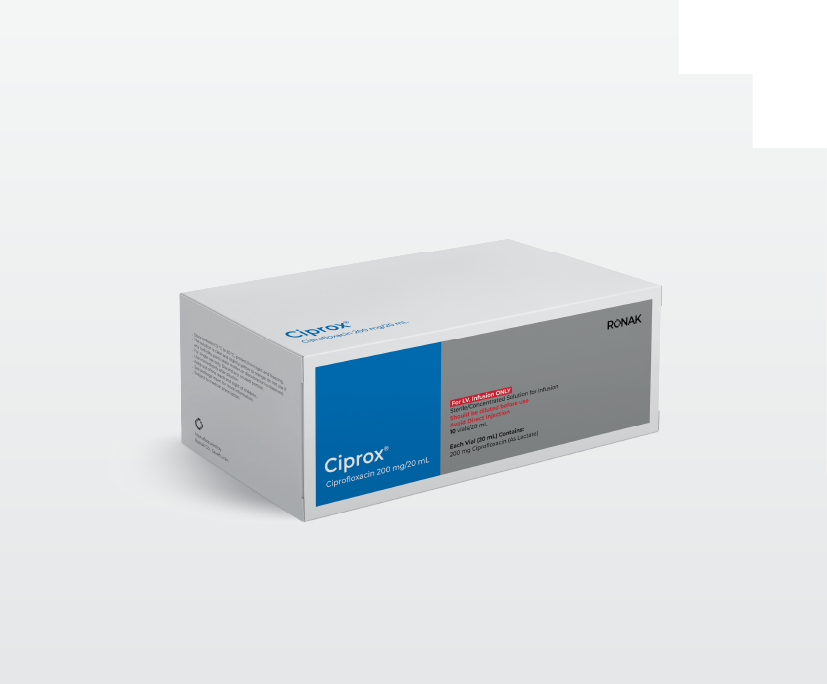
Ciprox®
Generic Name: Ciprofloxacin
Dosage Form: 20 mL concentrated solution for injection containing 10 mg of ciprofloxacin per mL
Drug Class: Antibiotic
Ciprox® Overview:
Ciprox® (Ciprofloxacin) is a broad-spectrum antibiotic from the fluoroquinolone class that prevents bacterial replication by inhibiting DNA synthesis.
Indications for Ciprox®:
- Urinary tract infections
- Acute uncomplicated cystitis in females
- Chronic bacterial prostatitis
- Acute bacterial exacerbations of chronic bronchitis
- Acute bacterial rhinosinusitis
- Skin and soft tissue infections
- Bone and joint infections
- Complicated intra-abdominal infections
- Infectious diarrhea
- Typhoid fever
- Hospital-acquired
- Pneumonia
- Uncomplicated cervical and urethral gonorrhea
Dosage Form:
- 20 mL concentrated solution for injection containing 10 mg of ciprofloxacin per mL.
Preparation of Ciprox®:
- The Ciprox® solution is clear and colorless to pale yellow. If you notice any cloudiness or foreign particles, do not use the solution.
- The solution must be diluted before injection. Never inject the undiluted solution.
- Ciprox® can be diluted with the following solutions:
- 0.9% Sodium chloride
- 5% Dextrose in 0.45% Sodium chloride
- 5% Dextrose in 0.225% Sodium chloride
- 5% Dextrose
- 10% Dextrose
- Ringer's injection
Dosage and Administration:
- The diluted solution should be infused into a large vein over 1 hour.
- If using a Y-shaped infusion set, it is recommended to temporarily stop the primary solution while infusing Ciprox®.
Monitoring During Treatment:
The following should be monitored while using Ciprox®:
- Blood cell count
- Liver and kidney function during long-term treatment
- Altered mental status
- Cardiac monitoring for QT prolongation
- Signs and symptoms of tendon damage (pain, swelling, inflammation, or tendon rupture) or peripheral neuropathy
- Blood sugar disturbances, particularly in diabetic patients
- Skin rashes and allergic reactions
Contraindications:
- History of hypersensitivity (symptoms include skin rashes with difficulty breathing or swallowing, swelling of the lips, face, throat, and tongue) to ciprofloxacin, other quinolone antibiotics (e.g., levofloxacin, ofloxacin), or any other ingredients in the formulation.
- Concurrent use with tizanidine (due to increased serum levels of tizanidine) or agomelatine.
- History of myasthenia gravis.
- Concurrent administration of agomelatine.
Warnings and Precautions:
- Dosage adjustments are required for patients with renal failure.
- Ciprofloxacin should be used with caution in individuals with a history of seizures, brain injuries (including stroke), aortic aneurysm, or those with G6PD deficiency (favism).
- To prevent crystallization in the urine, patients should ensure adequate fluid intake while on this medication.
- In case of signs of allergic reactions, such as redness, swelling, rashes, blisters, hives, itching, wheezing, or difficulty in breathing, swallowing, speaking, or swelling of the mouth, face, lips, tongue, or throat, seek immediate medical help.
- If neurological side effects (e.g., dizziness, tremors, depression, or delusion) occur, Ciprox® should be discontinued, and alternative treatment should be considered.
- This drug is ineffective in treating syphilis and may mask its symptoms. Therefore, all patients with syphilis should have syphilis tests at the time of diagnosis and 3 months later.
- If tendon damage (pain, swelling, inflammation, tendon rupture, or peripheral neuropathy) occurs, discontinue the medication immediately.
- Prolonged use of ciprofloxacin may lead to secondary fungal or bacterial infections.
- Ciprofloxacin should be used with caution in elderly patients.
- Ciprofloxacin is not recommended for children except for the treatment of anthrax.
Use in Pregnancy and Breastfeeding:
- Consult your doctor or pharmacist before using Ciprox® during pregnancy or breastfeeding.
- Ciprofloxacin passes through the placenta, and it is preferable to use alternative medications during pregnancy, if needed.
- Ciprofloxacin is excreted in breast milk, and due to potential side effects in the infant, a decision should be made about either discontinuing breastfeeding or discontinuing the medication. If the medication is administered, breastfeeding should be avoided for 2 days after the treatment is completed.
Side Effects of Ciprox®:
While every drug has the potential to cause side effects, not all patients will experience them. The more common side effects may include:
- Headache, dizziness, or restlessness
- Injection site reactions
- Skin reactions and sensitivity to light
- Nausea, diarrhea, vomiting, and abdominal pain
Drug Interactions:
- Consult your doctor or pharmacist before taking ciprofloxacin with other medications or supplements.
Packaging:
- Each package contains 10 vials of Ciprox®.
Storage:
- Store Ciprox® at 15 to 30°C, away from light, moisture, and freezing.
- Do not use the medication after the expiration date printed on the packaging.
- Keep out of the reach of children.
- Keep the medication in its original packaging until use.
References:
- Ciprofloxacin: Drug information, UpToDate 2025
- Drugs.com - Ciprofloxacin
Ciprox®
Generic Name: Ciprofloxacin
Dosage Form: 20 mL concentrated solution for injection containing 10 mg of ciprofloxacin per mL
Drug Class: Antibiotic
Ciprox® Overview:
Ciprox® (Ciprofloxacin) is a broad-spectrum antibiotic from the fluoroquinolone class that prevents bacterial replication by inhibiting DNA synthesis.
Indications for Ciprox®:
- Urinary tract infections
- Acute uncomplicated cystitis in females
- Chronic bacterial prostatitis
- Acute bacterial exacerbations of chronic bronchitis
- Acute bacterial rhinosinusitis
- Skin and soft tissue infections
- Bone and joint infections
- Complicated intra-abdominal infections
- Infectious diarrhea
- Typhoid fever
- Hospital-acquired
- Pneumonia
- Uncomplicated cervical and urethral gonorrhea
Dosage Form:
- 20 mL concentrated solution for injection containing 10 mg of ciprofloxacin per mL.
Preparation of Ciprox®:
- The Ciprox® solution is clear and colorless to pale yellow. If you notice any cloudiness or foreign particles, do not use the solution.
- The solution must be diluted before injection. Never inject the undiluted solution.
- Ciprox® can be diluted with the following solutions:
- 0.9% Sodium chloride
- 5% Dextrose in 0.45% Sodium chloride
- 5% Dextrose in 0.225% Sodium chloride
- 5% Dextrose
- 10% Dextrose
- Ringer's injection
Dosage and Administration:
- The diluted solution should be infused into a large vein over 1 hour.
- If using a Y-shaped infusion set, it is recommended to temporarily stop the primary solution while infusing Ciprox®.
Monitoring During Treatment:
The following should be monitored while using Ciprox®:
- Blood cell count
- Liver and kidney function during long-term treatment
- Altered mental status
- Cardiac monitoring for QT prolongation
- Signs and symptoms of tendon damage (pain, swelling, inflammation, or tendon rupture) or peripheral neuropathy
- Blood sugar disturbances, particularly in diabetic patients
- Skin rashes and allergic reactions
Contraindications:
- History of hypersensitivity (symptoms include skin rashes with difficulty breathing or swallowing, swelling of the lips, face, throat, and tongue) to ciprofloxacin, other quinolone antibiotics (e.g., levofloxacin, ofloxacin), or any other ingredients in the formulation.
- Concurrent use with tizanidine (due to increased serum levels of tizanidine) or agomelatine.
- History of myasthenia gravis.
- Concurrent administration of agomelatine.
Warnings and Precautions:
- Dosage adjustments are required for patients with renal failure.
- Ciprofloxacin should be used with caution in individuals with a history of seizures, brain injuries (including stroke), aortic aneurysm, or those with G6PD deficiency (favism).
- To prevent crystallization in the urine, patients should ensure adequate fluid intake while on this medication.
- In case of signs of allergic reactions, such as redness, swelling, rashes, blisters, hives, itching, wheezing, or difficulty in breathing, swallowing, speaking, or swelling of the mouth, face, lips, tongue, or throat, seek immediate medical help.
- If neurological side effects (e.g., dizziness, tremors, depression, or delusion) occur, Ciprox® should be discontinued, and alternative treatment should be considered.
- This drug is ineffective in treating syphilis and may mask its symptoms. Therefore, all patients with syphilis should have syphilis tests at the time of diagnosis and 3 months later.
- If tendon damage (pain, swelling, inflammation, tendon rupture, or peripheral neuropathy) occurs, discontinue the medication immediately.
- Prolonged use of ciprofloxacin may lead to secondary fungal or bacterial infections.
- Ciprofloxacin should be used with caution in elderly patients.
- Ciprofloxacin is not recommended for children except for the treatment of anthrax.
Use in Pregnancy and Breastfeeding:
- Consult your doctor or pharmacist before using Ciprox® during pregnancy or breastfeeding.
- Ciprofloxacin passes through the placenta, and it is preferable to use alternative medications during pregnancy, if needed.
- Ciprofloxacin is excreted in breast milk, and due to potential side effects in the infant, a decision should be made about either discontinuing breastfeeding or discontinuing the medication. If the medication is administered, breastfeeding should be avoided for 2 days after the treatment is completed.
Side Effects of Ciprox®:
While every drug has the potential to cause side effects, not all patients will experience them. The more common side effects may include:
- Headache, dizziness, or restlessness
- Injection site reactions
- Skin reactions and sensitivity to light
- Nausea, diarrhea, vomiting, and abdominal pain
Drug Interactions:
- Consult your doctor or pharmacist before taking ciprofloxacin with other medications or supplements.
Packaging:
- Each package contains 10 vials of Ciprox®.
Storage:
- Store Ciprox® at 15 to 30°C, away from light, moisture, and freezing.
- Do not use the medication after the expiration date printed on the packaging.
- Keep out of the reach of children.
- Keep the medication in its original packaging until use.
References:
- Ciprofloxacin: Drug information, UpToDate 2025
- Drugs.com - Ciprofloxacin