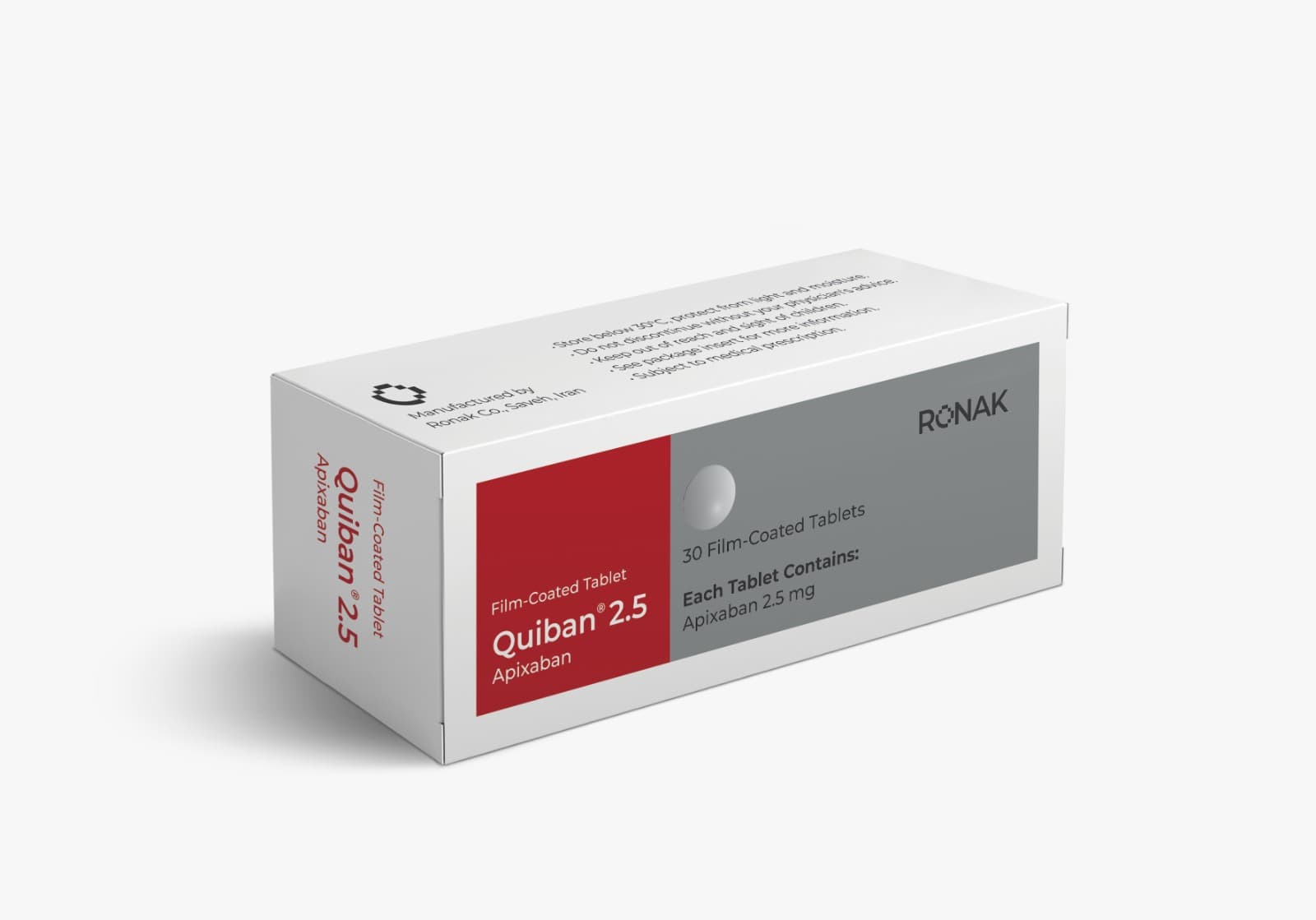


Quiban®
Quiban®
Generic Name: Apixaban
Dosage Form: Film-Coated tablet (2.5 mg and 5 mg)
Drug Class: Anticoagulant
Indications for Use
This medication is used for preventing and treating blood clots.
How Quiban® Works
Quiban® (Apixaban) is an anticoagulant that works by inhibiting Factor Xa, which prevents the formation of blood clots.
Indications for Quiban®
-
Treatment or prevention of thromboembolism
-
Treatment or prevention of left ventricular thrombus
-
Atrial fibrillation or atrial flutter
-
Heparin-induced thrombocytopenia
Dosage Forms
Film-Coated tablets in two strengths:
-
2.5 mg
-
5 mg
How to Use Quiban®
-
Take Quiban® exactly as prescribed by your doctor. Do not stop the medication without consulting your doctor.
-
Quiban® requires careful monitoring by your doctor during initiation, the duration of treatment, and when discontinuing the medication.
-
Take Quiban® at the same time every day, either before or after meals with a glass of water.
-
If you have difficulty swallowing the tablet and cannot swallow it whole, consult your doctor for alternative methods of taking the medication.
-
If you need surgery, follow your doctor's instructions regarding when to stop or resume Quiban® before and after the procedure.
Missed Dose
-
If you miss a dose, take it as soon as you remember.
-
If it's close to the time for your next dose, skip the missed dose. Do not take two doses at once.
Overdose
-
If you take more than the recommended dose, immediately inform your doctor or go to a healthcare facility.
-
Taking too much Apixaban increases the risk of bleeding.
Monitoring During Treatment
-
Monitor for signs of neurological problems (e.g., numbness or weakness in the legs, or bladder or bowel dysfunction) in patients receiving epidural anesthesia or undergoing lumbar puncture.
-
Complete blood count, prothrombin time, activated partial thromboplastin time (aPTT), serum creatinine, and liver function tests are necessary.
-
Routine coagulation tests are not required for oral anticoagulants like Quiban®.
Contraindications
-
Allergy to Apixaban or any component of the formulation
-
Active, abnormal bleeding
-
Hepatic diseases associated with coagulopathy and clinically relevant bleeding risk
-
Conditions that increase the risk of serious bleeding (e.g., hemorrhagic or ischemic stroke, active peptic ulcer with recent bleeding, acquired or inherited bleeding disorders)
-
Co-administration with certain drugs such as Ketoconazole, Itraconazole, Posaconazole, and Ritonavir
-
Co-administration with other anticoagulants (e.g., heparin derivatives, warfarin, dabigatran, rivaroxaban)
-
Presence of a surgically implanted mechanical heart valve
Warnings and Precautions
-
Weight loss surgeries may affect the absorption and effectiveness of the drug. Inform your doctor if you need to undergo surgery.
-
Apixaban should be used with caution in patients with kidney or certain kidney diseases, and dose adjustments may be necessary. Inform your doctor of any such conditions.
-
In patients weighing less than 50 kg, Apixaban may be absorbed more, while in those over 120 kg, absorption may be lower. Therefore, dose adjustments may be required, and your doctor may start with lower doses or increase the dose with caution.
-
Apixaban may increase the risk of epidural or spinal hematoma in patients who receive spinal anesthesia or undergo lumbar puncture. This risk is higher for patients using non-steroidal anti-inflammatory drugs (NSAIDs), platelet inhibitors, or other anticoagulants. Inform your doctor if you need such procedures.
-
If you notice signs of bleeding, such as weakness, fatigue, unexplained low blood pressure, dark stools, or blood in the urine, contact your doctor immediately.
Use During Pregnancy and Breastfeeding
-
If pregnancy is a possibility, use a reliable method of contraception while taking Apixaban.
-
Apixaban is not recommended during pregnancy or breastfeeding. It is advisable to use alternative anticoagulants, under the guidance of your doctor.
Side Effects of Quiban®
Like all medications, Quiban® may cause some side effects, though not everyone will experience them. Possible side effects include:
-
Severe menstrual bleeding
-
Nausea
-
Gingival hemorrhage
-
Bruising
Drug Interactions
Consult your doctor or pharmacist about any other medications or supplements you are taking to avoid potential interactions with Apixaban.
Packaging
Each package contains 30 coated tablets (3 blisters of 10 tablets).
Storage Conditions
-
Store Quiban® below 30°C, away from light and moisture.
-
Do not use after the expiration date printed on the package.
-
Keep out of reach of children.
-
Do not remove the medication from its original packaging until ready for use.
References
-
Apixaban: Drug Information, UpToDate 2025
- https://www.medicines.org.uk/emc/product/2878/smpc