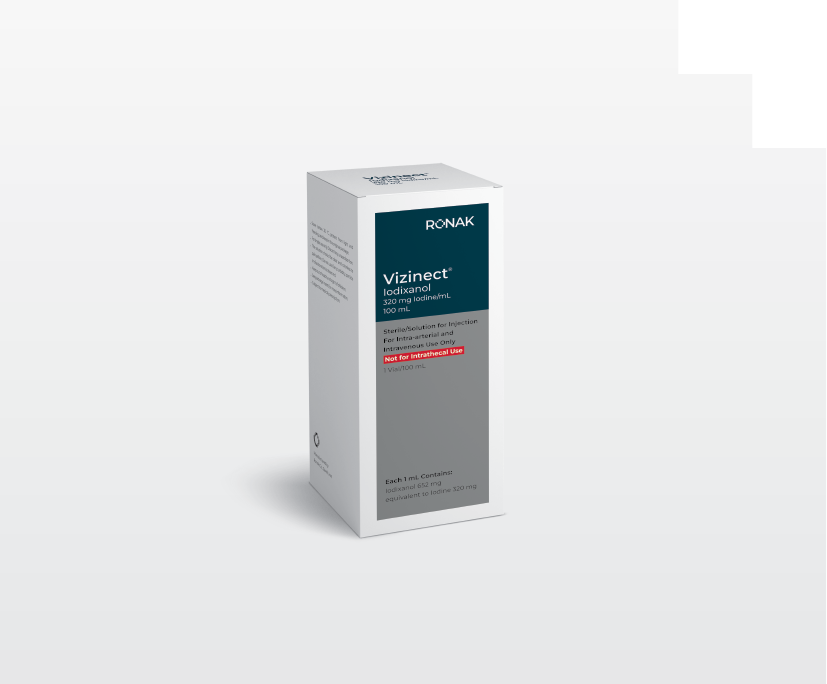


®Vizinect
Vizinect®
Generic Name: Iodixanol
Iodine Content: 320 mg/mL
Dosage Forms: 20 mL, 50 mL, and 100 mL vials
1. What is Vizinect® and its Uses?
Vizinect® is an isotonic aqueous solution containing iodixanol, a non-ionic, dimeric contrast agent.
Indications in Adults:
- Cardiac angiography
- Cerebral angiography
- Peripheral arteriography
- Abdominal angiography (e.g., DSA)
- Urography and venography
- CT enhancement
- Upper gastrointestinal tract studies
- Arthrography and hysterosalpingography (HSG)
- Spinal, chest, and cervical imaging
Indications in Children:
- Cardiac angiography
- Urography
- CT enhancement
- Upper gastrointestinal tract studies
2. Before Using Vizinect®
Contraindications:
- Hypersensitivity to iodixanol or any component of the formulation
- Thyrotoxicosis
- Intrathecal administration (not approved)
Warnings & Precautions:
- Allergy or asthma history: Use caution; premedication with corticosteroids or H1/H2 antagonists may be considered.
- Risk of severe hypersensitivity reactions, including anaphylaxis; emergency medications and equipment should be available. Monitor patients closely for at least 30 minutes post-injection.
- Thromboembolic events: Rarely, serious events such as myocardial infarction or stroke may occur. Proper catheter technique and hydration are essential.
- Dehydration: Can lead to kidney injury, particularly in elderly, diabetic, or patients with multiple myeloma or renal impairment. Ensure adequate hydration before and after injection.
- Cardiovascular or cerebrovascular disease: Use caution in patients with acute stroke, intracranial bleeding, altered blood-brain barrier, cerebral edema, or demyelinating disease.
- Renal or hepatic impairment: Clearance of iodixanol may be significantly reduced; close monitoring required.
- Metformin use: Suspend metformin at the time of contrast administration and for 48 hours afterward. Restart only after renal function is re-evaluated.
- Special populations: Patients with hyperthyroidism, sickle cell disease, severe heart disease, pulmonary hypertension, atherosclerosis, seizure disorders, myasthenia gravis, or pheochromocytoma require special precautions.
Drug Interactions:
- Loop diuretics: May increase nephrotoxicity risk
- Metformin: Risk of lactic acidosis due to contrast-induced renal impairment
- Radioactive iodine (I-123, I-131): Contrast may interfere with thyroid uptake for 6–8 weeks
- Beta-blockers: May increase risk of hypersensitivity reactions
Pregnancy & Breastfeeding:
- Safety not established in pregnancy; use only if benefits outweigh risks
- Iodixanol is minimally excreted in breast milk; breastfeeding can usually continue
- Neonatal thyroid function should be monitored after maternal contrast exposure
Pediatrics:
- Safe in children >1 year for arterial and IV studies
- Safety data for <1 year limited; close monitoring required in high-risk infants
- Increased risk in children with kidney impairment, dehydration, asthma, or cyanotic/non-cyanotic heart disease
Elderly:
- No major differences in safety compared to younger adults, but use caution due to possible comorbidities and organ dysfunction
Driving & Operating Machinery:
- Avoid for 1 hour post-injection
3. Administration & Dosage
General Instructions:
- Hydrate well before and after the procedure to minimize kidney risk
- Not for intrathecal use; IV only
- Dose, concentration, and injection rate adjusted for patient age, weight, vessel size, flow rate, and imaging technique
- Warm to room or body temperature before injection
- Avoid extravasation, especially in severe vascular disease
- Injection rate should approximate normal blood flow
- Do not mix with other drugs or nutrition lines
- Dose tailored for optimal imaging of target vessels
Dosage:
- Adults and children: Depends on procedure, age, weight, cardiac output, patient condition, and imaging technique
Overdose:
- Rare; treat symptomatically
- Maintain hydration and electrolytes
- Monitor renal function for at least 3 days
- Hemodialysis may be required to remove iodixanol
4. Side Effects
Common:
- Discomfort, warmth, or pain at injection site
Less common:
- Angina, chest pain, headache, migraine, dizziness, altered smell, paresthesia, rash, itching, taste changes, nausea
Severe hypersensitivity (rare):
- Respiratory or skin reactions, angioedema, hypotension, fever, laryngeal edema, bronchospasm, pulmonary edema
- Autoimmune patients: rare vasculitis or Stevens–Johnson-like syndrome
Procedure-specific common reactions:
- HSG: abdominal pain, vaginal bleeding, headache, nausea, fever
- Arthrography: injection site pain
- GI: diarrhea, abdominal pain, nausea
5. Storage
- Store below 30°C, protected from light and moisture, in the original box
- Single-use only; discard any remaining solution
- Keep out of reach of children
- Do not use expired product
References
- GE Healthcare Visipaque PDF
- FDA Label Visipaque
- UpToDate 2023