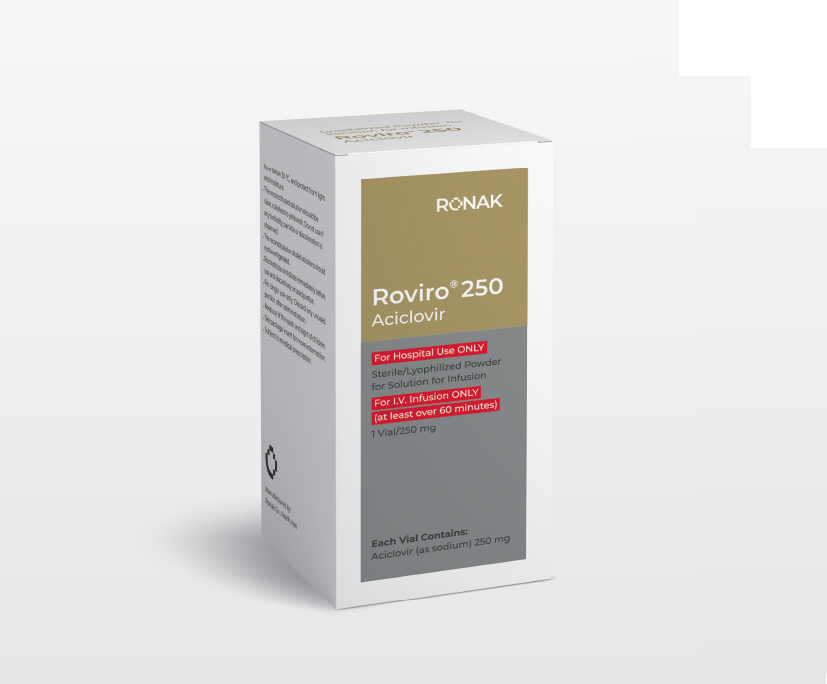


Roviro®
Generic name: Acyclovir
Dosage form: Lyophilized powder containing 250 mg and 500 mg Acyclovir for preparation of injectable solution
Drug class: Antiviral agent
Indications: This medicine is used to treat various viral infections caused by herpes simplex viruses and varicella-zoster virus, including herpes and chickenpox.
Roviro® is an antiviral medicine used to treat herpes and varicella infections, including genital herpes, mucocutaneous herpes, shingles, and chickenpox. It works by inhibiting viral DNA synthesis and preventing viral replication.
- Treatment of herpes infections, including herpes encephalitis, genital herpes, and mucocutaneous herpes
- Treatment of shingles
- Treatment of chickenpox
250 mg and 500 mg lyophilized powder for preparation of injectable solution.
Roviro® is compatible with the following solutions:
- 0.9% sodium chloride
- 5% dextrose
To prepare the solution for injection, first add 10 mL of sterile water for injection to the vial and shake gently until a clear solution is obtained.
The resulting concentration is:
- 25 mg/mL for Roviro® 250 mg
- 50 mg/mL for Roviro® 500 mg
The prepared solution must then be diluted with compatible solutions to a concentration of 7 mg/mL or less.
The initial prepared solution may be stored for up to 12 hours, and the diluted solution for up to 24 hours, at room temperature (20–25°C).
Roviro® must only be administered by intravenous infusion. The infusion should be given at a constant rate over at least 1 hour.
Each vial is for single use only; discard any remaining contents after use.
- Patient hydration status
- Urinalysis, serum creatinine, BUN, and urine output
- Liver enzymes
- Complete blood count
- Signs of neurotoxicity
- Neutrophil count in newborns
- Kidney toxicity in children receiving high doses
- Infusion site for injection-related reactions
History of hypersensitivity to Acyclovir, Valacyclovir, or any component of the formulation.
- Intravenous Acyclovir can be irritating depending on its concentration; prevent extravasation during administration.
- Adequate hydration of the patient is very important during Acyclovir administration.
- Dose adjustment is required in patients with kidney impairment.
- Contact your physician if symptoms of kidney problems occur, including urinary retention, blood in the urine, change in urine volume, or unexplained weight gain.
- Older adults are more sensitive to Acyclovir-related adverse effects and require closer medical supervision.
- Contact your physician if symptoms such as restlessness, confusion, hallucinations, impaired consciousness, or tremor occur.
Consult your physician before using Acyclovir during pregnancy or breastfeeding.
Acyclovir crosses the placenta. Use during pregnancy is permitted only when the expected benefit to the mother outweighs the possible risk to the fetus.
This medicine is excreted in breast milk. The decision to use Acyclovir during breastfeeding should consider the infant’s exposure risk, the benefits of breastfeeding, and the treatment benefit for the mother.
Like all medicines, Acyclovir may cause unwanted side effects, although not everyone experiences them. More common possible side effects include:
- Inflammation, pain, and redness at the injection site
- Headache
- Diarrhea
- Nausea and vomiting
Consult your physician or pharmacist about using Acyclovir together with other medicines or supplements.
Each package contains 1 vial of Roviro®.
- Store below 30°C, protected from light and moisture.
- The medicine may be used until the end of the month stated in the expiry date on the package. Do not use or store expired medicines.
- Keep the medicine out of the reach of children.
- Keep the medicine in its original packaging until use.
Acyclovir — systemic: Drug information, UpToDate 2025
Medicines.org.uk product information for Acyclovir.