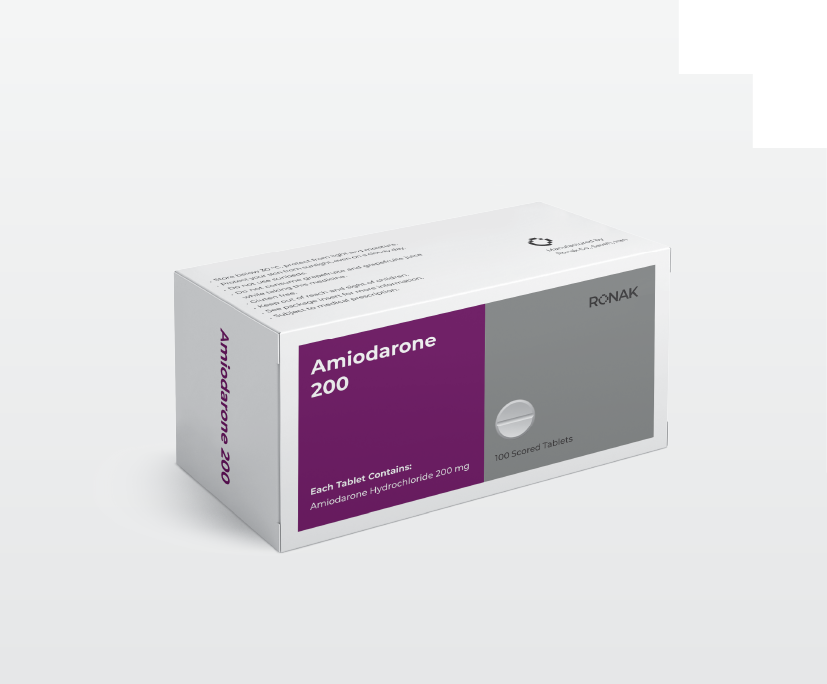





Amiorythm®
Amiorythm®
Generic name: Amiodarone
Dosage form: Scored 200 mg tablet
Drug class: Antiarrhythmic
Indications: This medicine is used to control cardiac arrhythmias (abnormal heart rhythms)
Amiorythm®
Amiorythm® is an antiarrhythmic that prolongs cardiac refractoriness and slows conduction within heart tissue.
Indications for Amiorythm®
- Ventricular or supraventricular arrhythmias, including atrial fibrillation
- Ventricular or supraventricular tachycardias
- Prevention of shocks from implantable cardioverter-defibrillators (ICDs)
Dosage form
Scored 200 mg tablet.
How to take Amiorythm®
Treatment with Amiorythm® requires close medical supervision when starting, during therapy, and when stopping.
Take exactly as prescribed and do not stop abruptly without medical advice.
Take your tablet at the same time each day. To minimize stomach upset, take with food. Your doctor may divide the daily dose.
Missed dose
If you forget a dose, take it as soon as you remember. If it is close to the next dose, skip the missed one. Do not take two doses at once.
Overdose
If more than the prescribed amount is taken, contact your doctor or seek medical care immediately.
Monitoring while on Amiorythm®
-
Blood pressure, ECG, and heart rhythm
-
Signs of lethargy, edema (swelling of hands/feet), weight loss
-
Pulmonary function tests and chest X-ray
-
Liver function and signs of hepatic injury
-
Serum electrolytes (especially potassium and magnesium)
-
Thyroid function and symptoms of thyroid disease
-
Ophthalmic (eye) examination
-
Clinical examination
-
Pacing/defibrillation thresholds in patients with implantable cardiac devices
Contraindications to Amiorythm®
-
Hypersensitivity to amiodarone, iodine, or any component of the formulation
-
Sick sinus syndrome
-
Second- or third-degree AV block
-
Severe bradycardia leading to syncope
-
Cardiogenic shock
-
Atrial fibrillation or flutter
-
Evidence of hepatitis
-
Interstitial lung disease
-
Thyroid dysfunction
Warnings and precautions
-
Periodic eye examinations are recommended.
-
Limit sun exposure and use sunscreen during therapy.
-
Correct electrolyte imbalances (K⁺/Mg²⁺/Ca²⁺) before starting; inform your doctor about any prior abnormalities.
-
Patients with ICDs or pacemakers should be monitored when initiating and during treatment.
-
If you are awaiting heart transplantation, inform your doctor—Amiodarone can affect graft function.
-
Inform your doctor before any surgery that you are taking Amiodarone.
-
Report signs of liver problems (dark urine, fatigue, loss of appetite, stomach pain, pale stools, vomiting, jaundice).
-
Report pulmonary symptoms (shortness of breath, cough, fever).
-
Report thyroid symptoms (weight change, nervousness, restlessness, weakness, hair thinning, depression, eye/neck swelling, poor concentration, heat/cold intolerance, menstrual changes, tremor, sweating).
Use in pregnancy and lactation
Consult your doctor before use in pregnancy or breastfeeding.
Amiodarone is excreted in breast milk; breastfeeding is not recommended during therapy.
Possible side effects
Not everyone experiences side effects. Possible effects include:
-
Constipation, stomach pain/discomfort, nausea or vomiting
-
Fatigue or weakness
-
Headache
-
Hypotension (low blood pressure)
-
Altered sense of smell
Drug interactions
Consult your doctor or pharmacist before using Amiorythm® with other medicines or supplements.
Packaging
Each pack contains 100 tablets (10 blisters × 10).
Storage
-
Store below 30°C, protected from light and moisture.
-
Use until the end of the month shown on the expiry date; do not use expired medicine.
-
Keep out of the reach of children.
-
Do not remove from the original package until use.
References
-
Amiodarone: Drug information, UpToDate 2025
-
medicines.org.uk — SmPC (product/13964)
Amiorythm®
Generic name: Amiodarone
Dosage form: Scored 200 mg tablet
Drug class: Antiarrhythmic
Indications: This medicine is used to control cardiac arrhythmias (abnormal heart rhythms)
Amiorythm®
Amiorythm® is an antiarrhythmic that prolongs cardiac refractoriness and slows conduction within heart tissue.
Indications for Amiorythm®
- Ventricular or supraventricular arrhythmias, including atrial fibrillation
- Ventricular or supraventricular tachycardias
- Prevention of shocks from implantable cardioverter-defibrillators (ICDs)
Dosage form
Scored 200 mg tablet.
How to take Amiorythm®
Treatment with Amiorythm® requires close medical supervision when starting, during therapy, and when stopping.
Take exactly as prescribed and do not stop abruptly without medical advice.
Take your tablet at the same time each day. To minimize stomach upset, take with food. Your doctor may divide the daily dose.
Missed dose
If you forget a dose, take it as soon as you remember. If it is close to the next dose, skip the missed one. Do not take two doses at once.
Overdose
If more than the prescribed amount is taken, contact your doctor or seek medical care immediately.
Monitoring while on Amiorythm®
-
Blood pressure, ECG, and heart rhythm
-
Signs of lethargy, edema (swelling of hands/feet), weight loss
-
Pulmonary function tests and chest X-ray
-
Liver function and signs of hepatic injury
-
Serum electrolytes (especially potassium and magnesium)
-
Thyroid function and symptoms of thyroid disease
-
Ophthalmic (eye) examination
-
Clinical examination
-
Pacing/defibrillation thresholds in patients with implantable cardiac devices
Contraindications to Amiorythm®
-
Hypersensitivity to amiodarone, iodine, or any component of the formulation
-
Sick sinus syndrome
-
Second- or third-degree AV block
-
Severe bradycardia leading to syncope
-
Cardiogenic shock
-
Atrial fibrillation or flutter
-
Evidence of hepatitis
-
Interstitial lung disease
-
Thyroid dysfunction
Warnings and precautions
-
Periodic eye examinations are recommended.
-
Limit sun exposure and use sunscreen during therapy.
-
Correct electrolyte imbalances (K⁺/Mg²⁺/Ca²⁺) before starting; inform your doctor about any prior abnormalities.
-
Patients with ICDs or pacemakers should be monitored when initiating and during treatment.
-
If you are awaiting heart transplantation, inform your doctor—Amiodarone can affect graft function.
-
Inform your doctor before any surgery that you are taking Amiodarone.
-
Report signs of liver problems (dark urine, fatigue, loss of appetite, stomach pain, pale stools, vomiting, jaundice).
-
Report pulmonary symptoms (shortness of breath, cough, fever).
-
Report thyroid symptoms (weight change, nervousness, restlessness, weakness, hair thinning, depression, eye/neck swelling, poor concentration, heat/cold intolerance, menstrual changes, tremor, sweating).
Use in pregnancy and lactation
Consult your doctor before use in pregnancy or breastfeeding.
Amiodarone is excreted in breast milk; breastfeeding is not recommended during therapy.
Possible side effects
Not everyone experiences side effects. Possible effects include:
-
Constipation, stomach pain/discomfort, nausea or vomiting
-
Fatigue or weakness
-
Headache
-
Hypotension (low blood pressure)
-
Altered sense of smell
Drug interactions
Consult your doctor or pharmacist before using Amiorythm® with other medicines or supplements.
Packaging
Each pack contains 100 tablets (10 blisters × 10).
Storage
-
Store below 30°C, protected from light and moisture.
-
Use until the end of the month shown on the expiry date; do not use expired medicine.
-
Keep out of the reach of children.
-
Do not remove from the original package until use.
References
-
Amiodarone: Drug information, UpToDate 2025
-
medicines.org.uk — SmPC (product/13964)