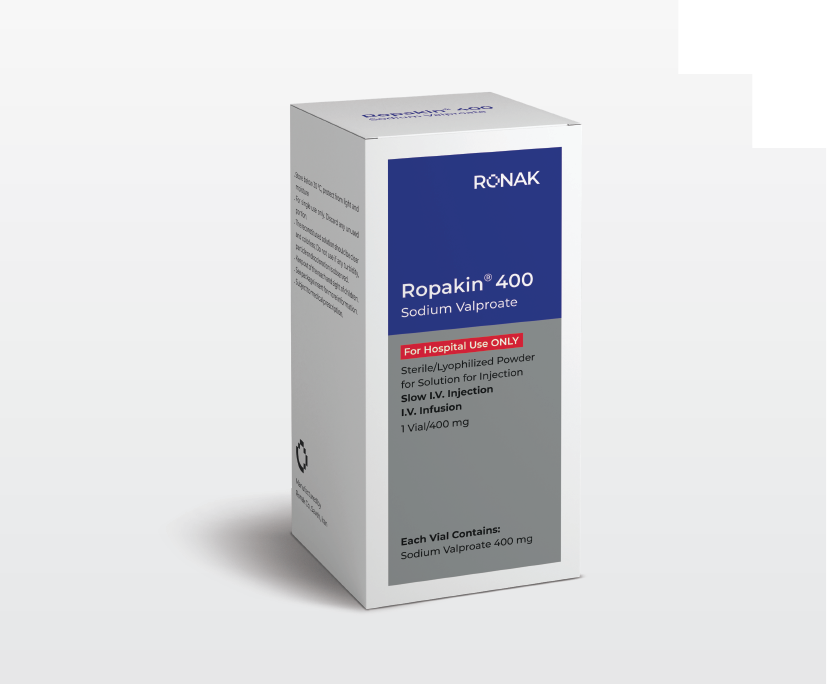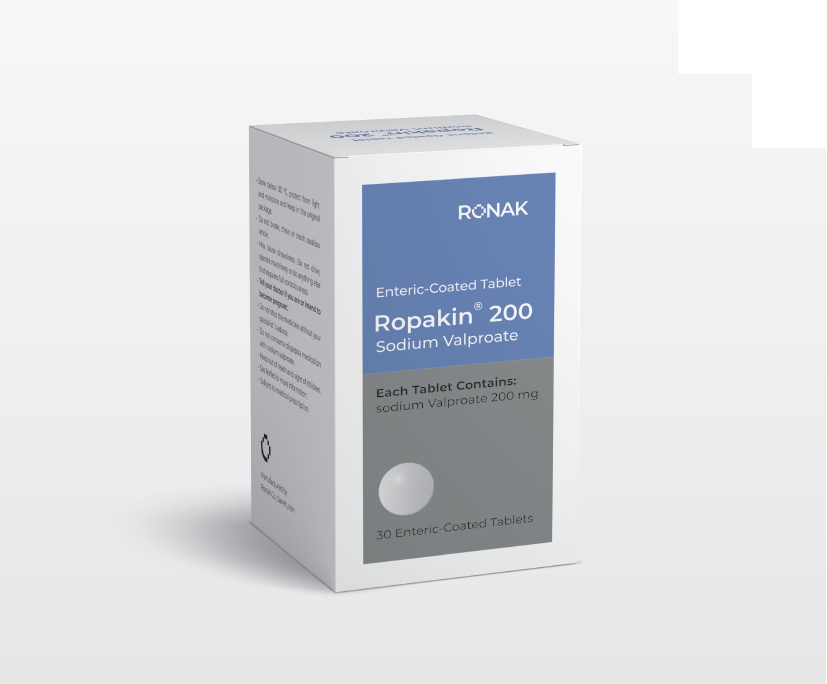


Ropakin inj®
Generic Name: Sodium Valproate
Dosage Form: Lyophilized powder containing 400 mg sodium valproate for preparation of an injectable solution
Pharmacological Class: Antiepileptic Agent
Indications: This medication is used for the management of seizures and treatment-resistant migraine.
Ropakin® Injection is a central nervous system agent that reduces neuronal activity by enhancing the function of GABA (an inhibitory neurotransmitter), as well as by inhibiting voltage-gated sodium channels and suppressing rapid neuronal signal transmission.
- Epilepsy (Partial and Generalized Seizures)
- Status epilepticus
- Treatment-resistant migraine
- Vial containing 400 mg lyophilized powder for preparation of an injectable solution
- Add 4 mL of Sterile Water for Injection to the contents of the Ropakin® vial and mix until the powder is completely dissolved.
- The solution should be prepared immediately before administration.
- Each vial of Ropakin® Injection is intended for single use only. Any unused portion should be discarded after use.
For dilution, Ropakin® Injection is compatible with the following solutions:
- 0.9% Sodium Chloride
- 5% Dextrose
- Lactated Ringer’s Solution
This medication should only be administered by slow intravenous (IV) injection or intravenous infusion.
In most cases, after dilution in a suitable diluent, Ropakin® Injection may be administered as an intravenous infusion over 60 minutes at a rate not exceeding 20 mg per minute.
Before initiating treatment and periodically during therapy, the physician may monitor the following parameters:
- Complete blood cell count (CBC)
- Bone density
- Coagulation tests
- Plasma valproate levels
- Liver function tests
- Kidney function tests
- Blood glucose levels
- Plasma electrolyte levels (sodium and potassium)
- Urinalysis (including glucose and electrolyte excretion)
- Signs and symptoms of pancreatitis
- Signs of DRESS syndrome (rash, redness, blistering, etc.)
- Symptoms of polycystic ovary syndrome (PCOS)
- Patient’s level of consciousness and cognitive or motor function
Do not use Ropakin® Injection in the following situations:
- Hypersensitivity to sodium valproate or any component of the formulation (symptoms may include skin rash accompanied by difficulty breathing or swallowing, swelling of the lips, face, throat, or tongue)
- Liver disease or hepatic dysfunction, including a family history of liver disorders (especially if associated with medication use)
- Pregnancy (unless no other effective treatment option is available)
- Porphyria
- Urea cycle disorders
- Metabolic disorders associated with mitochondrial dysfunction
- Sodium valproate may cause drowsiness. If this occurs, avoid activities requiring mental alertness, such as driving or operating machinery.
- Injectable sodium valproate is generally not considered suitable for children under 2 years of age.
- Contact your physician immediately if symptoms of liver dysfunction occur, including dark urine, fatigue, loss of appetite, stomach discomfort, pale stools, facial swelling, vomiting, or yellowing of the skin or eyes.
- Inform your physician immediately if you develop symptoms of pancreatic disorders, such as abdominal pain, vomiting, or loss of appetite.
- Notify your physician if symptoms of hyperammonemia occur, including altered consciousness, drowsiness, lethargy, or cognitive impairment.
- Inform your physician if signs of thrombocytopenia develop, such as bruising, bleeding, or impaired blood clotting.
- Notify your physician if you have a history of, or develop symptoms suggestive of, a urea cycle disorder, including irritability, fatigue, vomiting, or balance disturbances.
- Seek immediate medical attention if signs of severe hypersensitivity reactions occur, including redness, swelling, blistering, skin peeling, red eyes, or sores in the mouth, throat, nose, or eyes.
- Inform your physician if you have undergone bariatric (weight-loss) surgery.
- Certain medications may cause serious adverse effects when used concomitantly with sodium valproate. Therefore, it is essential to inform your physician about all medications and supplements you are taking to avoid potential drug interactions.
- Elderly patients may be more sensitive to adverse effects such as dehydration and drowsiness; therefore, sodium valproate should be used with additional caution in this population.
- Consult your physician before using sodium valproate during pregnancy or breastfeeding.
- Use of sodium valproate during pregnancy may lead to serious fetal neurological abnormalities.
- Women of childbearing potential should use a reliable method of contraception throughout treatment.
- Estrogen-containing contraceptives (such as LD, Yaz®, Rokin®, and similar products) may reduce blood levels of sodium valproate and increase the risk of seizures.
Like all medications, Ropakin® Injection may cause side effects, although not everybody experiences them.
Possible adverse effects include:
- Headache, weakness, fever
- Nausea, vomiting, abdominal pain, diarrhea, loss of appetite, dyspepsia, constipation
- Tremor, dizziness, double vision, blurred vision, nystagmus
- Impaired balance, emotional instability, cognitive disturbances, memory impairment
- Flu-like symptoms, respiratory tract infections, runny nose
- Weight gain or weight loss
- Hair loss
- Fatigue, drowsiness, weakness, dizziness
- Sleep disturbances
Consult your physician or pharmacist before using sodium valproate together with any other medication or dietary supplement.
Each package contains:
- 1 vial
- Keep out of the sight and reach of children.
- Store below 25°C, protected from light and moisture.
- Use the product before the expiry date indicated on the package. Do not use or store expired medications.
- Keep the medication in its original packaging.
- Electronic Medicines Compendium (eMC)
- Valproate: Drug Information, UpToDate, 2023.