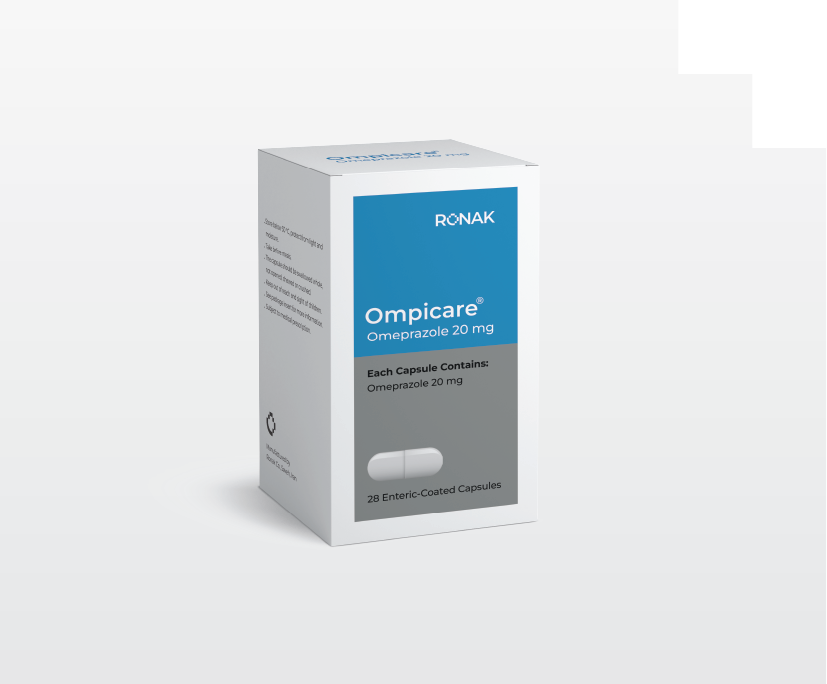





Ompicare®
Ompicare®
Generic Name: Omeprazole
Formulation: 20 mg enteric-coated capsule
Pharmacological Class: Proton Pump Inhibitors (PPIs)
Indications for Ompicare®:
Ompicare® (Omeprazole) belongs to a group of drugs called Proton Pump Inhibitors (PPIs), which reduce stomach acid secretion.
Indications:
- Gastroesophageal reflux disease (GERD)
- Dyspepsia (indigestion) and heartburn
- Esophagitis (inflammation of the esophagus)
- Treatment and prevention of stomach and duodenal ulcers
- Helicobacter pylori infection regimen
- Prevention of NSAID-induced ulcers (e.g., naproxen and mefenamic acid)
- Prevention of excess gastric acid secretion due to pancreatic or duodenal tumors (Zollinger-Ellison syndrome)
- Prevention of aspiration (blockage of the airways from foreign substances) during anesthesia
- Zollinger-Ellison syndrome
Ompicare® Composition:
Each capsule contains 20 mg omeprazole.
Dosage and Administration of Ompicare®:
- Take Ompicare® exactly as prescribed by your doctor. If uncertain about how to take the medication, consult your doctor or pharmacist.
- Take Ompicare® 30 minutes to 1 hour before meals (preferably breakfast). If taking it twice daily, take it before breakfast and dinner.
- Swallow the capsules whole; do not crush, chew, or split them. If you open the capsule, swallow the granules inside without crushing them.
Missed Dose:
- If you miss a dose, take it as soon as you remember. However, if the next dose is near, skip the missed dose. Do not take two doses together or take extra doses.
Overdose:
- If you take more than the prescribed amount, contact your doctor or seek medical attention immediately.
Monitoring During Ompicare® Treatment:
- Susceptibility testing is recommended in patients who fail H. pylori-eradication regimen
- Magnesium levels (prior to initiation of therapy and periodically thereafter
- Especially if taking concomitant digoxin, diuretics, or other drugs known to cause hypomagnesemia.
- Signs or symptoms of cutaneous lupus erythematosus or systemic lupus erythematosus
- C. difficile-associated diarrhea
- Bone loss and fractures (especially in patients on high-dose or long-term therapy [≥1 year])
Contraindications for Ompicare®:
- History of hypersensitivity to omeprazole or any other ingredients in the formulation
- History of hypersensitivity to other proton pump inhibitors (e.g., pantoprazole, lansoprazole, rabeprazole, esomeprazole)
Warnings and Precautions for Ompicare®:
- Certain medications may cause serious side effects when taken with omeprazole. Therefore, it is very important to inform your doctor about all the medications you are taking to avoid drug interactions.
- Even if you feel better, continue taking omeprazole as directed by your doctor until the treatment course is complete.
- Liver impairment: Dose adjustments are required in patients with severe liver disease. Inform your doctor if you have liver problems.
- Omeprazole may reduce the therapeutic effect of clopidogrel. If taking clopidogrel, inform your doctor.
- Omeprazole may affect the results of certain tests. Inform your doctor before any tests.
- Long-term use (over 1 year) may result in decreased vitamin B12 absorption. If you have symptoms of vitamin B12 deficiency (e.g., muscle weakness, fatigue, pale skin, mood changes, or tingling in limbs), consult your doctor for a possible vitamin B12 supplement.
- Report immediately to your doctor if you experience unexplained weight loss, difficulty swallowing, stomach pain, indigestion, vomiting (especially if bloody), black or bloody stools, or persistent diarrhea.
- Severe allergic reactions may occur, such as redness, swelling, rash, blisters, hives, itching, wheezing, chest or throat tightness, trouble breathing, swallowing, or speaking, and unusual swelling of the mouth, face, lips, tongue, or throat. Seek medical attention immediately.
- Omeprazole may increase the risk of Clostridium difficile-associated diarrhea. Notify your doctor if you experience stomach pain, watery or bloody stools.
- Long-term use (more than a year) in children is not recommended.
- When used for self-medication (OTC), do not use if hypersensitive to omeprazole or any component of the formulation; trouble or pain when swallowing food; vomiting with blood, or bloody or black stools; heartburn with lightheadedness, dizziness, or sweating; chest pain or shoulder pain with shortness of breath, sweating, pain spreading to arms, neck or shoulders, or lightheadedness; frequent chest pain.
Use of Ompicare® During Pregnancy and Breastfeeding:
Consult your doctor before using omeprazole if you are pregnant or breastfeeding. It is generally recommended to avoid using this medication during pregnancy and breastfeeding unless deemed necessary by your doctor.
Side Effects of Ompicare®:
Like all medications, Ompicare® may cause some unwanted side effects, though not everyone will experience them. Potential side effects include:
- Headache
- Skin sensitivity or rash
- Joint pain
- Abdominal pain, diarrhea, nausea, bloating, vomiting, acid reflux, and constipation
- Upper respiratory infections and cough
Drug Interactions with Ompicare®:
Consult your doctor or pharmacist before using omeprazole in combination with other medications or supplements.
Ompicare® Packaging:
Each bottle contains 28 capsules.
Storage Conditions for Ompicare®:
- Store at below 30°C, away from light and moisture.
- Use the medication before the expiration date printed on the packaging.
- Keep out of reach of children.
- Do not remove the drug from its original packaging until use.
References:
- Omeprazole: Drug Information, UpToDate, 2025
- Medicines.org.uk – Omeprazole Information
Ompicare®
Generic Name: Omeprazole
Formulation: 20 mg enteric-coated capsule
Pharmacological Class: Proton Pump Inhibitors (PPIs)
Indications for Ompicare®:
Ompicare® (Omeprazole) belongs to a group of drugs called Proton Pump Inhibitors (PPIs), which reduce stomach acid secretion.
Indications:
- Gastroesophageal reflux disease (GERD)
- Dyspepsia (indigestion) and heartburn
- Esophagitis (inflammation of the esophagus)
- Treatment and prevention of stomach and duodenal ulcers
- Helicobacter pylori infection regimen
- Prevention of NSAID-induced ulcers (e.g., naproxen and mefenamic acid)
- Prevention of excess gastric acid secretion due to pancreatic or duodenal tumors (Zollinger-Ellison syndrome)
- Prevention of aspiration (blockage of the airways from foreign substances) during anesthesia
- Zollinger-Ellison syndrome
Ompicare® Composition:
Each capsule contains 20 mg omeprazole.
Dosage and Administration of Ompicare®:
- Take Ompicare® exactly as prescribed by your doctor. If uncertain about how to take the medication, consult your doctor or pharmacist.
- Take Ompicare® 30 minutes to 1 hour before meals (preferably breakfast). If taking it twice daily, take it before breakfast and dinner.
- Swallow the capsules whole; do not crush, chew, or split them. If you open the capsule, swallow the granules inside without crushing them.
Missed Dose:
- If you miss a dose, take it as soon as you remember. However, if the next dose is near, skip the missed dose. Do not take two doses together or take extra doses.
Overdose:
- If you take more than the prescribed amount, contact your doctor or seek medical attention immediately.
Monitoring During Ompicare® Treatment:
- Susceptibility testing is recommended in patients who fail H. pylori-eradication regimen
- Magnesium levels (prior to initiation of therapy and periodically thereafter
- Especially if taking concomitant digoxin, diuretics, or other drugs known to cause hypomagnesemia.
- Signs or symptoms of cutaneous lupus erythematosus or systemic lupus erythematosus
- C. difficile-associated diarrhea
- Bone loss and fractures (especially in patients on high-dose or long-term therapy [≥1 year])
Contraindications for Ompicare®:
- History of hypersensitivity to omeprazole or any other ingredients in the formulation
- History of hypersensitivity to other proton pump inhibitors (e.g., pantoprazole, lansoprazole, rabeprazole, esomeprazole)
Warnings and Precautions for Ompicare®:
- Certain medications may cause serious side effects when taken with omeprazole. Therefore, it is very important to inform your doctor about all the medications you are taking to avoid drug interactions.
- Even if you feel better, continue taking omeprazole as directed by your doctor until the treatment course is complete.
- Liver impairment: Dose adjustments are required in patients with severe liver disease. Inform your doctor if you have liver problems.
- Omeprazole may reduce the therapeutic effect of clopidogrel. If taking clopidogrel, inform your doctor.
- Omeprazole may affect the results of certain tests. Inform your doctor before any tests.
- Long-term use (over 1 year) may result in decreased vitamin B12 absorption. If you have symptoms of vitamin B12 deficiency (e.g., muscle weakness, fatigue, pale skin, mood changes, or tingling in limbs), consult your doctor for a possible vitamin B12 supplement.
- Report immediately to your doctor if you experience unexplained weight loss, difficulty swallowing, stomach pain, indigestion, vomiting (especially if bloody), black or bloody stools, or persistent diarrhea.
- Severe allergic reactions may occur, such as redness, swelling, rash, blisters, hives, itching, wheezing, chest or throat tightness, trouble breathing, swallowing, or speaking, and unusual swelling of the mouth, face, lips, tongue, or throat. Seek medical attention immediately.
- Omeprazole may increase the risk of Clostridium difficile-associated diarrhea. Notify your doctor if you experience stomach pain, watery or bloody stools.
- Long-term use (more than a year) in children is not recommended.
- When used for self-medication (OTC), do not use if hypersensitive to omeprazole or any component of the formulation; trouble or pain when swallowing food; vomiting with blood, or bloody or black stools; heartburn with lightheadedness, dizziness, or sweating; chest pain or shoulder pain with shortness of breath, sweating, pain spreading to arms, neck or shoulders, or lightheadedness; frequent chest pain.
Use of Ompicare® During Pregnancy and Breastfeeding:
Consult your doctor before using omeprazole if you are pregnant or breastfeeding. It is generally recommended to avoid using this medication during pregnancy and breastfeeding unless deemed necessary by your doctor.
Side Effects of Ompicare®:
Like all medications, Ompicare® may cause some unwanted side effects, though not everyone will experience them. Potential side effects include:
- Headache
- Skin sensitivity or rash
- Joint pain
- Abdominal pain, diarrhea, nausea, bloating, vomiting, acid reflux, and constipation
- Upper respiratory infections and cough
Drug Interactions with Ompicare®:
Consult your doctor or pharmacist before using omeprazole in combination with other medications or supplements.
Ompicare® Packaging:
Each bottle contains 28 capsules.
Storage Conditions for Ompicare®:
- Store at below 30°C, away from light and moisture.
- Use the medication before the expiration date printed on the packaging.
- Keep out of reach of children.
- Do not remove the drug from its original packaging until use.
References:
- Omeprazole: Drug Information, UpToDate, 2025
- Medicines.org.uk – Omeprazole Information