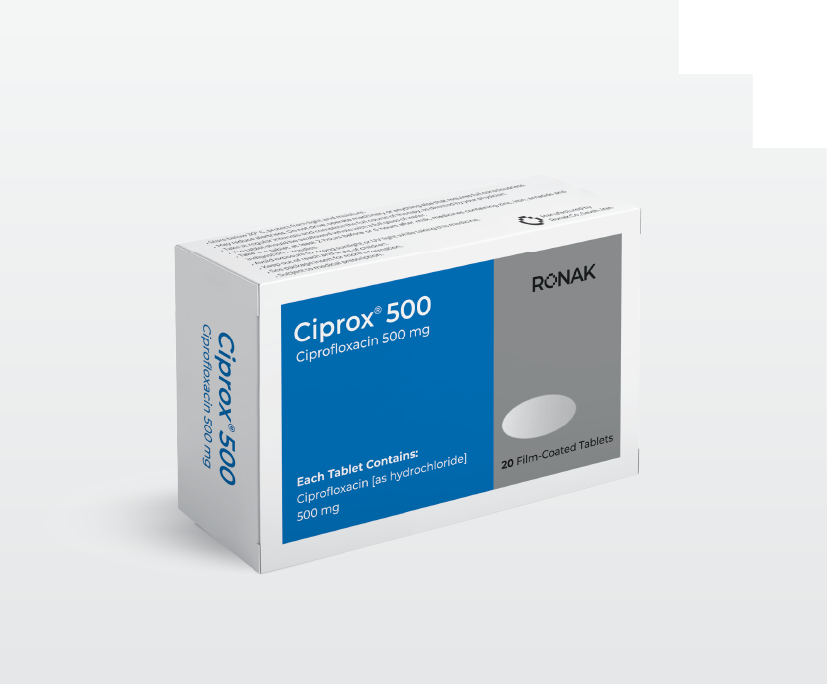





Ciprox®
Ciprox®
Generic Name: Ciprofloxacin
Dosage Form: Film coated tablet, 500 mg
Drug Class: Antibiotic
Indications:
This medicine is used to treat various infections, including urinary tract, respiratory, bone, joint, and skin infections.
About Ciprox®
Ciprox® (Ciprofloxacin) is a broad-spectrum antibiotic from the fluoroquinolone class that works by preventing the growth and multiplication of bacteria.
Indications for Use
Ciprox® is used in the treatment of infections of the skin and soft tissue, bones and joints, hospital-acquired pneumonia, endocarditis, neutropenia with fever, upper and lower respiratory tract infections, intra-abdominal infections, urinary and genital tract infections, prostatitis, and pyelonephritis.
Dosage Form
Film-coated oral tablet, 500 mg
Dosage and Administration
For the best therapeutic response, do not change the dose or duration of treatment without consulting your doctor.
Take Ciprox® exactly as prescribed by your doctor and at the same time each day.
To avoid stomach upset, take Ciprox® with food and a full glass of water. Drink plenty of fluids during treatment.
Missed Dose
If you forget a dose, take it as soon as you remember. If it is less than 6 hours before your next scheduled dose, skip the missed dose. Do not take two doses at the same time or take an extra dose.
Overdose
If you take more than the prescribed dose, contact your doctor or seek medical attention immediately.
Monitoring During Treatment
-
Blood cell count
-
Liver and kidney function in long-term treatments
-
Mental status changes
-
Signs and symptoms of tendon injury (pain, swelling, inflammation, or rupture) or peripheral neuropathy
-
Blood sugar abnormalities, especially in diabetic patients
-
Skin reactions, rashes, or allergic responses
-
ECG (heart monitoring)
Contraindications
-
History of hypersensitivity to ciprofloxacin, other quinolone antibiotics (such as levofloxacin or ofloxacin), or any component of the formulation
-
Concomitant use with tizanidine (due to increased serum levels of tizanidine) or agomelatine
-
History of myasthenia gravis
Warnings and Precautions
-
Ciprofloxacin should be taken at least 2 hours before or 6 hours after antacids, sucralfate, bismuth, sevelamer, multivitamins, or other products containing calcium, magnesium, aluminum, iron, or zinc.
-
Avoid taking ciprofloxacin alone with dairy products or calcium-fortified foods, although it can be taken with meals containing such products.
-
Drink sufficient water to prevent crystal formation in urine.
-
Follow your doctor’s advice during long-term use; report any fever or infection symptoms immediately.
-
Use cautiously in patients with kidney impairment—dose adjustment may be required.
-
Use cautiously in patients with favism (G6PD deficiency).
-
Elderly patients are more likely to experience side effects and may require closer monitoring.
-
Use in children is recommended only for the treatment of anthrax; avoid in other conditions.
-
Avoid direct sunlight during treatment; wear protective clothing and sunscreen.
-
Notify your doctor if you experience symptoms of high or low blood sugar such as dizziness, rapid heartbeat, confusion, fatigue, or sweating.
-
Stop taking the medicine and seek medical help immediately if you experience severe allergic reactions such as redness, swelling, blistering, or peeling skin, or sores in the mouth, throat, nose, or eyes.
-
Ciprofloxacin may increase the risk of Clostridium difficile–associated diarrhea; contact your doctor if you have abdominal pain or watery/bloody stools.
-
Report dizziness, restlessness, confusion, or suicidal thoughts to your doctor immediately.
-
Use with caution in patients with heart problems (irregular heartbeat or fainting).
-
Discontinue use and inform your doctor if you develop tendinitis, tendon rupture, or peripheral neuropathy.
-
Use with caution in patients with a history of seizures, stroke, or aortic aneurysm.
Pregnancy and Lactation
If you are pregnant, breastfeeding, or planning to become pregnant, consult your doctor before using ciprofloxacin.
The decision to use ciprofloxacin during pregnancy or breastfeeding should be made by your doctor based on clinical judgment and necessity.
Possible Side Effects
Like all medicines, Ciprox® may cause some unwanted side effects, although not everyone experiences them.
Common side effects include:
-
Insomnia, headache, or dizziness
-
Stomach pain, diarrhea, nausea, and indigestion
-
Skin reactions or photosensitivity (sensitivity to sunlight)
Drug Interactions
Consult your doctor or pharmacist before taking ciprofloxacin with any other medication or supplement.
Packaging
Each box contains 20 tablets (2 blisters of 10 tablets each).
Storage Conditions
-
Store below 30°C, away from light and moisture.
-
Do not use after the expiry date printed on the package.
-
Keep out of reach of children.
-
Do not remove tablets from the original packaging until use.
References
-
Ciprofloxacin (systemic): Drug information, UpToDate 2025
Ciprox®
Generic Name: Ciprofloxacin
Dosage Form: Film coated tablet, 500 mg
Drug Class: Antibiotic
Indications:
This medicine is used to treat various infections, including urinary tract, respiratory, bone, joint, and skin infections.
About Ciprox®
Ciprox® (Ciprofloxacin) is a broad-spectrum antibiotic from the fluoroquinolone class that works by preventing the growth and multiplication of bacteria.
Indications for Use
Ciprox® is used in the treatment of infections of the skin and soft tissue, bones and joints, hospital-acquired pneumonia, endocarditis, neutropenia with fever, upper and lower respiratory tract infections, intra-abdominal infections, urinary and genital tract infections, prostatitis, and pyelonephritis.
Dosage Form
Film-coated oral tablet, 500 mg
Dosage and Administration
For the best therapeutic response, do not change the dose or duration of treatment without consulting your doctor.
Take Ciprox® exactly as prescribed by your doctor and at the same time each day.
To avoid stomach upset, take Ciprox® with food and a full glass of water. Drink plenty of fluids during treatment.
Missed Dose
If you forget a dose, take it as soon as you remember. If it is less than 6 hours before your next scheduled dose, skip the missed dose. Do not take two doses at the same time or take an extra dose.
Overdose
If you take more than the prescribed dose, contact your doctor or seek medical attention immediately.
Monitoring During Treatment
-
Blood cell count
-
Liver and kidney function in long-term treatments
-
Mental status changes
-
Signs and symptoms of tendon injury (pain, swelling, inflammation, or rupture) or peripheral neuropathy
-
Blood sugar abnormalities, especially in diabetic patients
-
Skin reactions, rashes, or allergic responses
-
ECG (heart monitoring)
Contraindications
-
History of hypersensitivity to ciprofloxacin, other quinolone antibiotics (such as levofloxacin or ofloxacin), or any component of the formulation
-
Concomitant use with tizanidine (due to increased serum levels of tizanidine) or agomelatine
-
History of myasthenia gravis
Warnings and Precautions
-
Ciprofloxacin should be taken at least 2 hours before or 6 hours after antacids, sucralfate, bismuth, sevelamer, multivitamins, or other products containing calcium, magnesium, aluminum, iron, or zinc.
-
Avoid taking ciprofloxacin alone with dairy products or calcium-fortified foods, although it can be taken with meals containing such products.
-
Drink sufficient water to prevent crystal formation in urine.
-
Follow your doctor’s advice during long-term use; report any fever or infection symptoms immediately.
-
Use cautiously in patients with kidney impairment—dose adjustment may be required.
-
Use cautiously in patients with favism (G6PD deficiency).
-
Elderly patients are more likely to experience side effects and may require closer monitoring.
-
Use in children is recommended only for the treatment of anthrax; avoid in other conditions.
-
Avoid direct sunlight during treatment; wear protective clothing and sunscreen.
-
Notify your doctor if you experience symptoms of high or low blood sugar such as dizziness, rapid heartbeat, confusion, fatigue, or sweating.
-
Stop taking the medicine and seek medical help immediately if you experience severe allergic reactions such as redness, swelling, blistering, or peeling skin, or sores in the mouth, throat, nose, or eyes.
-
Ciprofloxacin may increase the risk of Clostridium difficile–associated diarrhea; contact your doctor if you have abdominal pain or watery/bloody stools.
-
Report dizziness, restlessness, confusion, or suicidal thoughts to your doctor immediately.
-
Use with caution in patients with heart problems (irregular heartbeat or fainting).
-
Discontinue use and inform your doctor if you develop tendinitis, tendon rupture, or peripheral neuropathy.
-
Use with caution in patients with a history of seizures, stroke, or aortic aneurysm.
Pregnancy and Lactation
If you are pregnant, breastfeeding, or planning to become pregnant, consult your doctor before using ciprofloxacin.
The decision to use ciprofloxacin during pregnancy or breastfeeding should be made by your doctor based on clinical judgment and necessity.
Possible Side Effects
Like all medicines, Ciprox® may cause some unwanted side effects, although not everyone experiences them.
Common side effects include:
-
Insomnia, headache, or dizziness
-
Stomach pain, diarrhea, nausea, and indigestion
-
Skin reactions or photosensitivity (sensitivity to sunlight)
Drug Interactions
Consult your doctor or pharmacist before taking ciprofloxacin with any other medication or supplement.
Packaging
Each box contains 20 tablets (2 blisters of 10 tablets each).
Storage Conditions
-
Store below 30°C, away from light and moisture.
-
Do not use after the expiry date printed on the package.
-
Keep out of reach of children.
-
Do not remove tablets from the original packaging until use.
References
-
Ciprofloxacin (systemic): Drug information, UpToDate 2025